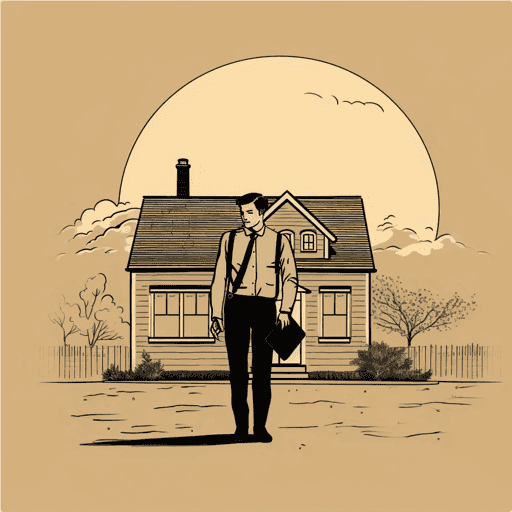
An Enemy of the People: An Adaptation of the Play by Henrik Ibsen
A modern alternative to SparkNotes and CliffsNotes, SuperSummary offers high-quality Study Guides with detailed chapter summaries and analysis of major themes, characters, and more.
Summaries & Analyses
Quizzes
NEWReading Tools
Summary and Study Guide
Overview
An Enemy of the People (1950) by Arthur Miller is an adaptation of Henrik Ibsen’s 1882 realist drama, also titled An Enemy of the People, into a tightened, American-stage-friendly version. It follows Dr. Thomas Stockmann, who discovers that his town’s lucrative public baths are contaminated and likely making visitors sick. When civic leaders insist that his findings be suppressed to avoid economic fallout, the doctor’s whistleblowing attempts to publish and speak openly trigger a rapid collapse of community support as he is scapegoated and labeled an “enemy of the people.” The play explores the themes of The Dangers of the Uninformed Masses, The Moral Limits of Compromise, and Family Loyalty Strained by Power and Status. Miller’s version of the play was adapted into a film in 1978.
This guide refers to the 2010 Penguin Classics edition.
Content Warning: The source material and guide feature depictions of illness, physical abuse, emotional abuse, and bullying.
Plot Summary
At the beginning of the play, Dr. Thomas Stockmann is in high spirits. The town’s baths, which he has helped promote, are becoming a major source of prosperity. Visitors are arriving, businesses are improving, and the future appears promising. Then, Dr. Stockmann receives the results of tests he ordered on the bath water and discovers that it’s contaminated with dangerous bacteria originating from a nearby tannery. He’s convinced that the contamination poses a serious health risk to the public; he believes that once the truth is known, the town will take swift action to correct the problem.
He shares his findings with his wife, Catherine Stockmann, and his daughter, Petra, both of whom initially support him. Dr. Stockmann also informs the local newspaper editor, Hovstad, and the printer, Aslaksen. They react enthusiastically, seeing the report as an opportunity to expose wrongdoing and demonstrate their commitment to progress and reform. Dr. Stockmann expects that the authorities will also respond responsibly.
However, when he presents his findings to his brother, Peter Stockmann, the town’s mayor, the reaction is very different. Peter is concerned about the financial consequences of closing and repairing the baths. The necessary changes would be expensive, time-consuming, and damaging to the town’s reputation. He argues that the problem is exaggerated and insists that his brother should withdraw or soften his report. Dr. Stockmann refuses, maintaining that the health of the public must come before economic considerations.
As the situation develops, Peter works to suppress the report. He persuades the newspaper to reconsider its support by emphasizing the potential financial losses and the risk of public panic. Hovstad and Aslaksen begin to withdraw their backing when they realize the economic and political pressures involved. They decide not to publish the report, leaving Dr. Stockmann without a platform to present his findings.
Determined to make the truth known, Dr. Stockmann decides to hold a public meeting to present his findings directly to the townspeople. A man named Captain Horster offers his home as a venue after other locations refuse to host the event. On the night of the meeting, a large crowd gathers, but the atmosphere quickly becomes tense. The meeting is taken over by procedural arguments, and Peter is given the opportunity to address the crowd first.
Peter frames the issue as a threat to the town’s prosperity and stability. He accuses Dr. Stockmann of attempting to undermine the community and portrays him as reckless and self-serving. The crowd begins to turn against Dr. Stockmann even before he has had a chance to speak. When he finally attempts to present his findings, he’s shouted down. The meeting descends into disorder, with interruptions, jeering, and hostility.
Unable to present his report, Dr. Stockmann shifts his speech to broader themes. He criticizes the idea that the majority is always right and argues that truth is often held by a minority. He declares himself in opposition to the majority and insists that individuals must stand by their convictions even when they’re unpopular. His statements further inflame the crowd, who interpret his words as an attack on democracy and the community. The meeting concludes with a formal resolution declaring Dr. Stockmann “an enemy of the people” (63).
After the meeting, the consequences for Dr. Stockmann and his family escalate rapidly. Their home is attacked, with windows broken and stones thrown inside. The townspeople begin to shun them, and services are denied. The family receives notice that they’re being evicted from their home. Petra loses her teaching position due to her association with her father, and the family’s social isolation becomes complete. Captain Horster, who supported Dr. Stockmann by hosting the meeting, also suffers repercussions. He loses his position as a ship captain because of his involvement. Despite this, he remains loyal to the Stockmann family and offers them assistance.
Peter visits Dr. Stockmann and informs him that he has been dismissed from his position as medical officer of the baths. He also reveals that a petition is circulating among the townspeople, pledging that they will no longer seek Dr. Stockmann’s medical services. Peter says that if his brother signs a statement retracting his claims, he can be reinstated and allowed to continue his work. Dr. Stockmann refuses, unwilling to compromise his findings. Peter issues an ominous warning about his brother’s father-in-law, Morten Kiil.
The situation becomes more complicated when Kiil arrives and reveals that he’s been buying shares in the baths. His tannery is the source of the contamination, and he seeks to protect his reputation and financial interests. By investing in the baths, he has tied the family’s financial future to their success. He pressures Dr. Stockmann to reconsider his claims, suggesting that there may be uncertainty in the scientific evidence and that alternative explanations for the illnesses could exist. He presents an ultimatum: Either Dr. Stockmann retracts his statements, or the family will suffer financial loss.
Shortly afterward, Hovstad and Aslaksen visit Dr. Stockmann. They’re aware of Kiil’s actions and reinterpret the situation as a financial scheme. They propose to restore Dr. Stockmann’s reputation through the newspaper, presenting him as a public-spirited figure who acted responsibly. However, this support is conditional: They expect financial backing to offset potential losses in circulation. Dr. Stockmann rejects their offer, accusing them of corruption.
The conflict reaches a personal level when Dr. Stockmann’s sons return home after being attacked by other children. They report that they were harassed and physically assaulted because of their father’s reputation. Despite the mounting pressure, Dr. Stockmann refuses to yield. He openly declares that he accepts the label of “enemy of the people” if it means standing by the truth (82). He drives Hovstad and Aslaksen out of his house and refuses to engage in further compromise.
When more stones are thrown at the house and a hostile crowd gathers outside, Catherine suggests that they leave town. Captain Horster offers to take them away on his ship. Dr. Stockmann ultimately decides that they will remain. He rejects the idea of fleeing and instead resolves to continue his fight. As the play concludes, the family stands together inside their damaged home while the hostile crowd gathers outside.

Get in-depth, chapter-by-chapter summaries and analysis from our literary experts.
- Grasp challenging concepts with clear, comprehensive explanations
- Revisit key plot points and ideas without rereading the book
- Share impressive insights in classes and book clubs
Related Titles
By Arthur Miller