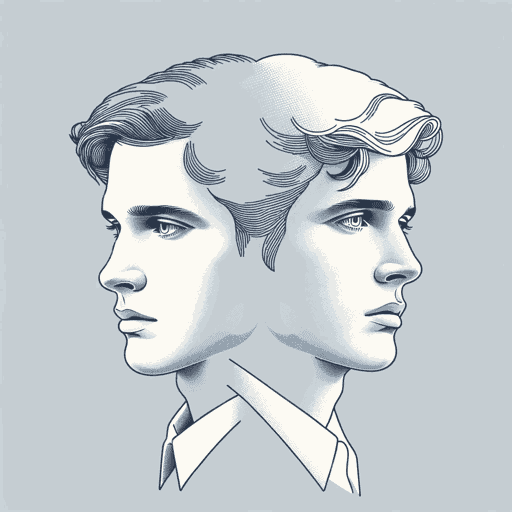
East of Eden
A modern alternative to SparkNotes and CliffsNotes, SuperSummary offers high-quality Study Guides with detailed chapter summaries and analysis of major themes, characters, and more.
Summaries & Analyses
Author Insights
Quizzes
NEWReading Tools
Games
Character Analysis
Content Warning: This section of the guide includes discussion of gender discrimination, racism, emotional abuse, death by suicide, and death.
Adam Trask
Adam Trask is the older half-brother of Charles Trask, the father of Caleb and Aron Trask, and the son of Cyrus Trask. He mirrors the biblical Adam in many obvious ways. He shares a name with Adam and is known for his sweet disposition, just like the biblical Adam. Adam Trask is seduced and nearly defeated by a driven woman, just as the Bible depicts Adam being persuaded into disobeying God by following Eve.
Adam’s flaws are also his best qualities. He’s kind to others, wishes no one ill will, and acts as a godlike figure to Cal and Aron. Although this gives him a reputation for being nice, he’s also foolish, easily manipulated, and forced into situations he doesn’t want. Adam’s chief flaw is his arbitrary preference for Aron over Cal. At the end of the story, Adam dies but gives his son Cal his blessing (and breaks the Trask family curse) before passing on.
Charles Trask
Adam’s younger half-brother, Charles Trask, is the first character Steinbeck uses to question beliefs about good and evil. Charles can’t control his anger, but that bad quality doesn’t make him a bad person. He’s capable of killing in a fit of anger, and he sleeps with his brother’s wife. However, he’s meticulously good at farming his land, he’s honest with himself and his brother about the world, and he doesn’t want to cause hurt or stress to others. He’s generous with his brother, Adam, who gives Charles little to nothing in return. Their father, Cyrus, rejects Charles, and that trauma informs much of how he understands his role in the world. Charles personifies Cain in that he’s an excellent farmer and has a dark scar on his forehead. However, Charles doesn’t kill his brother and even helps him achieve his goal of moving to California. Charles both is and isn’t Cain.
Lee
Adam Trask’s cook-turned-babysitter and good friend, Lee, is the story’s moral compass. Both a foreigner and the character who most embodies the American ethos, Lee can weave into many seemingly disparate roles. He’s therefore the glue that holds the Trasks together. In addition, Steinbeck uses Lee to critique racism. Although he’s American born and raised, as well as intelligent and kind, he’s often the subject of harmful racial slurs and assumptions. As the character who discovers the concept of timshel, Lee establishes and spreads the novel’s main theme. However, true to his discovery of timshel, Lee doesn’t let others interfere in his happiness. Lee is subversive and is crucial to the story in that he gets Adam back on track—and cares for Cal and Aron throughout their infancy and well into their adolescence.
Samuel Hamilton
Samuel Hamilton is a poor but happy man who lives on the wrong side of King City. Although he works hard and is brilliantly inventive, he remains in poverty because of his over-generous personality. An Irish immigrant, Samuel is happy to own land, even if it’s unfarmable, and he’s a proud father and devoted husband. Samuel brings a loveable sense of humor to the book. When he discovers that Lee is a philosophical genius, he encourages Lee to be himself unabashedly. In addition, Samuel intervenes when Adam refuses to get over Cathy’s abandonment. Samuel is gentle yet strong and has a firm moral code. The narrator identifies the ideal person as one who has learned how to balance good and bad and who leaves behind love in the wake of his death. That person is Samuel Hamilton.
Cathy Ames (Kate)
Cathy Ames is the central antagonist in East of Eden. The author depicts her as an inherently ruthless and selfish person who can do nothing to change her nature. She doesn’t realize how immoral she is because in her worldview she’s simply stronger, smarter, and more capable than others. She lacks empathy for other people because she’s ashamed of their weaknesses. An expert manipulator, Cathy always angles to assert power over others. In keeping with misogynistic interpretations of the Bible, Cathy represents the role of Eve in this retelling of the Book of Genesis: Eve eats the apple from the Tree of Knowledge and convinces her husband, Adam, into disobeying God as well. So too does Cathy lead her Adam astray, although he eventually prevails against her. Cathy abandons her children, Aron and Caleb, but their return into her life decades later is her undoing. Cathy lacks the ability to feel sympathy for others, and the author affords no sympathy for her desire not to be tied down to anything or anyone. This desire for independence was feared in women in the early 1900s. In her own way, the biblical Eve was subversive. She desired knowledge that God withheld from her, and although she was severely punished for it, Eve chose to practice timshel. Similarly, Cathy’s business acumen, sense of violence, and lack of care for others are masculine traits, which subvert the feminine norm. Cathy wants freedom in its absolute form, but the escalating paranoia and isolation that lead to her death reveal that living only to serve oneself can’t bring peace. In the end, Cathy’s characterization is shaped by a self-fulfilling prophecy: Because she believes humans are innately bad, she gives into her own selfish and harmful impulses, ultimately causing her own destruction.
Aron Trask
Aron Trask is the twin brother of Caleb (Cal) Trask and the son of Cathy Ames and Adam Trask (or Charles Trask, if Cathy’s claim is true). One of two central characters in Part 4, Aron takes after Adam in that he’s fair-skinned, beautiful, and blond—and in that he inspires love in others without doing anything to earn it. He’s nice to everyone and doesn’t struggle with himself until late in high school. He and Cal love one another, but he’s a foil for Cal, who struggles to match Aron’s ability to get and give love. Although Aron is kind and good, that goodness paves the way for his naivete. He projects a desire for the world to be a beautiful place, which sets him up for terrible disappointment. Because Aron can’t see the world for what it truly is, his “good” quality ends up being his downfall.
Caleb Trask
Aron’s twin brother, Caleb (or Cal) Trask is a central character in Part 4. As the novel’s ultimate protagonist, Cal embodies the honest struggle between good and evil—which he resolves by embracing timshel. Much more layered than his father, Adam, Cal is in constant self-reflection about his place in the world and his effect on it. He knows he can be mean but doesn’t want to be. His meanness comes out of his hurt. Growing up motherless and largely fatherless because Adam left the childcare to Lee, Cal spends most of his life unaware of what it feels like to be loved. He’s darker than Aron and resembles Charles, which aligns him with Cain. Cal both loves deeply and hates fiercely, unlike his counterparts Charles and Cathy. Cal wants to do good in the world but has difficulty managing resentment. He finds love in Lee, in Abra, and eventually in his father, Adam. Cal’s character arc represents the potential for human development. Cal is the novel’s most relatable character, as he struggles with self-hatred, shame, humiliation, and the desire to assert control over his life. He exemplifies all the novel’s main themes—and the actions and reflections that allow the story to reach its climax and resolution.
The Narrator
The grandson of Samuel Hamilton is the story’s narrator. Obviously representing the author, John Steinbeck, the narrator begins each section by providing historical context and philosophical wonderings that inform the plot. The narrator invites thought about the complexities of good and evil. He advances Steinbeck’s plot and themes by explaining historical moments and posing thoughtful questions. In addition, the narrator enables Steinbeck to reinforce how this is a story like other stories. The narrator is omniscient for all characters but Cathy, whose third-person limited narration signifies her unapproachability and the difficulties of understanding a person so self-centered. The narrator questions himself and criticizes his society but ultimately conveys a message of hope and progress for each individual human being.

Unlock analysis of every major character
Get a detailed breakdown of each character’s role, motivations, and development.
- Explore in-depth profiles for every important character
- Trace character arcs, turning points, and relationships
- Connect characters to key themes and plot points
Related Titles
By John Steinbeck















Featured Collections
American Literature
View Collection
Family
View Collection
Good & Evil
View Collection
Historical Fiction
View Collection
Nobel Laureates in Literature
View Collection
Realistic Fiction (High School)
View Collection
Religion & Spirituality
View Collection
Valentine's Day Reads: The Theme of Love
View Collection