Fear the Flames
A modern alternative to SparkNotes and CliffsNotes, SuperSummary offers high-quality Study Guides with detailed chapter summaries and analysis of major themes, characters, and more.
Summaries & Analyses
Quizzes
NEWReading Tools
Symbols & Motifs
Content Warning: This section of the guide includes discussion of death, graphic violence, child abuse, gender discrimination, and animal cruelty.
The Dragons
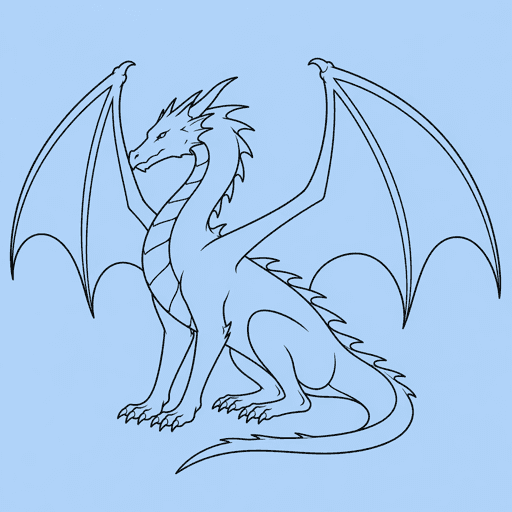
The five dragons are the novel’s central symbol, representing Elowen’s true, untamed self that the story’s patriarchal figures seek to control. Their imprisonment mirrors her own, making their liberation synonymous with her quest for agency. Darling establishes this shared trauma from the Prologue: “Shackles were locked around the princess’s wrists, and the dragons were plucked from the air and shoved into cages when they refused to leave her side” (4). This parallel highlights the ways that Elowen and her dragons are both impacted by King Garrick’s fear of unmanageable female power. The literal chains on the dragons and the psychological chains of Elowen’s captivity reinforce the theme of Reclaiming Agency After Trauma and Captivity. By freeing them, Elowen liberates her soul, which was violently suppressed but never broken. Her reunion with the dragons marks the ultimate reclamation of her identity, power, and birthright from the patriarchal system that tried to destroy her.
The dragons are also the catalyst for the novel’s main political and romantic plotlines. Garrick’s desire to control them and Cayden’s need for them in the war against Imirath position Elowen as a pivotal player on the continent. Her alliance with Cayden is built upon the shared objective of freeing the dragons in exchange for Elowen’s military support. This vengeance-based pact evolves into a deep personal bond, illustrating the theme of The Intersection of Political Alliance and Personal Desire. Ultimately, the dragons symbolize that Elowen’s personal power is inherently political. By unleashing them, she not only reclaims her own soul but also unleashes a revolutionary force destined to shatter the existing patriarchal order and reshape the world.
Blades
Blades function as a motif representing Reclaiming Agency After Trauma and Captivity. When Elowen is separated from her dragons, knives become the tools she uses to survive and redefine herself. They’re a tangible manifestation of her transformation into a self-made weapon after her escape from Imirath’s dungeons. After receiving her first knife, she makes a vow “that [she] w[ill] never be helpless again” (49). This commitment is directly tied to her constant training with blades, which becomes a ritual of reclaiming the control that was stolen from her. The knives are an extension of the identity she built in Aestilian, a constant, physical reminder of her resilience and her capacity for violence as a means of survival and vengeance. Blades represent the agency she had to earn, contrasting with the innate magical power the dragons provide.
In addition, blades contribute to Elowen and Cayden’s relationship because their alliance is built upon the common ground of violence and pragmatism. Cayden, a feared warlord, is defined by his sword, just as Elowen is by her knives. Like the protagonist, he’s shaped by childhood trauma caused by King Garrick’s cruelty, and he regains a sense of control over his life by attaining the combat prowess to protect himself and reshape Ravaryn’s corrupt political order. Darling emphasizes the key role of violence and vengeance in bringing the central couple together through the vows they pledge to one another on their respective weapons. Cayden declares, “My sword is yours,” to which Elowen replies, “My knives and dragon fire are yours” (32). Their shared proficiency with blades is the initial language of trust between them, forming the foundation for their complex relationship. Blades’ thematic significance contributes to the romantasy’s dark tone, the protagonist’s journey toward healing, and her bond with her love interest.
Fire
The recurring motif of fire is central to the novel’s exploration of Female Power as a Threat to Patriarchal Control. The book’s title, Fear the Flames, immediately establishes the motif’s importance. The prophecy that frames the narrative states that Elowen’s soul is “forged from the fire of the gods” (4), marking her as a primal force with the potential for both creation and destruction. Her father fears this elemental power and attempts to extinguish it by imprisoning her. The author develops the motif through the dragons’ literal flames as well as Elowen’s passionate spirit, her capacity for burning rage, and the transformative essence of her journey from a suppressed princess to a vengeful queen.
The motif’s significance is reinforced through other characters’ recognition of Elowen’s fiery nature. The fire cult’s high priestess anoints her the “Queen of Flames,” acknowledging her mythic power, and charges her to “[m]ake [her enemies] fear the flames of a queen” (39). This instruction calls upon Elowen to embrace her power and righteous anger as weapons. Ultimately, flames bring together her personal identity and her political destiny. When she commands her dragons to burn her enemies, she is weaponizing her inner fire. By embracing this motif, Elowen transforms a force that was used to justify her subjugation into the very instrument of her liberation and her revolution against the patriarchal order.

Unlock the meaning behind every key symbol & motif
See how recurring imagery, objects, and ideas shape the narrative.
- Explore how the author builds meaning through symbolism
- Understand what symbols & motifs represent in the text
- Connect recurring ideas to themes, characters, and events