Good People
Good People
A modern alternative to SparkNotes and CliffsNotes, SuperSummary offers high-quality Study Guides with detailed chapter summaries and analysis of major themes, characters, and more.
Summaries & Analyses
Author Insights
Quizzes
NEWReading Tools
Part 2, Chapter 41-Part 3Chapter Summaries & Analyses
Content Warning: This section of the guide includes discussion of death, emotional abuse, bullying, suicidal ideation, and racism.
Part 2: “Things Secret and Open” - Part 3: “In the Garden”
Part 2, Chapter 41 Summary: “Torpekey Rasul, Sharaf Family Friend”
Torpekey judges Zorah for dating a non-Afghan South Asian American. Zorah’s boyfriend worked at a restaurant near the airport. Torpekey insinuates that Zorah used Rahmat’s money to buy her boyfriend new clothes, making him look as wealthy as her.
Part 2, Chapter 42 Summary: “Asma Sarwary, Sharaf Family Friend”
Asma remembers calling Maryam with the intention of finding out whether she approved of Zorah’s boyfriend. She concluded that Maryam knew nothing about him.
Part 2, Chapter 43 Summary: “Sara Bashar, Cousin of Maryam Sharaf’s”
According to Sara, various people started calling Maryam’s house to mock her over her daughter’s behavior. Maryam withheld these calls from Rahmat, fearing how he might react. She confessed her anxieties to Omer, who assured her that he would take care of the calls.
Part 2, Chapter 44 Summary: “Tim Ashburn, Investigative Reporter, Fairfax County Register”
Ashburn reports that on August 27, Zorah and her boyfriend, Sahil Rafique, visited a mall in a neighboring county to avoid bumping into anyone they knew. However, they learned that they were being followed by Omer, who followed them after Sahil picked Zorah up at the library, where she was expected to be all afternoon. Omer confronted them, ordered Sahil to leave Zorah alone, and brought Zorah home.
Part 2, Chapter 45 Summary: “Zarghoona Hamdard, Sharaf Family Friend”
Zarghoona claims that Americans are too accepting of teen dating, especially considering how often this leads to teen pregnancy. Nevertheless, Americans consider Afghans “barbarians” for teaching their daughters to stay away from boys while they’re young. Maryam and Zorah’s relationship was framed this way in the media, making it appear as though Maryam had imprisoned her daughter. Zarghoona defends Maryam’s actions, knowing that she was trying to prevent Zorah from making mistakes with Sahil.
Part 2, Chapter 46 Summary: “Fiona Dressler, Friend of Zorah Sharaf’s”
After returning from France, Fiona tried to meet up with Zorah. Zorah gave non-committal responses and eventually stopped replying to her invitations to hang out. On the first day of senior year, Zorah approached Fiona for a favor: She needed Fiona to buy her a secret phone to replace the one her parents had confiscated. Zorah explained how her parents had imposed stricter measures on her after catching her with Sahil. She then gave Fiona jewelry to pawn to finance the new phone. Fiona was reluctant to indulge Zorah’s request. This strained relations between them.
Part 2, Chapter 47 Summary: “Sara Bashar, Cousin of Maryam Sharaf’s”
Zorah turned belligerent against Maryam, professing that she would marry Sahil. Worried that Zorah might try to harm someone, Maryam finally confessed the situation to Rahmat. Rahmat wept as he confronted Zorah and professed his disappointment. Zorah insisted on marrying Sahil. Rahmat responded by grounding her and restricting her privileges.
Part 2, Chapter 48 Summary: “Aziza Popal, Sharaf Family Friend”
Aziza explains that Rahmat took whatever opportunities he had left to save his family’s reputation.
Part 2, Chapter 49 Summary: “Kathleen Graham, Principal, Theodore Roosevelt High School”
Principal Graham references an October incident in which accusations were made against the school, but she refuses to discuss it further.
Part 2, Chapter 50 Summary: “Patrick Delaney, Security Director, Theodore Roosevelt High School”
The school security director, Patrick Delaney, discusses the challenges of his job. He claims that teens have bloated egos that make them perform rash actions in service of misguided ideals. Though the school has instituted various measures to prevent the students from engaging in these actions, the school respects their autonomy. In this context, Delaney discusses the incident that occurred in October. Rahmat accused the school administration of failing to protect Zorah. An investigation found that Zorah left school without permission one day and ran away with Sahil. Delaney defended the school, claiming that it wasn’t its responsibility to stop Zorah if she left of her own volition.
Part 2, Chapter 51 Summary: “Torpekey Rasul, Sharaf Family Friend”
Torpekey believes that Zorah planned to escape her parents’ control, leveraging xenophobia against Afghan immigrants to make people believe that she was experiencing abuse.
Part 2, Chapter 52 Summary: “Tim Ashburn, Investigative Reporter, Fairfax County Register”
Ashburn reports that on October 25, Zorah entered a hospital emergency room claiming that she had attempted to die by suicide because of her parents’ abusive punishments, which she said included ostracizing her from her siblings and verbally shaming her. After receiving treatment, Zorah told a social worker that she was afraid of returning home. The social worker turned her over to Child Protective Services.
Part 2, Chapter 53 Summary: “Margaret Hoffman, Former Sharaf Family Neighbor”
Margaret recalls the police coming to the Sharaf residence one night.
Part 2, Chapter 54 Summary: “Noreen Stewart, Former Casework Assistant, Hope House”
Noreen Stewart shares the history of her work with Zorah at Hope House, the women’s shelter that Child Protective Services placed her in. When Zorah insisted that her boyfriend would pick her up, Noreen warned her that she would have to call the police to bring her back. Zorah relented and stayed in Hope House for a month, though she resented her living situation and acted out in response. Noreen remembers that Zorah would often come to her office to talk at night. Noreen tried to discourage Zorah’s fantasies of marrying as a teen. One day, Zorah suddenly stopped living at Hope House.
Part 2, Chapter 55 Summary: “John Masterman, Attorney, Buchanan, Rooney & Masterman, LLP”
Rahmat consulted Attorney John Masterman to discuss regaining legal custody of Zorah and suing Sahil. Based on the facts of Rahmat’s situation, Masterman concluded that there was nothing they could do, especially since Zorah had just turned 18 and was living with Sahil of her own volition.
Part 2, Chapter 56 Summary: “Asma Sarwary, Sharaf Family Friend”
Maryam and Rahmat hid Zorah’s absence from their peers, though most people suspected the truth anyway. At one point, Zarghoona’s son visited the restaurant where Sahil worked and accused him of trying to steal Afghan girls. Sahil was unfazed.
Part 2, Chapter 57 Summary: “Zaman Mukul, Owner, Khantap Mediterranean Grill”
Zaman Mukul, owner of the restaurant where Sahil worked, recalls the day when Rahmat and Omer came to confront Sahil. When Zaman confronted the men, Rahmat explained that Sahil had kidnapped his daughter. Although Zaman disliked Sahil, he knew he couldn’t force him to give Zorah up. The police arrived and forced the Sharaf men to stay away from Sahil. After closing that day, Zaman dismissed Sahil, indicating that he didn’t want Sahil’s personal problems to affect the restaurant’s reputation.
Part 2, Chapter 58 Summary: “Nader Khan, Sharaf Family Friend”
Nader believes that in Afghanistan, the whole community would have mobbed Sahil to support Rahmat. In the US, however, Rahmat found no support from his community and was instead blamed for his problems.
Part 2, Chapter 59 Summary: “Torpekey Rasul, Sharaf Family Friend”
The Sharaf family began to withdraw from social events, leading some to suspect that they had left Virginia. One day, however, Torpekey saw a distraught-looking Maryam at a grocery store in a neighboring county. When Maryam saw Torpekey, she ran off, leaving Torpekey shaken.
Part 2, Chapter 60 Summary: “Ustad Khairyar, Sharaf Family Friend”
Ustad comments that despite his wealth, Rahmat lived in complete humiliation because of Zorah.
Part 2, Chapter 61 Summary: “Tim Ashburn, Investigative Reporter, Fairfax County Register”
Ashburn explains that little is known about the period in which Zorah lived with Sahil. Sahil has likely refused to discuss this period out of fear that it would implicate himself in Zorah’s case, endangering him as an undocumented immigrant.
Part 2, Chapter 62 Summary: “Fiona Dressler, Friend of Zorah Sharaf’s”
Sometime after her falling out with Zorah, Fiona was called to the principal’s office to speak to the police. Fiona confessed everything about Zorah in the last days of their friendship. When Fiona told her parents about what happened, they went to the school and complained about Fiona’s interrogation; they then discouraged her from associating with people like Zorah.
Fiona occasionally thought about Zorah. One night, to her surprise, Rahmat came to her house. After explaining that Zorah had run away, Rahmat asked if Fiona could appeal to Zorah on their family’s behalf. This, along with happy memories of Zorah’s family life, changed Fiona’s perception of Rahmat, making her feel sorry for him.
Part 3, Chapter 1 Summary: “Qandi Gul, Sharaf Family Friend”
Qandi comments that the Afghan people are cursed.
Part 3, Chapter 2 Summary: “Lake Shore Register—September 1”
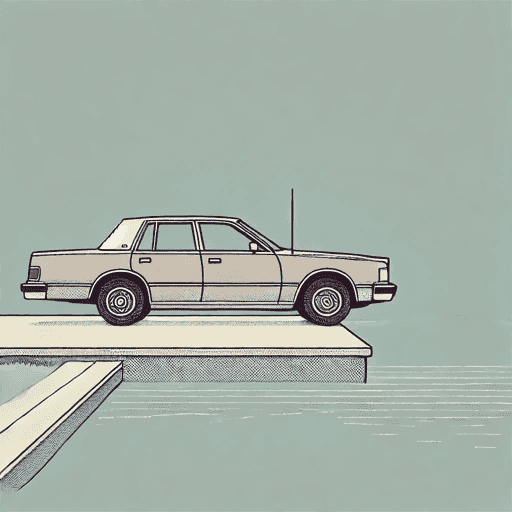
An article reports the discovery of a corpse inside a crashed car but does not confirm the deceased person’s identity.
Part 3, Chapter 3 Summary: “Tim Ashburn, Investigative Reporter, Fairfax County Register”
Ashburn explains that the police blamed several factors for the crash.
Part 3, Chapter 4 Summary: “Elaine Montalvo, Forensic Meteorologist”
Meteorologist Elaine Montalvo reveals that the heaviest rainfall of the year occurred on the night of the car crash.
Part 3, Chapter 5 Summary: “Andrea Young, Collision Reconstruction Engineer”
Engineer Andrea Young explains that the car, Omer’s Mercedes-Benz, was in extreme need of maintenance at the time of the crash. Special attention is given to the car tires, which required replacement.
Part 3, Chapter 6 Summary: “Jeanne Henrichs, Fulton County Resident”
Jeanne Henrichs, a resident who lives near the canal where the crash occurred, explains that the local government repeatedly failed to install safeguards over a hazardous bend of Lake Ridge Road. As a result, many motorists speed down the bend, putting them at severe risk of going off the road and into the canal.
Part 3, Chapter 7 Summary: “Mark Herskovitz, Road Safety Specialist, National Transportation Safety Board”
Mark Herskovitz, a road-safety specialist, discusses the physics of hydroplaning incidents. He says that when motorists lose control over their vehicle due to excessive water on the road, they should ride out the slide trajectory to regain control. Most motorists instinctively brake, which will typically launch the vehicle off the road.
Part 3, Chapter 8 Summary: “Tim Ashburn, Investigative Reporter, Fairfax County Register”
Eyewitness reports link Omer’s car to a speeding vehicle on Lake Ridge Road, though they conflict on the timing of its appearance. It’s possible that the weather conditions contributed to this uncertainty.
Part 3, Chapter 9 Summary: “Qandi Gul, Sharaf Family Friend”
Qandi laments that the US is not paradise.
Part 3, Chapter 10 Summary: “WNVC-Channel 5 News—September 3”
A news report details the Sharaf family’s migration to the US and their efforts to achieve the American dream. On the morning of September 1, the family discovered that Zorah was missing, along with Omer’s keys and car. The police soon found Zorah’s corpse in the car wreckage. Her death was ruled accidental.
Zorah’s high-school community mourns her loss, remembering her as a bright and spirited teenager.
Part 3, Chapter 11 Summary: “Sara Bashar, Cousin of Maryam Sharaf’s”
Sara recounts an earlier incident when Rahmat and Maryam came home and discovered that Zorah had taken her younger siblings to get ice cream using the family car. Despite being grounded, Zorah had been secretly practicing her driving skills around the neighborhood. Zorah’s parents imposed a total ban on her driving privileges and started hiding the keys. By the time she died, Zorah still hadn’t gotten her driving license.
Part 3, Chapter 12 Summary: “Dr. Douglas Bell, Clay County Medical Examiner”
Zorah’s autopsy revealed an abrasion on her temple, suspected to be an injury caused during the car crash. Accidental drowning was listed as her cause of death. No substances of any kind were found in her system.
Part 3, Chapter 13 Summary: “Qandi Gul, Sharaf Family Friend”
Qandi laments that no one can predict their fortunes.
Part 3, Chapter 14 Summary: “Margaret Hoffman, Former Sharaf Family Neighbor”
Margaret laments Zorah’s loss, championing their neighborhood as a place where people are supposed to feel safe and free. After the news of Zorah’s death broke out, Margaret and her neighbors felt the need to do something for the Sharaf family. Unsure of how to extend her sympathies in a way that wouldn’t offend the Sharafs, Margaret chose to do nothing. One day, people started leaving flowers by the Sharaf family’s mailbox, building a community memorial for Zorah.
Part 3, Chapter 15 Summary: “Zarghoona Hamdard, Sharaf Family Friend”
Zarghoona posits that Zorah’s death was inevitable, given the precedent of her behavior.
Part 3, Chapter 16 Summary: “Torpekey Rasul, Sharaf Family Friend”
Torpekey prays to spare parents the suffering of grief and to keep children from wicked behaviors.
Part 3, Chapter 17 Summary: “Ustad Khairyar, Sharaf Family Friend”
Zorah’s burial rites, the jinazah, were performed as soon as the police released her body. Maryam’s intense grief caused her to faint. Rahmat’s peers tried to convince him to continue without Maryam, but Rahmat refused. By the late afternoon, Zorah was finally lowered into her grave. Though Rahmat’s peers worried over Maryam, they neglected to anticipate that Rahmat would attempt to descend into the grave with Zorah. Rahmat’s peers held him back as they tried to finish the jinazah.
Part 3, Chapter 18 Summary: “Imam Inayat Yusuf, Imam, Masjid Al-Noor”
The imam who celebrated Zorah’s jinazah, Inayat Yusuf, shares his attempts to console Rahmat and Maryam in their grief. Maryam repeatedly asked where Zorah was. When Yusuf told her that she was considered a martyr in heaven, Maryam lamented that Zorah had been in the house just a week ago and now lay under dirt. Yusuf professed sympathy with her anguish.
Part 3, Chapter 19 Summary: “Aziza Popal, Sharaf Family Friend”
Aziza shares how their community supported the Sharaf family through their 40 days of grieving. After the 40th day-prayer service, the community returned to their respective lives. The community elders urged the Sharaf family to do the same for the sake of their remaining children.
Part 3, Chapter 20 Summary: “Margaret Hoffman, Former Sharaf Family Neighbor”
Margaret watched as people stopped visiting the Sharaf residence and the Sharaf family tried to restore a sense of normalcy in their lives. The community memorial remained by the mailbox, however, and no one made any attempt to clean it up. Over time, the flowers rotted, turning the memorial into what Margaret calls an “eyesore.” After an October storm scattered the memorial, a garbage truck was forced to dispose of it.
Part 3, Chapter 21 Summary: “Tim Ashburn, Investigative Reporter, Fairfax County Register”
The police concluded their investigation with the theory that Zorah stole Omer’s keys once he had fallen asleep and drove off for a joyride, as American teenagers are prone to doing. The storm worsened driving conditions, making it easy for her to lose control. Had it not rained, Zorah might have survived.
Part 2, Chapter 41-Part 3 Analysis
Part 2’s depiction of the relationship between Zorah and Sahil explores the fissures that can develop when one’s cultural identities come into conflict. In resisting the moral norms of the Afghan American community, Zorah’s relationship represents her defiance of her cultural identity. Sabit goes on to suggest that Zorah’s rebelliousness illustrates her assimilation as an American, developing an irony introduced in Part 2, Chapter 11: “They [the Sharafs] forgot who they were. They tried to be what they weren’t. They became more American than the Americans” (104). Where Saif, the speaker in this passage, suggests that Zorah’s rebelliousness actually stemmed from the Sharafs’ assimilation, not their traditionalism, and thus condemns any break from one’s roots, Sabit doesn’t explicitly state whether such assimilation is good or bad.
In fact, the ambiguity on this point becomes a major point of contention in the debate over whose fault Zorah’s death really is. Part 2, Chapter 45 frames Afghan cultural values as protective measures against harm: “What did Maryam and Sharaf do that was so terrible? What does every parent do? They try to protect their child. So they tried to protect Zorah, so she wouldn’t make mistakes which would affect her whole future” (157). That refugees like the Sharafs have fled death and destruction in Afghanistan, as stated in Part 1, Chapter 1, further contextualizes this protectiveness while challenging The Xenophobia of American Culture, which would dismiss it as mere “barbarism” (in Zarghoona’s words). At the same time, Sabit highlights a xenophobic element in the Afghan American community’s distrust of outsiders. Though it’s, in some ways, a reaction to the xenophobia that they themselves face, this suspiciousness extends to people like Sahil, whose undocumented status places him in a uniquely marginalized and precarious position even in relation to other immigrants. These contradictory currents within Afghan American culture complicate the novel’s moral framework; it’s unclear not only to what extent overprotectiveness fueled Zorah’s rebelliousness but also to what extent that overprotectiveness was justified.
Part 3 unpacks the tragedy of Zorah’s death, explaining the factors that led to it and the community’s reaction. The clinical examination of Zorah’s death leaves little room for uncertainty as to the facts of the accident, but it does leave several gaps as to the motivations for Zorah’s supposed joyride, especially in the context of the weather conditions that exacerbated her driving skills. Instead, the incident is written off as yet another example of Zorah’s rebelliousness, if ultimately a tragic one.
Rahmat and Maryam’s grief manifests in intense displays of emotion, specifically Maryam’s fainting and her questions to the imam and Rahmat’s attempt to climb into the grave. The fixation on Zorah’s grave turns it into a symbol for her parents’ fractured relationship with the American dream. Rahmat and Maryam devoted their lives to pursuing a better life for their children, only for one of them to end up dead. When Rahmat climbed into the grave, he symbolically implied that he wants to join her in the afterlife: Rahmat has lost his sense of purpose in life, knowing that he can no longer witness Zorah grow in happiness and freedom in the US.

Get in-depth, chapter-by-chapter summaries and analysis from our literary experts.
- Grasp challenging concepts with clear, comprehensive explanations
- Revisit key plot points and ideas without rereading the book
- Share impressive insights in classes and book clubs