Good People
Good People
A modern alternative to SparkNotes and CliffsNotes, SuperSummary offers high-quality Study Guides with detailed chapter summaries and analysis of major themes, characters, and more.
Summaries & Analyses
Author Insights
Quizzes
NEWReading Tools
Symbols & Motifs
Content Warning: This section of the guide includes discussion of death, bullying, and racism.
The Canal
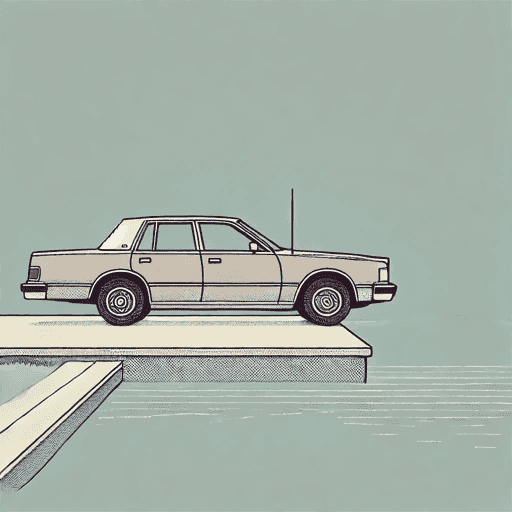
The canal in which Zorah dies functions as a symbol of the unsolvable mystery of her death. The geophysical conditions of the canal mirror the uncertainty regarding what really happened to her.
The canal is located far away from the Sharaf family’s home, making its unfamiliarity its defining feature. The fact that Zorah stumbles upon the canal during an extended detour in a family trip suggests that she is never meant to pass by that canal in the first place, lending both practical and symbolic credence to the interpretation of her death as accidental. Moreover, the canal exists alongside a stretch of road that is known for its hazardous shape, putting many motorists at risk when they use the road as a shortcut. The initial investigation thus suggests that Zorah’s lack of awareness of this road’s hazardous features, along with her lack of experience as a driver and the poor weather conditions, all contribute to her fatal car crash.
At the same time, the submergence of the car in the water symbolically points to the absence of clear physical evidence as to the causes of the crash. No one clearly witnesses the car going into the water. When the car is discovered the following day, the people using the canal gate initially don’t realize that there’s a car underneath until one of them dives down to inspect the blockage. Their shared confusion over the discovery, as well as the police’s subsequent inability to provide an explanation for what happened, drives the mystery of Zorah’s death and foreshadows the lack of resolution surrounding it.
The Sharaf Residence
The Sharaf residence is a symbol related to themes of both Social Status and the Fear of Public Opinion and The Xenophobia of American Culture. Initially, it functions as a status symbol marking Rahmat and his family’s achievement of the “American dream.” The house’s location in Riverside, one of Virginia’s most exclusive neighborhoods, speaks to the Sharafs’ elevation to the ranks of wealthy Americans, setting them apart from their peers in the Afghan immigrant community.
However, though the Sharafs reside in Riverside, there exists the sense that they live apart from their neighbors. Even Margaret Hoffman, who speaks positively about the Sharafs, remains distanced from them. Her confusion over how to extend her condolences to the Sharafs while they grieve over the loss of Zorah speaks to the gap between them, which is fostered by cultural differences. The press harassment of the Sharaf family at their home develops this symbolism further, as it illustrates the media’s willingness to violate the family’s privacy, even despite their supposed status. Ultimately, the Sharaf family’s departure from the house signals their resignation to American society’s ostracism of them. They cannot keep living in their Riverside house without facing ongoing suspicion regarding their role in Zorah’s death. The only way to escape the scrutiny is to disappear, though this entails surrendering the symbol of their achievement—a symbolic commentary on the difficulty of achieving lasting success as an immigrant.
Zorah’s Grave
Zorah’s grave functions both as a memorial to the tragedy of Zorah’s death and as a symbol of the Sharafs’ tainted American dream. Rahmat and Maryam moved from Afghanistan to the US in the hopes of giving Omer and their future children better lives, sparing them the death and destruction brought about by war. When Zorah eventually dies in the US, Rahmat recognizes the irony of having come to the country at all: “I should have stayed in Kabul and let the rockets finish us. At least then we would have all died one time, together, instead of dying like this, every day” (295).
Rahmat’s observation illuminates his actions on the day of Zorah’s burial. After Zorah is lowered into the grave, Rahmat attempts to climb in with the intention of being buried with her. This represents Rahmat’s abandonment of the joys and liberties promised by the American dream. In his relentless pursuit of this ideal, Rahmat made choices that eventually led to the death of his daughter.

Unlock the meaning behind every key symbol & motif
See how recurring imagery, objects, and ideas shape the narrative.
- Explore how the author builds meaning through symbolism
- Understand what symbols & motifs represent in the text
- Connect recurring ideas to themes, characters, and events