Homecoming
Homecoming
A modern alternative to SparkNotes and CliffsNotes, SuperSummary offers high-quality Study Guides with detailed chapter summaries and analysis of major themes, characters, and more.
Themes
Tensions Between the Working Class and the Upper Class
In “Homecoming,” Alvarez explores the conflict between the people who own a sugar cane ranch and the people who work on it. The former includes the speaker’s uncle, who is referred to as only Tio (uncle in Spanish), and his daughter, the bride Carmen. The latter includes “the guards” (Line 1), “workmen” (Line 17), and “maids” (Line 38). The upper-class owners of the ranch rely on their working-class employees for their income, comfort, and entertainment.
The people who work in sugar cane fields are subject to dangerous conditions. The speaker has a vision that “fields around [them] were burning” (Line 56) during the wedding party. Sugar cane being burned during the harvest is one of many workplace hazards. The industry originally used enslaved laborers to produce sugar. Even in the 2020s, forced labor and child labor have been used in harvesting sugar cane (Coto, Dánica. “U.S. to detain Dominican sugar import amid accusations of forced labor.” PBS, 2022).
The speaker does not become educated about exploitative labor conditions until they attend college. However, their education was funded by exploitative labor: “I took the courses that would change my mind / in schools paid for by sugar from the fields around us” (Lines 46-47). The working-class employees make it possible for their upper-class employers to obtain college degrees. These degrees often, especially in the case of the speaker, make it possible to work in places that are less dangerous, and more ethical, than sugar cane ranches.
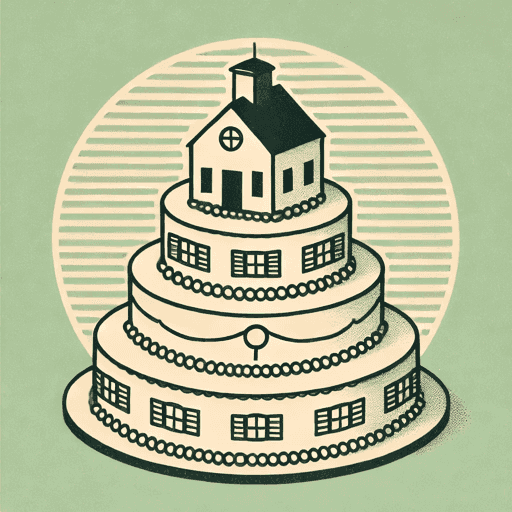
The central symbol of the wedding cake epitomizes class tension. The sugar harvest from the “family rancho” (Line 20) is partially used to create Carmen’s cake, which is a miniature version of the ranch. The upper-class guests have gorged themselves on the entrees and drinks, purchased with the profits from the fields, but not made from the sugar their ranch produces. They have no room to eat the miniature ranch. This illustrates how they are disconnected, or alienated, from the labor that runs the ranch, as well as what it produces. However, the people closer to the ranch—the ones that work in it—eat the food made from the sugar they harvest. They labor to produce the sugar and appreciate the difficulty of their labor and the products made from it more than their employees do.
Gendered Entitlement to Places and Bodies
Alvarez explores how upper-class men like Tio feel entitled to land, laborers, and women’s bodies. This is illustrated by what Tio says and does to the speaker on the dance floor.
Physically, Tio touches the speaker inappropriately. The speaker says he was “fondling my shoulder blades beneath my bridesmaid’s gown / as if they were breasts” (Lines 12-13). Tio uses his hands in an incestuous manner. He abuses his power as the host, an elder, and possibly the wealthiest person at the wedding. Tio holds much of his power because he is a man, and with his power, he views women as if he owns them. The speaker describes how he was “pressing himself into my dress” (Line 41). Both moments of inappropriate touching are connected with the speaker’s clothing. The “gown” offers only a minimal barrier between Tio’s body and the speaker’s. It is a stereotypically feminine item of clothing, identifying the speaker as part of the bride’s wedding party, or a collection of women (bridesmaids). As the father of the bride, Tio probably purchased the gown that the speaker wears, and this makes him feel entitled to touch it inappropriately.
Tio identifies the speaker as a member of the upper class. For example, he tells the speaker that all of the ranch belongs to them. He repeats versions of “all this is yours!” (Line 16) both times he touches the speaker inappropriately. Fondling and pressing are accompanied by his statement that the speaker owns the land and is in charge of the employees. Tio feels possessive of the speaker and wants them to side with him as a male authority figure. Being on his side means feeling like they own the people they see around them. The speaker is subservient to him. However, everyone who works on the ranch, he insists, should be subservient to the speaker because they are of a lower socioeconomic class. To feel possessive of these people and this place means being complicit in dangerous labor practices and acknowledging Tio’s gendered power.
Intersections Between Caribbean and US Cultures
The speaker returns to the Dominican Republic after living in Vermont. The poem contrasts and compares the groom’s family from Minnesota with the bride’s Caribbean family as they dance at the wedding.
The speaker leaving the Caribbean and coming back changes the way they dance. Their uncle says the speaker’s “merengue had lost its Caribbean” (Line 29). The speaker has picked up a more Caucasian way of dancing. Merengue is known for being from the Dominican Republic and spreading throughout North America from there. Large dance studio chains like Arthur Murray and Fred Astaire, which were founded and primarily operate in the United States, teach a version of merengue that diverges from how people dance it in the Caribbean. Dancers refer to American ballroom dances, especially those in DanceSport competitions, as sanitized and standardized versions of dances that originated outside of the US. To dance more Caribbean can mean including more improvisation, as well as more sensuality. The speaker, in picking up American techniques and tendencies in their dancing, might be view by people like Tio as becoming more American and losing their culture after moving away.
The groom’s Minnesotan family performs an American dance. They “broke loose and danced a Charleston / and were pronounced good gringos with latino hearts” (Lines 34-35). Feeling free enough to dance is part of Caribbean culture, according to the wedding guests. The Charleston is a dance that white Americans learned from Black people and became popular in the Roaring Jazz Age, or the 1920s. Enslaved African American people danced juba, which evolved into the Charleston. This evolution can be compared with how enslaved Dominicans influenced merengue. There are similarities in the cultural dances of the US and the Dominican Republic, as well as differences in how they are performed.

Unlock every key theme and why it matters
Get in-depth breakdowns of the book’s main ideas and how they connect and evolve.
- Explore how themes develop throughout the text
- Connect themes to characters, events, and symbols
- Support essays and discussions with thematic evidence