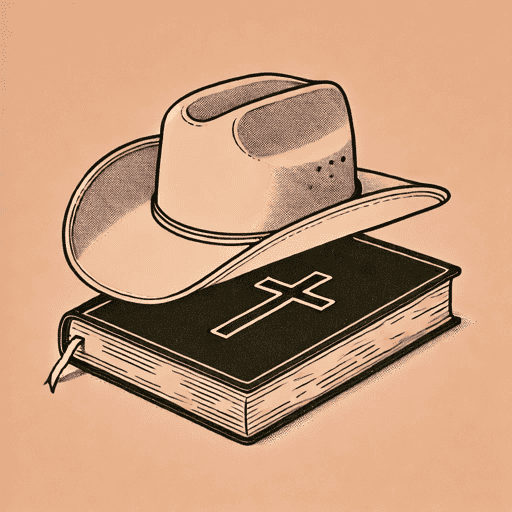
Jesus and John Wayne: How White Evangelicals Corrupted a Faith and Fractured a Nation
Jesus and John Wayne: How White Evangelicals Corrupted a Faith and Fractured a Nation
A modern alternative to SparkNotes and CliffsNotes, SuperSummary offers high-quality Study Guides with detailed chapter summaries and analysis of major themes, characters, and more.
Summaries & Analyses
Quizzes
NEWReading Tools
Key Figures
Kristin Kobes Du Mez
The author of Jesus and John Wayne: How White Evangelicals Corrupted a Faith and Fractured a Nation, Kristin Kobes Du Mez is a historian. She is a native of the town of Sioux Center in northwest Iowa, where she also attended Dordt College (now Dordt University), an evangelical Christian university, as an undergraduate. She received a BA in history and Germany and then earned a MA and a PhD in history from the University of Notre Dame. Currently, she is a professor of History at Calvin University in Grand Rapids, Michigan, and a Research Fellow at the University of Notre Dame’s Center for Philosophy of Religion. She specializes in the recent history of women, religion, and political movements in the US. Her other publication is A Gospel for Women: Katharine Bushnell and the Challenge of Christian Feminism, a biography of female doctor, Christian theologian, and social activist Katharine Bushnell published in 2015. Also, she has written articles on religion and politics for the BBC, Religion News Service, and the New York Times, among other outfits.
Du Mez has been outspoken about the influence that conservative evangelical culture has had over US politics, arguing that this influence has been detrimental to American democracy in general. In fact, Du Mez views sexual abuse scandals in right-wing evangelical spaces, threats to democracy, patriarchy, and Christian nationalism as interconnected developments. In an interview published in Sojourners, Du Mez stated:
It is […] a profound problem inside evangelical spaces and linked to this Christian nationalist vision, which ups the stakes for everything [in their minds]. If Christianity is “under attack,” if Christians are “under siege,” if the ends will always justify the means, then you have to [protect] that bond aggressively. You have to defeat them before they defeat you” (Atencio, Mitchell. “Kristin Kobes Du Mez: Christian Patriarchy and Christian Nationalism Are Intertwined.” Sojourners, 29 Oct. 2024).
As Du Mez suggests throughout Jesus and John Wayne, if a group is motivated by a need to protect the nation and the proper roles of the family from outside threats, then any criticism or attempt to reform the group will be perceived as an existential threat, no matter how valid or grounded the critique is.
Donald Trump
The 45th and 47th US president, Donald Trump is an American media personality, businessman, and politician. As Du Mez notes, his political candidacy was embraced by the Religious Right even though his statements often seem contradictory to Christian views. His book The Art of the Deal is effectively a manifesto for his beliefs and ideas and strives to bolster Trump’s public persona. His hotels and casinos are grand displays of wealth and luxury that use the Trump name to project an image of business success. Trump considers himself genetically predisposed to make deals, and dealmaking is a fundamental part of his public persona. The Trump brand is always at the heart of everything he does.
Jerry Falwell
Televangelist Jerry Falwell (1933-2007) was the founding pastor of a Baptist megachurch in Lynchburg, Virginia, and in 1979 cofounded the Moral Majority political lobby for evangelicals. The Moral Majority was instrumental in electing Ronald Reagan in the 1980 presidential election, largely by using television ads to characterize Jimmy Carter as un-Christian. After the 9/11 attacks, Falwell famously took issue with “pagan” American citizens (those who are gay, pro-abortion, and feminist) for contributing to an atmosphere that enabled the attacks. Over the years, some critics have noted that to attract more followers, Falwell softened his stance from outright Christian patriarchy to the “complementarian” lifestyle that Du Mez notes in her book.
Barack Obama
The 44th US president, Barack Obama is a devout Christian, but some evangelicals saw him as a threat because he was Black and thus represented a deviation from the ideal leader. Thus, conservative evangelicals promoted a conspiracy theory that he was a Black Muslim and was not a natural US citizen. Du Mez notes that Obama successfully sought support from moderate evangelicals, however, and served two terms. His presidency shows that the dominance of the Religious Right is not inevitable.

Unlock analysis of every key figure
Get a detailed breakdown of each key figure’s role and motivations.
- Explore in-depth profiles for every key figure
- Trace key figures’ turning points and relationships
- Connect important figures to a book’s themes and key ideas