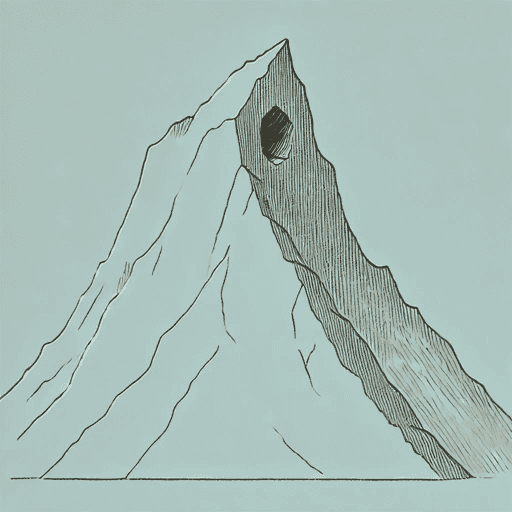
Kneeknock Rise
41 pages • 1-hour read
Natalie BabbittKneeknock Rise
A modern alternative to SparkNotes and CliffsNotes, SuperSummary offers high-quality Study Guides with detailed chapter summaries and analysis of major themes, characters, and more.
Important Quotes
“Here lay the heart of the mountains’ charm; here, like Eve’s forbidden fruit, dwelt their mystery, for good or evil.”
(Page 4)
This simile alludes to the Biblical story of the Garden of Eden, establishing the mountains as both alluring and dangerous, much like the apple of knowledge. The reference to “Eve’s forbidden fruit” creates a thematic link between the villagers’ belief in the Megrimum and religious faith, situating The Pain of Knowledge Versus the Comfort of Ignorance as a central theme in the story. The duality of good and evil heightens tension, suggesting that the consequences of uncovering the truth are undesirable or even dangerous. The prose is poetic and layered with alliteration, creating a mystical tone.
“The creature had mourned there for a thousand years, in isolation so splendid, and with sorrows so infinitely greater than any of their own, that the people were struck with awe and respect.”
(Page 5)
The hyperbolic chronology reflects how folklore exaggerates truth and preserves mystery across generations. The phrase “isolation so splendid” deepens the symbolism of the Megrimum as a representation of human sorrow. The people’s awe and respect show that the creature functions less as a monster and more as a mystical touchstone for their collective identity, reinforcing The Need for Mystery in Everyday Life. This mythical introduction creates tension between imagination and reality.
“When Egan arrived at last, he was tired and dusty and somehow resentful of the somber thrust of the cliff that had loomed larger and larger as the cart jolted over the fields toward Instep.”
(Page 11)
This passage highlights Egan’s emotional state, using the external imagery of the cliff to mirror his discomfort and create a tone of unease, foreshadowing the influence Kneeknock Rise will have on Egan’s journey. The idea of resentment introduces early tension between Egan and the town’s beliefs, hinting at a conflict between logic and communal superstition.
“Around her neck a thick roll of extra flesh fanned out soft fur into a deep, inviting ruffle and her ears drooped like rich brown velvet triangles.”
(Page 21)
This detailed, multisensory description of Annabelle emphasizes the dog’s emotional importance and symbolic weight in the narrative. The imagery personifies her as a comforting, loyal companion. The attention to texture and detail highlights Egan’s instant affection for her, emphasizing his need for connection in an unfamiliar place. Annabelle later becomes a symbol of Egan’s connection to Uncle Ott and their shared desire for truth.
“Cats are supposed to kill Kneeknock birds. The Megrimum wants them to.”
(Page 26)
The villagers’ belief illustrates how superstition allows the community to make sense of their world with imaginative reasoning. The personification of the Megrimum reflects how fear can give myth power. This kind of logic reveals the community’s reliance on storytelling to rationalize the unknown, demonstrating How Folklore Shapes Communities.
“Annabelle, who had been sleeping on the cot at his feet, lifted her head, listened, and began to tremble. With bulging eyes and tail pressed tight between her legs, she slid down and scrabbled under the cot, where she lay panting in the private darkness, bulky and pathetic with dread.”
(Page 28)
This vivid description of Annabelle’s terror functions on multiple levels. The use of specific details of Annabelle’s demeanor dramatizes her fear, conveying the intensity of the Megrimum’s mythic presence. Her reaction heightens suspense, suggesting that even animals are affected by the mountain’s mystery. It also establishes a contrast between her earlier depiction as gentle and loyal and this moment of raw fear, reinforcing the ways folklore shapes communities.
“If you leave a candle in your window, the Megrimum knows you’re safe inside. When it sees the wishbone, it thinks all the food is eaten up and there’s none left to steal.”
(Page 30)
This quote demonstrates the ways the community’s superstition manifests through various rituals. The candle and the wishbone—ordinary objects imbued with magical properties—provide the townspeople with a sense of comfort and reinforce their awe of the unknown. Babbitt’s personification of the Megrimum reflects the people’s belief in the myth’s agency.
“At the window Egan clutched the sill and stared at the wet, swirling darkness. Leaves and twigs, caught by the wind hurried up, paused, and were swept away, and the rain chased in rivers down the glass.”
(Page 30)
“A weathervane’s no good. You have to grow poppies in your dooryard. No demon can stand the sight of poppies.”
(Page 35)
This passage blends humor and superstition, showcasing the unusual beliefs of the townspeople. The absolute certainty with which such a claim is mentioned reflects the way oral traditions gain authority. The woman’s tone emphasizes that these rituals are more about emotional reassurance than practical protection.
“Just the same, I do believe that clock of yours with the feathers and all was bad luck, Anson. Let’s have no more of those features in this house again. Ever!”
(Page 38)
This quote reflects Aunt Gertrude’s deep-seated superstition and her desire for control in the face of uncertainty. It demonstrates how seemingly unrelated details become connected through the human desire to impose order. Her firm declaration emphasizes the fear that something so innocent as a clock could invite misfortune—another example of fear dictating daily life.
“The fool was gay.
The king was not.
Now tell me if you can:
Which was perhaps the greater fool
And which the wiser man?”
(Page 48)
Uncle Ott’s poem emphasizes the novel’s thematic interest in the pain of knowledge versus the comfort of ignorance. The simple rhyme scheme and contrast between the fool and the king communicate a fable-like tone, connecting the story with age-old folklore traditions. It prompts Egan to question whether understanding the truth is worth the emotional cost. The ambiguity in the final question leaves the answer open, reinforcing the novel’s insistence on the value of personal interpretation over objective truth.
“The problem of the king and the fool dissolved into muted patterns of velvet which rippled, wavered, and lifted him away into sleep.”
(Pages 49-50)
This poetic line uses imagery to reveal internal conflict as Egan grapples with the question of truth versus belief. The metaphor reinforces the idea that the full truth may never be knowable. This moment connects conscious reflection and dreamlike ambiguity, helping to create the story’s mystical undertone.
“Then Aunt Gertrude was beside him, wielding a needle with thread like rope. ‘Don’t worry, Your Majesty,’ she shrieked in his ear. ‘I’ll sew the feathers on again if you’ll just give me the time. Give me the time! Give me the time!’”
(Page 50)
This snippet from Egan’s dream obscures reality through absurdity and repetition—a common feature of dreams. Aunt Gertrude desperately clings to her myth, insisting that Egan “wear” it too. Her repeated plea for time emphasizes a fear of change and a need for control. She wants to maintain an illusion rather than confront reality. The dream uses exaggeration and satire to deepen Egan’s internal crisis about truth versus belief.
“Home is going to seem kind of dull after Instep.”
(Page 54)
This passage showcases a turning point in Egan’s emotional development. It reveals how his exposure to mystery, fear, and folklore has reshaped his view of the ordinary. The comment about life being dull after his experiences in Instep conveys a subtle but meaningful realization that there is value in the strange and unknown. It foreshadows his impending loss of innocence and the realization that there is a need for mystery in everyday life.
“All the shops in the village were brave with flags, bright new merchandise spilling out of their doors into the streets on trays and tables and mats.”
(Page 55)
The personification of the shops gives the village a sense of communal pride and festivity, reflecting the anticipation around the fair and the appearance of the Megrimum. Babbitt uses tactile and visual imagery to create a vibrant, almost theatrical scene. This description contrasts with the eerie atmosphere of the mountain, emphasizing the tension between celebration and the darker unknown looming above.
“Into the center of it all, that afternoon, came Egan, dazzled and breathless with the glories of his first fair.”
(Page 57)
This line showcases the moment of Egan’s full immersion into the town’s rituals and enchantment, using sensory language to emphasize his wonder. Placing Egan at the center of the fanfare suggests a rite of passage; he is no longer an observer but an active participant in the community’s traditions and myths. It foreshadows Egan’s decision to climb the mountain and find the truth for himself.
“There’s a lot more to the world than meets the eye. There’s hidden things, strange things. That old fellow up there in the mist—it makes you stop and wonder. He can do terrible things. Great things, maybe. Who knows?”
(Page 69)
The use of hidden, strange things implies that the world is more complex than what is immediately visible, encouraging Egan to embrace the unknown. The ambiguity of the line enhances the sense of awe and fear. The repetition reinforces the enticement of mystery. This moment reflects a pivotal shift in the narrative, as Egan starts to appreciate the allure of the unknown.
“It’s the knowing there’s something different, something special up there waiting. It’s the knowing you could choose to change your days—climb up there and throw yourself right down the throat of the only and last and greatest terrible secret in the world.”
(Page 70)
This line emphasizes the ways the unknown shapes and inspires human stories and culture. The use of metaphor for plunging headfirst into danger embodies the desire to uncover what’s hidden. The description heightens the sense of urgency and importance of the unknown, giving the Megrimum mythical significance. Egan’s willingness to seek the truth shows his transition from innocent wonder to a more active engagement with the mysterious forces around him.
“Then all at once it began to rain in earnest, blurring the dim light and shellacking the rocks into slippery, treacherous jewels.”
(Page 72)
The personification of rain gives it a dangerous quality and suggests the storm is no longer playful, but a serious force that causes emotional tension, confusion, and gives rise to more questions. The description of the rocks turns the mountain’s terrain from a physical challenge into something beautiful, yet dangerous. This moment emphasizes the atmosphere of uncertainty and tension, as Egan’s journey toward the truth becomes more and more dangerous.
“There isn’t any Megrimum. Never was. It’s all been just a lot of nothing all these years. Just a lot of—megrimummery, if you will.”
(Page 83)
Uncle Ott’s revelation represents a turning point in Egan’s arc and the story’s plot. His dismissal of the Megrimum exposes the fragility of myths and the human tendency to perpetuate stories that give life meaning, even when they are false. The invented word “megrimummery” itself reveals the absurdity and silliness of the myth, an invention that people have allowed to captivate their imaginations. This moment shifts the narrative from the supernatural to the practical, challenging the characters to consider the power of belief.
“Is it better to be wise if it makes you solemn and practical, or is it better to be foolish so you can go on enjoying yourself?”
(Page 87)
This philosophical question, posed by Uncle Ott, epitomizes the novel’s examination of the pain of knowledge versus the comfort of ignorance. The contrast between wisdom and foolishness outlines two conflicting approaches to life—one based on knowledge and responsibility, and the other on joy and unburdened superstition. This tension appears throughout the novel, creating a challenge for Egan as he grapples with his own evolving understanding of the world.
“He didn’t even thank me when
I told him he was wrong.
It’s possible—just possible—
He knew it all along.”
(Page 89)
This passage emphasizes Egan’s growing awareness of the complexity of knowledge and belief, revealing his frustration at being ignored or dismissed, despite his efforts to share the truth. The possibility that the cat knew he had a string all along creates a layer of self-awareness in the narrative, implying that some truths are not so much unknown as unacknowledged, even amongst the superstitious townspeople. Egan is beginning to understand that knowledge is not always a straightforward path to clarity or satisfaction, and that sometimes ignorance holds equal power.
“When his story was over, there was a long minute of silence. He sat waiting to be called a hero, or a savior, but no one spoke.”
(Pages 97-98)
The silence after Egan’s story emphasizes the disillusionment he and others feel, as his discovery does not get the response he expected. Egan’s youthful desire for validation and a sense of importance relates to his immaturity and idealization of adventure, a common feature of youth. This is a significant turning point for Egan, as he realizes that he may not be the hero he had envisioned himself to be, and that the world doesn’t always reward those who seek the truth, emphasizing the tension between the pain of knowledge and the comfort of ignorance.
“The rain was still falling softly and the moaning from the top of the Rise could still be heard, though it had grown much fainter now and was sadder than ever.”
(Page 108)
The rain and the moaning create an atmosphere of resolution after being the source of tension for several nights. The melancholy tone reinforces Egan’s loss of innocence. The personification of the moaning reflects the village’s attachment to the fantasy and the possibility that this belief may eventually fade.
“If your mind is made up, all the facts in the world won’t make the slightest difference.”
(Page 111)
This passage reflects Uncle Anson’s philosophical worldview, where truth becomes secondary to personal belief and emotional satisfaction. Uncle Anson has long since resigned himself to the fact that people often prefer comforting myths over the harsh reality of truth. This sentiment underscores the idea that the community’s reliance on folklore and myth leads them to ignore inconvenient truths, thus preserving the mystery at the heart of their lives.

Unlock every key quote and its meaning
Get 25 quotes with page numbers and clear analysis to help you reference, write, and discuss with confidence.
- Cite quotes accurately with exact page numbers
- Understand what each quote really means
- Strengthen your analysis in essays or discussions