Kneeknock Rise
A modern alternative to SparkNotes and CliffsNotes, SuperSummary offers high-quality Study Guides with detailed chapter summaries and analysis of major themes, characters, and more.
Summaries & Analyses
Quizzes
NEWReading Tools
Symbols & Motifs
Kneeknock Rise and the Mammoth Mountains
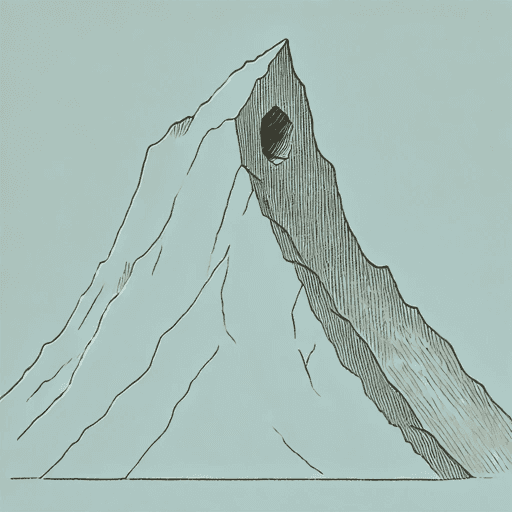
Kneeknock Rise and the Mammoth Mountains evidence the Instep community’s Need for Mystery in Everyday Life. The mountains are described as a source of “mystery, for good or evil” (4), a place of intrigue that captivates the imagination of the townspeople. They are hesitant to investigate or climb the mountains, respecting the unknown force that resides there. This deep sense of mystery is what makes Kneeknock Rise such a powerful symbol of community identity: “[T]o all of them the cliff was the grandest, most terrible thing in the world. They trembled over it, whispered about it, and fed their hearts to bursting with gleeful terrors. It was frightful and fine and it belonged to them. They called it Kneeknock Rise” (6). The idea that the cliff “belongs” to the people underscores its significance to their culture and identity. Their pride in the mountains stems from the fact that the mountains are the only major natural feature in an otherwise flat land. They are also home to the elusive Megrimum. Babbitt’s decision to introduce these mountains at the beginning establishes them as an important force in the story.
The Megrimum
The Megrimum, a central element of the narrative, evidences How Folklore Shapes Communities. Described as a creature that “moaned on stormy nights like a huge and anguished something chained forever to its own great tragic disappointments” (5), the Megrimum is a symbol of human loneliness and sorrow, even as it inspires awe, terror, and communal pride. The creature’s mysterious presence perpetuates the town’s superstitions, with the townspeople collectively believing in its existence despite the lack of evidence. Egan, eager to prove himself, even imagines that killing the Megrimum would make him a hero, reinforcing the connection between myth and personal ambition. As Uncle Ott reveals, the Megrimum is nothing more than a creation of folklore, inspired by the “moan” attributed to a sulphur spring projected onto a mythical beast. The uncovering of this truth exposes the contrast between truth and belief—the myth offers the townspeople a kind of comfort, even if it is rooted in deception. Although Egan discovers the truth and proclaims it for all to hear, nobody wants to believe him— they would rather continue living in a sort of mystical reality.
Annabelle
Annabelle, the dog that belongs to Uncle Ott, plays an important role as a symbol of loyalty and the philosophical connection between Egan and Uncle Ott, both of whom grapple with the pain of knowledge versus the comfort of ignorance. The detailed description of Annabelle’s appearance—“around her neck a thick roll of extra flesh fanned out soft fur into a deep, inviting ruffle and her ears drooped like rich brown velvet triangles”—emphasizes her role as a companion and a symbol of warmth and security (21). Her deep bond with Uncle Ott defines Annabelle’s character. She is content to simply be herself, without needing to impress anyone. Egan, upon meeting Annabelle, feels an immediate connection and describes being “enchanted” by her presence. This instant bond between Egan and Annabelle symbolizes Egan and Ott’s connection. Uncle Ott’s poem further reinforces Annabelle’s importance, celebrating her loyalty and her ability to be herself in a world full of expectations.
Stormy Nights
Stormy nights act as a motif in the story, emphasizing the need for mystery in everyday life. The sound of the Megrimum, described as a “mumble of thunder complained from far away,” remains linked to storms throughout the narrative, reinforcing the sense of mystery and thrilling unease that pervades the town of Instep. On one such stormy night, as lightning illuminates the sky, Egan and Ada see “a dim shape coming down the rocky side of Kneeknock Rise” (31), heightening the tension and mystery surrounding the mountain and its mythic creature.
The storm not only intensifies the fear but also serves as a catalyst for action, driving Egan to take risks and challenge the unknown. The storm’s personification as a “mumble of thunder [that] complained from far away” (76) adds to the atmosphere of foreboding and emphasizes the storm as an active and influential aspect of the story’s plot. The repeated storms throughout the story heighten the sense of unpredictability, mystery, and fear, mirroring Egan’s internal struggles and his growing desire to uncover the truth behind the Megrimum. When Egan ascends the mountain, the storm grows more intense the higher he climbs, but when he reaches the top, it subsides, just as the myth is replaced by the reality of Uncle Ott’s reappearance and the explanation of the sulphur spring.
Superstition
Superstition is a prominent motif in the story for the ways that folklore shapes communities. Various rituals and beliefs used by the townspeople to ward off the Megrimum and other imagined threats reveal the depths to which these legends define the people’s lives. One such ritual involves putting out a candle, placing a wishbone, and setting onions on the door to keep away monsters. These practices are portrayed as ineffective and illogical, yet the characters continue to believe in them, revealing how superstition can provide a sense of control in a world full of uncertainties.
Babbitt employs a humorous irony in the fact that the women of Instep discuss the pointless nature of each other’s superstitions, such as using a weathervane or bell, but never doubt the veracity of their own. Aunt Gertrude’s belief that the clock is bad luck illustrates her deep roots in communal lore. The people’s belief that the Megrimum grants cats special privilege on the mountain—allowing them to roam freely, while humans cannot—defines the villagers' relationship to cats. The symbolism of the wishbone is also significant, as it represents the conflict between truth and belief and the choice Egan must make about whether he will allow himself to believe in the unknown or not.

Unlock the meaning behind every key symbol & motif
See how recurring imagery, objects, and ideas shape the narrative.
- Explore how the author builds meaning through symbolism
- Understand what symbols & motifs represent in the text
- Connect recurring ideas to themes, characters, and events