Kneeknock Rise
41 pages • 1-hour read
Natalie BabbittKneeknock Rise
A modern alternative to SparkNotes and CliffsNotes, SuperSummary offers high-quality Study Guides with detailed chapter summaries and analysis of major themes, characters, and more.
Pages 3-38Chapter Summaries & Analyses
Pages 3-7 Summary
The Mammoth Mountains, the focal point of an otherwise flat vista, are the pride of the people of the land. The mountains earned their name when a traveler passing through proclaimed them much too small and hill-like to ever be considered real mountains. The people threatened and insulted him, forcing him to recant his statement and declare them mammoth-like.
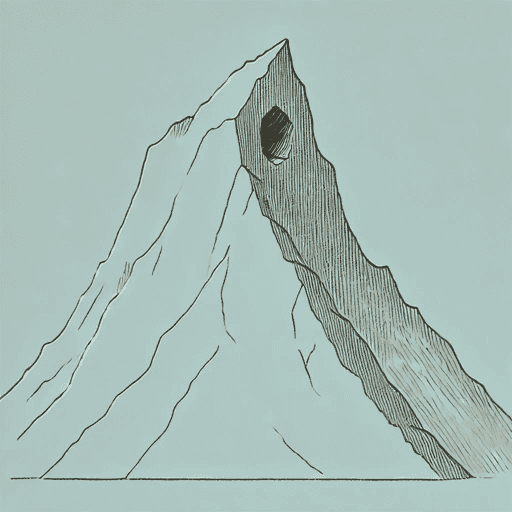
One of the mountains, rockier and steeper than the others, is called Kneeknock Rise, the legendary home of a creature called the Megrimum that wails and moans on stormy nights—a sound of tragic sadness unlike anything the people have ever known. They respect the magnificent creature and its mystery, and do not climb the mountain for fear of disturbing it. Instead, they tell stories of it that inspire and awe, and though everyone has theories about what the Megrimum is and where it came from, nobody knows for sure. The town of Instep sits at the bottom of the mountain, and each year when the fair is held, the people hear the Megrimum wail.
Pages 8-15 Summary
Egan gets ready to head to Instep for the yearly fair. His mother eyes him critically and tells him that he should be looking forward to staying with relatives—his cousin Ada, who was a baby the last time she saw her, and Egan’s Uncle Ott, who is sickly and lives with Uncle Anson and Aunt Gertrude. Egan dreads staying with them because of their dour manner.
As Egan approaches the Mammoth Mountains, he scowls, noting that they’re too large and proud. Egan rides to his aunt and uncle’s house, where a scowling Ada sits outside holding her cat. The cat scratches Egan, and Ada announces that neither she nor her cat likes him. She points toward the mountain and smiles as she tells Egan that their Uncle Ott was eaten by the Megrimum.
Pages 16-22 Summary
Ada brings Egan inside to her mother, Aunt Gertrude. Gertrude comments on how much Egan looks like his “noisy” father, and how big Egan is for his age. She takes him back to the room he will use, which was formerly Uncle Ott’s room. It is filled with all sorts of books, a pipe, and quills and ink for writing. Aunt Gertrude is worried about Ott, believing he may have wandered up the hills and fearing the worst. She tells Egan he is clever and brave, and tells him to wash up and rest. Before leaving, Aunt Gertrude is startled by Uncle Ott’s dog, Annabelle, who is underneath the bed. Egan finds the dog breathtaking and notices all its fine details, including the way her white coat turns brown around her eyes, which creates a quizzical expression. Egan pets the dog, who rolls over and lets him scratch her belly. The two quickly become friends.
Pages 22-25 Summary
Soon, Uncle Anson comes home with his finest creation yet, a clock in the shape of a figure eight with a wooden bird’s nest on top. When the clock strikes, a kneeknock bird pops out. The cat is immediately triggered by the sight of the bird and attacks the clock.
Pages 26-27 Summary
Over dinner, Egan wonders why the family doesn’t do something about the cat and its misbehavior. Ada explains that the cat hates kneeknock birds, as all cats do, because they get their instructions from the Megrimum. As the Megrimum’s favorite animal, the cats are welcome on the hillside and do not get attacked, while people usually do.
Pages 28-32 Summary
Egan wakes up in the night to the sound of violent thunder, and Ada comes into his room, wild-eyed and excited for Egan to hear the sound of the Megrimum. Annabelle hides, terrified, and Ada assures Egan that they are safe because of the candle, wishbone, and onions that the family puts out on stormy nights. Egan asks what they’re for, and Ada explains that each has a purpose in keeping away the Megrimum.
Suddenly, the wailing sound of the creature comes down through the hills before fading away into the thunder again. Egan stares outside, hoping to see it, but sees nothing but rain. The sound returns, and a figure appears to be coming down the mountainside. Egan and Ada are suddenly both terrified, and Annabelle barks loudly. Aunt Gertrude comes in and cries out when she sees that there is someone at the window, knocking to get in, before disappearing again.
Pages 32-38 Summary
The next morning, everyone in town has heard what happened at Aunt Gertrude’s house, and women gather around as she tells of a creature with a gaping mouth and a white, horrible glow. Each woman has a different theory about what might have stopped the “attack,” including a weathervane, poppies, and a bell that wards off devils, but Aunt Gertrude thinks that Anson’s clock was bad luck and tells him not to make another one. Anson doesn’t believe that the Megrimum came to their house, instead blaming it on a passerby, but he agrees not to make any more Kneeknock bird clocks.
Pages 3-38 Analysis
Egan’s arrival in Instep immediately introduces the myth of the Megrimum, establishing Babbitt’s thematic exploration of The Need for Mystery in Everyday Life. The author’s opening description of the Mammoth Mountains asserts that their charm, as in “Eve’s forbidden fruit, [dwells in] their mystery, for good or evil” (4), establishing early on the alluring power of the unknown. The people of Instep appreciate this mystery, taking it on as part of their identity, choosing not to climb Kneeknock Rise despite generations of speculation about what lives there. Instead of seeking answers, they protect and perpetuate the legend of the Megrimum. The strength of the myth imbues the mountain itself with a sacred quality, rendering it a source of legend, intrigue, and awe. Babbitt reinforces the mountain’s importance by naming her narrative for it—Kneeknock Rise. The villagers’ commitment to the myth, and their reluctance to debunk it, suggests that the mystery itself sustains them, giving them something to believe in, to fear, and to claim as their own. The creature and the mountain become cultural anchors, necessary illusions that demonstrate How Folklore Shapes Communities.
Babbitt uses imagery to create a world based in tradition and influenced by the supernatural. Instep, the town at the foot of Kneeknock Rise, is known for its annual fair, which draws crowds eager to hear the eerie cries of the Megrimum. As Egan journeys toward the fair, his escort is overwhelmed by the grandeur of the Mammoth Mountains, while Egan views them more skeptically, finding them “too big … too proud” (11). This tension between awe and skepticism is at the heart of the novel’s central conflict: The Pain of Knowledge Versus the Comfort of Ignorance. The imagery used to describe Aunt Gertrude’s home establishes a pastoral setting from the past, with ink and quills and a pipe for smoking, underscoring the fable-like nature of Babbitt’s narrative. On the night of the storm, when Ada bursts into the room, the atmosphere becomes electric and ominous. Her hair is described as red and wild, her eyes “saucers of excitement,” enhancing the sense of intrigue and impending revelation (28). Such visual details contribute to a mythical atmosphere that bridges the gap between the ordinary and the extraordinary.
From the beginning, Babbitt presents Egan as a boy caught between external expectations and internal doubt. As soon as he is introduced, he is immediately judged, first by his mother and then by his cousin Ada—both of whom look at him “critically.” Aunt Gertrude is no more welcoming, calling Egan’s father “big and cheerful and noisy” and insisting that Egan looks like him, which she makes clear is not a compliment—yet a few moments later, she contradicts herself by calling Egan “bright and clever” (18). These mixed signals prompt Egan to question the town’s obsession with superstition. He reacts with suspicion to the charms and rituals used to ward off evil—an early skepticism that positions Egan as an outsider— someone who will challenge the beliefs of Instep, setting the stage for the lessons learned throughout the story.
Babbitt uses literary devices such as alliteration, foreshadowing, and a rhythmic prose that enhances the fairy-tale quality of the narrative and creates layers of meaning. The opening pages are filled with alliterative phrases like “Mammoth Mountains,” “forbidden fruit,” and “no mere mole” (4—5), creating a lyrical tone. Babbitt also uses irony and contrast, such as when Egan’s mother says it will be a treat for Ada to see her cousin again, only for Ada to scowl at him and declare that neither she nor her cat likes him. The author’s descriptions of the setting represent an implicit use of foreshadowing. For example, the mountain is described as “huge and silent and cold as a gravestone” (15), hinting at the danger that the townspeople believe dwells there. Later, a blood-red sunset casts a red tinge over the scene, evoking a sense of menace to come.
The illustrations in Kneeknock Rise reinforce character traits and details, often exaggerating expressions to emphasize mood. In the first drawing, Ada is shown sitting on a wall under a tree with her hair in a tight braid and her cat in her lap. Both Ada and the cat scowl directly at the reader, mirroring their immediate dislike of Egan in the story. This visual cue hints that Ada’s intentions are untrustworthy. Another drawing shows Aunt Gertrude surrounded by other women from the town. Her dramatic expression emphasizes her superstitious nature and tendency toward wild claims. These illustrations function as supplements to the prose, emphasizing emotional tone throughout the story.
Kneeknock Rise is filled with symbolism that adds mystery and emphasizes the story’s themes. The Mammoth Mountains are described as towering and dominant in a landscape that is otherwise completely flat. Babbitt’s opening anecdote about the outrage of the townspeople at a visitor who questioned whether they were truly mountains introduces the Mammoth Mountains as symbolic of the townspeople’s sense of self. The author chooses to introduce the Megrimum’s home—the titular Kneeknock Rise— right away to emphasize its importance. On stormy nights, the Megrimum “like a huge and anguished something chained forever to its own great tragic disappointments,” positioning the creature as an embodiment of the townspeople’s fears, disappointments, and uncertainties. Other symbols include Annabelle, the dog who shares a deep bond with Uncle Ott. Her introduction spans two full pages, described in an affectionate tone: “around her neck a thick roll of extra flesh fanned out soft fur into a deep, inviting ruffle and her ears drooped like rich brown velvet triangles” (21). Egan and Annabelle instantly connect, with the narrator using the word “enchanted” to describe the moment of their meeting. Superstition dominates the town’s logic as demonstrated by the clock featuring a kneeknock bird that leads the cat to attack, and Ada claims the Megrimum wants cats to kill these birds. Cats are allowed up the mountain, humans are not; bells and weathervanes are said to ward off evil. Aunt Gertrude even blames the clock for bad luck.
The story’s plot centers on the mystery of Uncle Ott’s disappearance and the town’s growing hysteria about the Megrimum—two engines that drive the plot forward. The central conflict arises from Aunt Gertrude’s worry that Uncle Ott has gone up Kneeknock Rise, which she believes to be dangerous and even fatal. This suspicion turns into town-wide preoccupation when a strange figure appears during a thunderstorm, and the townspeople become convinced it is the Megrimum itself, failing to connect the incident with the missing Uncle Ott. These plot turns reveal how tension builds not from actual danger, but from the villagers’ escalating fear and superstition. Egan is described as brave and intelligent, suggesting he will be the one to uncover the truth.

Unlock all 41 pages of this Study Guide
Get in-depth, chapter-by-chapter summaries and analysis from our literary experts.
- Grasp challenging concepts with clear, comprehensive explanations
- Revisit key plot points and ideas without rereading the book
- Share impressive insights in classes and book clubs