Kneeknock Rise
41 pages • 1-hour read
Natalie BabbittKneeknock Rise
A modern alternative to SparkNotes and CliffsNotes, SuperSummary offers high-quality Study Guides with detailed chapter summaries and analysis of major themes, characters, and more.
Pages 77-118Chapter Summaries & Analyses
Pages 77-83 Summary
The storm clears, and the men look around the lower cliffside for Egan as Aunt Gertrude stays at home, worried for his safety. All around, people discuss the bravery of the men who are going up the hill to search for him.
Egan smells something odd in the distance and hears the sound of an animal. He thinks he must have found the Megrimum after all, until he steps through the mist and sees Uncle Ott, reunited with his dog. Egan is aghast at first but introduces himself and admits he came to find and kill the Megrimum. Uncle Ott admits he, too, came to find it as well, but instead, he discovered there was no Megrimum at all.
Pages 84-90 Summary
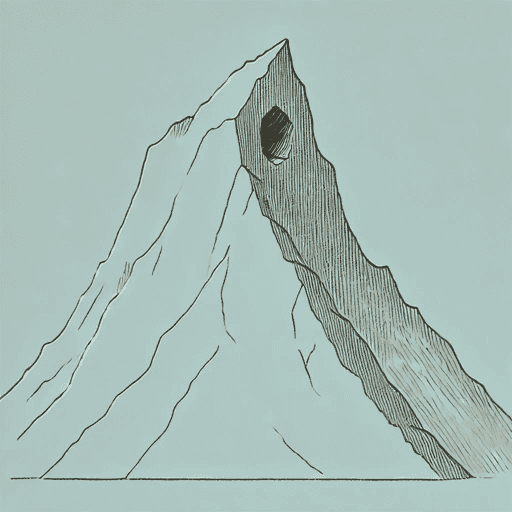
Uncle Ott takes Egan to the top of Kneeknock Rise, where a cave opens up into a sulphur spring, explaining the awful smell. When steam rises through the hole in the cave, it creates a wailing sound, which is more intense during rain. Egan feels smug, knowing he always suspected there was no Megrimum, and suggests going back to town to tell everyone. Uncle Ott declines, having reunited with his dog; he would rather continue over the hills instead, and finds they help with his illness. Uncle Ott admits he was the one who came to the window, hoping to take Annabelle in the night, but he didn’t want to show himself and explain what he learned about the Megrimum. He tells Egan that he decided it would be better to keep the secret, and Egan remembers the poem about the fool and the king. Uncle Ott doesn’t want to spoil the mystery and believes that it helps the people. Before leaving, Uncle Ott recites a poem about a cat that plays with a string; to be told it is not a mouse after all changes nothing except perhaps the cat’s ability to enjoy itself.
Pages 90-95 Summary
Egan stares into the cave and decides he is going to tell the people the truth. He tosses a large rock into the hole, plugging it up, and proudly returns to town, thinking he will be famous and celebrated for revealing the truth. On his way down, he bumps into Uncle Anson, who is relieved to see him. When Egan starts to say that there is no Megrimum after all, Uncle Anson covers his mouth and tells him he must be falling ill. Egan continues to insist that he is telling the truth and isn’t ill, but even the other men agree that he must be. They fall silent when he explains that the Megrimum is just a sulphur spring, but after a moment, they go back to insisting that it cannot be true. Uncle Anson takes Egan home to “get well.”
Pages 95-102 Summary
Egan and the family sit around the fire. Egan is frustrated and angry as he insists once again that there is no Megrimum and tells the story of finding Uncle Ott on the mountainside. Ada asks whether Egan went into the cave, and when Egan says he did not, Ada insists that the Megrimum must just be hiding inside. Frustrated, Egan demands that the others believe him, but Uncle Anson insists that everyone go to bed and that nothing Egan claims can be proven. Ada suggests that they wait for a storm and listen for the sound of the Megrimum.
Pages 103-107 Summary
That night, Egan lies awake, and Ada hears the sound of the storm. Egan invites her to his room to listen, and they watch as the cat jumps out the window and runs up the hill. Uncle Anson wakes up and finds the children, and suddenly a shrill wail comes down off the mountain. Ada knows it to be the Megrimum and believes Egan is proven wrong. The cat comes back, terrified, and Egan insists that the sound was just the rock shooting out of the spring. Uncle Anson once again tries to discourage Egan from arguing.
Pages 107-115 Summary
Egan says goodbye to the family and finds Uncle Anson in his clock shop. He asks Uncle Anson what he truly believes, and Uncle Anson admits he cannot know for sure, adding that perhaps it doesn’t matter. Someone may believe or they may not, and once someone has decided to be skeptical, it is nearly impossible to convince them otherwise. Before leaving, Egan retrieves the presents he bought for everyone and finds that the wishbone is broken. He meets the same man who escorted him to the village days before, and the man gifts him a new wishbone, insisting he keep it just in case.
Pages 116-118 Summary
Egan makes his way back home, leaving Instep far behind. The sun appears after the rain, and the man tells Egan that even if nobody has ever seen the Megrimum, it must still exist. The man warns Egan of a boy who climbed the mountain just the night before and lost his dog to the creature, and tells Egan to come back to the fair again next year.
Pages 77-118 Analysis
The novel concludes with questions unanswered, reiterating the central tension between The Pain of Knowledge Versus the Comfort of Ignorance. Uncle Ott poses a philosophical question to Egan: “Is it better to be wise if it makes you solemn and practical, or is it better to be foolish so you can go on enjoying yourself?” (87). Ott’s rhetoric suggests that the preservation of illusions can bring joy, a sense of identity, tradition, and wonder. His question echoes Uncle Anson’s earlier statement that it doesn’t matter what is true, because a skeptic cannot be convinced regardless. Babbitt evokes the concept of religious belief to imply that myth and faith serve similar psychological functions—providing meaning rather than literal truth—to emphasize The Need for Mystery in Everyday Life.
Babbitt’s poetic motif concludes with Ott’s final poem, a simple reflection on perception. The poem features a cat playing with a piece of string as if it were a mouse. Uncle Ott questions whether the cat knows it’s just string, and whether this knowledge matters for its happiness—an open-ended metaphor that mirrors the central philosophical question of the novel. Ott’s poem suggests that engaging with illusion can be as satisfying as knowing the truth.
The closing setting maintains the novel’s atmospheric tension, emphasizing the contrast between chaos and calm. The imagery of Egan’s climb, which is solitary, ominous, and foreboding, creates a spiritual backdrop for the story’s climax that shifts subtly after Egan’s return. The warm, flickering fire by which he sits frustrated and disillusioned contrasts with the earlier mood of awe and anticipation, emphasizing the weight of knowing the truth in a community that finds its meaning and identity in legend. The moment when the sulphur spring erupts and mimics the Megrimum’s cry restores a kind of magical tension, suggesting that nature itself helps to preserve the myth.
In the final chapters, the story reaches its climax as Egan climbs the mountain during a storm and undergoes his most profound transformation. The dramatic buildup of the storm, the anxious mood of the townspeople who whisper darkly that Egan and those who follow “will never come down again, ever,” and Babbitt’s escalating imagery all contribute to a sense of foreboding. Compelled by curiosity, pride, and an almost mystical sense of calling, Egan “wander[s] up the final stony slope toward the top like a sleepwalker lost in dreams” (79). The mundanity of the reveal that the Megrimum is not a monster but a sulfur spring, juxtaposed with the mythic quality of Egan’s ascent, emphasizes the tension between legend and reality. When Egan discovers Uncle Ott alive and well, sitting in the grass with his dog, Ott’s only concern is for the needs of the village. He admits to Egan that it’s better not to tell people the truth, recognizing the comfort the myth provides.
Egan’s need to reveal the secret emphasizes his pride and desire for recognition. The townspeople’s refusal to believe him reinforces the importance of the mystery to their individual and collective identity. Ada remains stubborn in her belief, and the rest of the family reinterpret the explosive noise from the spring as further proof of the Megrimum. In this way, Egan becomes part of the very myth he sought to disprove. He becomes a boy who wandered up and lost his dog to the Megrimum—a final irony that emphasizes his development from skeptical child to a symbol of the town’s enduring folklore.
The novel’s closing illustrations reiterate the tension between knowledge and ignorance. One of the final drawings shows Uncle Ott sitting gleefully in the grass, reunited with Annabelle, his loyal dog—a peaceful image that contrasts with the darkness and tension that surrounded his perceived disappearance and death at the hands of the Megrimum. Another depicts Egan by the fire, clearly frustrated, as he tries to convince his family that there is no Megrimum. Despite his efforts, the expression of disbelief on Ada’s face communicates the futility of his truth-telling. The final visual of Egan and Uncle Anson in the clock shop serves as an epilogue without a solid conclusion. Their thoughtful expressions suggest a shared understanding, even if unspoken, that truth and belief serve different purposes in a community. The broken wishbone, found the next day, symbolizes Egan’s lost innocence and the futility of trying to impose truth on others. Yet, a new wishbone is given to him, a symbolic gesture suggesting that, despite what he knows, wonder and belief are still accessible to him if he chooses.

Unlock all 41 pages of this Study Guide
Get in-depth, chapter-by-chapter summaries and analysis from our literary experts.
- Grasp challenging concepts with clear, comprehensive explanations
- Revisit key plot points and ideas without rereading the book
- Share impressive insights in classes and book clubs