Our Perfect Storm
Our Perfect Storm
A modern alternative to SparkNotes and CliffsNotes, SuperSummary offers high-quality Study Guides with detailed chapter summaries and analysis of major themes, characters, and more.
Summaries & Analyses
Author Insights
Quizzes
NEWReading Tools
Symbols & Motifs
Content Warning: This section of the guide includes discussion of animal death, child abuse, and sexual content.
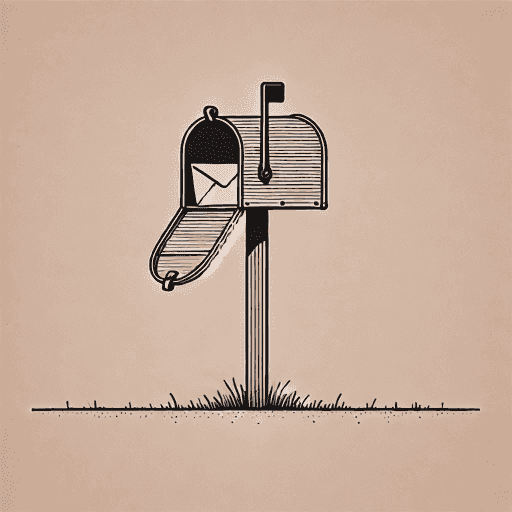
The Mailbox
The mailbox, a private, protected channel of communication between Frankie and George, symbolizes Lifelong Friendship as a Foundation for Identity and serves as a testament to their enduring bond. Constructed in their childhood as a way to communicate through their first argument, the birdhouse mailbox is a physical manifestation of the emotional haven they provide for one another. George’s first note establishes its purpose as a sacred space for uninhibited honesty, promising, “We can say whatever we want, and nobody but us will read it” (52). This tradition allows them to navigate complicated feelings and maintain their intimacy even when separated by distance or misunderstanding. The mailbox becomes the repository for their shared history and the unspoken bedrock of their lifelong friendship.
In the novel’s present, the mailbox allows Frankie and George to find their way back to each other. When Frankie discovers that George knew why Nate left her but never told her, George gives her the space she needs to process her feelings. He leaves letters in the mailbox for her to read on her own time and to let her know that he’ll be there when she’s ready. The archive of George’s unsent letters, written throughout their friendship, reinforces the depth and consistency of his feelings for her.
Storms
The recurring motif of storms mirrors the rise and fall of Frankie and George’s most intense emotions, highlighting The Challenges of Transitioning From Friends to Lovers. The novel opens with a “heavy spring rain attack[ing] the last of the snow, liberating purple and white crocus blossoms from their icy beds” (1), signaling the change in seasons that Rebecca’s departure and Frankie’s first encounter with George instigates.
Later, on Tofino, Frankie and George’s growing desire for each other is reflected in the volatile coastal weather. During their first sexual encounter, Frankie observes that she and George “stay like that […] staring into each other’s eyes as the emotions pass through them like a weather system” (294). In the aftermath, while lying in George’s arms, Frankie realizes that “the storm has eased” (300). Using these weather-related parallels allows Fortune to escalate and de-escalate the tension throughout George and Frankie’s romantic arc.
By linking severe weather to these critical moments in their romantic arc, Fortune frames natural disruption as a prerequisite for new beginnings. Frankie explicitly links the transition of their friendship to something with the storm outside their room: “Thunder and wind and rain roar at our doorstep, but we’ve created our own weather system. Sex with George is an act of destruction. This is a tempest, a hurricane, a cyclone. We’re ripping through our old selves. Our friendship. We’re tearing it all down to build something new” (296). The novel’s title, Our Perfect Storm, reinforces the convergence of timing, destiny, and desire that brings Frankie and George together after a lifetime of friendship.
Whales
Whales serve as an evolving symbol of Frankie’s relationship with her mother, charting her journey from the trauma of abandonment to forgiveness and self-reclamation. In her childhood, whales are intrinsically linked with love and storytelling, but that connection is severed when her mother disappears: “[O]ne day, I woke up and Mom was gone. To the whales. Without me” (41). From that moment, the animals become a painful symbol of maternal rejection. Fortune position’s Frankie’s declared hatred of whales as unresolved anger and grief over her mother’s absence.
To Frankie, the North Atlantic right whale named Francesca, her namesake, represents the life her mother chose over a life with her. Frankie’s inability to engage with the topic of whales is symbolic of her inability to process her childhood trauma and reconcile with her mother.
Frankie’s perception of whales transforms during her trip to Tofino in tandem with the start of her emotional healing. Witnessing the majesty of gray whales in person for the first time marks a turning point, allowing her to finally connect with her mother’s passion. This experience fosters empathy and understanding. Learning of the real Francesca’s death allows Frankie to mourn the loss she felt as a child as well as the loss of the whale itself, creating a moment of catharsis. This emotional breakthrough, prompted by her journey of self-discovery, enables her to reconnect with her mother, forgive the past, and reclaim a vital part of her heritage that she had long suppressed.

Unlock the meaning behind every key symbol & motif
See how recurring imagery, objects, and ideas shape the narrative.
- Explore how the author builds meaning through symbolism
- Understand what symbols & motifs represent in the text
- Connect recurring ideas to themes, characters, and events