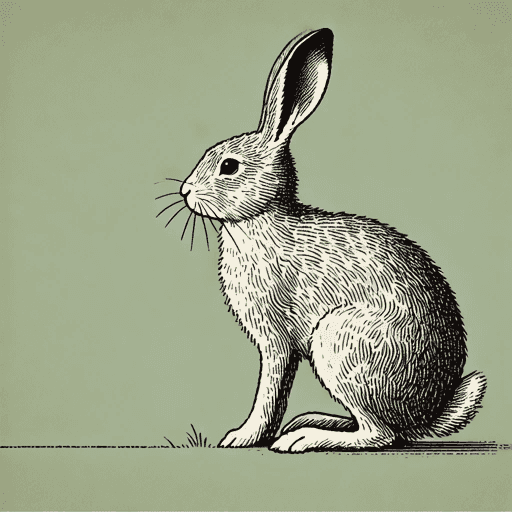
Raising Hare
50 pages • 1-hour read
Chloe DaltonRaising Hare
A modern alternative to SparkNotes and CliffsNotes, SuperSummary offers high-quality Study Guides with detailed chapter summaries and analysis of major themes, characters, and more.
Background
Genre Context: Nature Memoirs
Nature memoirs are a sub-genre of memoirs in which the author reflects on their personal experiences as they relate to nature or the environment. They exist at the intersection of autobiography and nature writing and contain elements of each genre. Nature memoirs often focus on one specific place, time period, or event and weave narration about writer’s life with observations about the natural world. Writers typically choose one set of themes to explore and use their memoir as a way to contemplate their own experiences as well as introduce readers to an environmental issue. Common themes are the impact of grief and loss, personal growth, and aging combined with an exploration of climate change, human encroachment on wild habitats, deforestation and urbanization, or an in-depth look at a particular animal species.
The sub-genre is often dated to Henry David Thoreau’s Walden (1854), an account of the two years the author spent living in a small cabin on Walden Pond. Thoreau simplified his life, immersed himself in nature, and even grew his own food in an attempt to regain some measure of the peace and autonomy he felt he’d lost by growing up in a capitalist society. Thoreau muses on the nature of life during the industrial revolution, contemplates how societal forces shaped his identity as an individual, and shares his observations about the beauty of the woods surrounding Walden Pond.
A Sand County Almanac (1949) by Aldo Leopold is another of the sub-genre’s classic works. In it, the author describes the events of one year spent on his farm, interweaving his own experiences with key observations about rural Wisconsin, where his farm is located. Structured as a series of essays, the work culminates with an explication Leopold’s “Land Ethic.” In it, he advocates for a shift in how humanity understands its relationship with the land. Leopold argues that the land is not merely a resource to be exploited but rather part of the community to which humans, along with plants and animals, belong. He urges his readers to see the planet as one large, interconnected system in which each living thing plays an equal and important role. He also explains the consequences that human actions can and have had on the natural world and calls for a more concerted, organized effort to protect nature. He is often cited as one of the first conservationists, and The Sand County Almanac is still widely read and taught.
Annie Dillard is another early pioneer of nature memoirs. Her book Pilgrim at Tinker Creek (1974) focuses on the seasonal changes she observes at Tinker Creek near her home in Virginia during the course of one year. She describes the many walks she takes to Tinker Creek, introducing readers to the flora and fauna native to the area, but also asks big-picture questions about God, philosophy, and the differences between true wilderness, the ex-urban landscape in which she lives, and the city. Pilgrim at Tinker Creek was awarded the Pulitzer Prize for Nonfiction in 1975 and launched a long career. Many of her books, including Teaching a Stone to Talk (1982) and Holy the Firm (1977) also interweave personal narrative, philosophy, and an interrogation of humanity’s place within the natural world, and even her older works still enjoy a wide readership.
Wild: Lost and Found on the Pacific Crest Trail (2012) by Cheryl Strayed is a popular contemporary nature memoir that was turned into a film starring Reese Witherspoon. In it, the author narrates her through-hike of the Pacific Crest Trail, weaving a description of the hardships and setbacks she faces along the way with an honest, if at times difficult look, into her childhood and personal life. Like Thoreau, Cheryl retreats to the wilderness in order to better reflect on her own life and her place within family, community, and society. The connection between nature, solitude, and contemplation is a key facet of many nature memoirs as well as nature writing as a whole, and Strayed’s book makes use of that framework to better examine the impact of grief, loss, and addiction.
H is For Hawk (2014), by Helen MacDonald, is another recent example of a bestselling nature memoir. It contains an account of the author’s attempts to train a goshawk in the wake of her father’s death. Like Raising Hare, it is a meditation on the healing power of nature that combines personal narrative with an in-depth look at one particular species. She shares with Chloe Dalton an interest in research and a dedication to lifelong learning, and she interweaves her own descriptions of the training process with a meditation on the memoirs of T. H. White, a man who struggled with falconry during the 1930s. In the way that Dalton attempts to learn more about hares and improve her caretaking methods, MacDonald tries to learn as much as she can from both White’s triumphs and failures.
Lab Girl (2016) by Hope Jahren is another best-selling contemporary example of a nature memoir. It chronicles the author’s life as a geo-biologist. The text is divided into three sections, each detailing a particular period in Jahren’s life. She begins with an account of her childhood in rural Minnesota, moves on to the early days of her teaching career, and ends with a section on her personal life and the late stage of her career. Throughout the book, Jahren explores various species of plant life, explaining the ways that humans, animals, and insects impact plant health and habitat. Like other nature memoirs, the author uses nature as a way to meditate on her own life and uses her writing as a way to introduce readers to a set of related environmental issues.

Unlock all 50 pages of this Study Guide
Get in-depth, chapter-by-chapter summaries and analysis from our literary experts.
- Grasp challenging concepts with clear, comprehensive explanations
- Revisit key plot points and ideas without rereading the book
- Share impressive insights in classes and book clubs