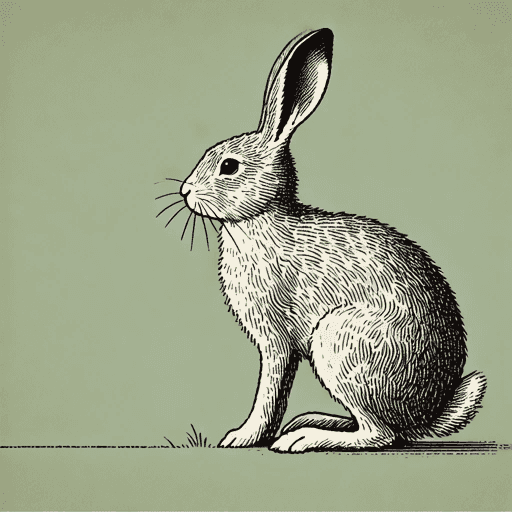
Raising Hare
50 pages • 1-hour read
Chloe DaltonRaising Hare
A modern alternative to SparkNotes and CliffsNotes, SuperSummary offers high-quality Study Guides with detailed chapter summaries and analysis of major themes, characters, and more.
Themes
The Challenges and Rewards of Caregiving
Content Warning: This section of the guide includes discussion of animal death.
Through the trial-and-error process of learning to care for a wild animal that often seems utterly unlike herself, Chloe learns to recognize and care for aspects of herself of which she was not previously aware. She enjoys her relationship with the hare even as she struggles with the fact that it is not a domesticated creature, that she must ultimately let it go, and that she cannot always keep it safe.
Chloe is an intelligent, driven individual who, at the beginning of the memoir, derives her identity in large part from her career. Because research is a key component of her job, she values learning and applies her interest in studying new topics to the hare. She researches hares’ habits, diets, and habitats along with doing a deep dive into the cultural history of hares in Europe and beyond. This process of research not only equips her with necessary practical knowledge; it also helps her to find meaning in challenging day-to-day interactions with the young hare. She notes: “Learning to care for the leveret was a process of experimentation” (49). She does her best to care for it properly, but acknowledges the missteps she makes along the way. Still, she ultimately is successful in her attempts to keep the hare alive as well as raise it in a way that will allow it to re-integrate into the wild as it grows. This entire process becomes a way for Chloe to maintain her sanity during the stress of the COVID-19 pandemic: She has a project to throw herself into, and she finds that the more time she spends caring for and learning about the hare, the less she worries about the state of the world.
Despite the therapeutic effects of caring for the hare, it does also introduce new stressors into her life. Hares exist as part of a complex ecosystem. As herbivores, they are the natural diet of the area’s many carnivorous species, and as such they are subject to predation. Hawks, kestrels, stoats, foxes, weasels, and other animals routinely hunt and kill hares. While Chloe might be able to chase off these predators when she and the hare are inside her garden, she cannot safeguard the hare when it is out in the wild or even when she is in her house, working. She must develop the ability to love the hare while knowing that it is a part of the natural world and that she cannot alter the course of its life. This, too, offers a lesson about caretaking more broadly: With love comes the risk of grief.
The hare is not always easy to love. Chloe must come to terms with the fact that hares are not domesticated creatures and that despite its habituation to life with Chloe, she will never “tame” it. She will not have the kind of relationship with it that humans have with dogs, cats, or even rabbits. She learns this early on, during the first few days after rescuing the leveret, but it takes her some time to fully realize it. She demonstrates her respect for the hare’s autonomy and wildness by allowing it to set the boundaries of their relationship. She does not handle it, (outside of feedings when it is small) pet it as one would a cat or a dog, or limit its movements. When it approaches her, she does her best to remain calm and open, but she does not approach the hare.
The final lesson she learns from the hare is how to let go. As it ages, she understands that it may be approaching the end of its life. Because she has allowed it freedom of movement, it leaves her property each night, and she knows that there might be a day when it does not return. She steels herself against this loss, hoping that rather than succumb to grief, she will be able to value the time she spent with it and the opportunity to live in harmony with a wild thing. She ends her memoir without disclosing what happens to the hare. There is no afterword informing readers of the hare’s fate. This is an important formal detail in that it mirrors what the hare teaches Chloe about letting go: Just as Chloe might never know the hare’s fate, the text does not provide that information either.
The Therapeutic Effects of Nature
The author notes at the beginning of her book how comfortable she is with the hectic pace of city life and how invested she has become in her demanding career. Though she loves her urban, professional life, she has fond memories of a rural childhood and purchases her country home as a way to reconnect with nature. In caring for the hare, the author finds a way to redirect her energy away from the stress of the pandemic. She simplifies her life and her priorities. Ultimately, she finds that caring for the hare shifts her perspective and allows her to develop a new personal philosophy.
When the pandemic begins, Chloe is a self-avowed urbanite with a successful, fast-paced career in London. She is grateful for the solitude and increased freedom of movement that her rural retreat provides, but she has no intention of remaining there full-time once lockdown has been lifted. Although she is happy to have such a refuge, she initially struggles both with the slower pace of country living and with the uncertainty of the global pandemic. She finds that time spent with the leveret is calming: “In truth, the animal soothed me” (42). She throws herself into the creature’s care, constantly observing how much happier she is when she is focused on finding suitable foods for it and helping it to explore and find comfortable resting spaces.
Gradually, the hare begins to bring about larger changes in her life. As an adult, she’d long felt disconnected from the natural world that captivated her as a child, and the hare allows her to reacquaint herself with nature. By learning about and observing the hare, she develops “a new spirit of attentiveness towards nature” (107). The hare follows a predictable daily schedule, and Chloe learns the names of the birds that chirp in the morning when the hare returns to her garden. She observes it at play in the yard, and she uses those observations to better understand the flowers, shrubs, plants, and grasses that grow in and around her property. She can identify and name a wealth of different species and understands how those species fit together into a larger ecosystem.
Chloe’s time with the hare not only brings her into closer contact with nature, but it also deepens her understanding of what it means to be human. She thinks critically about the kinds of bonds that humans and animals share. Although once someone who scoffed at her friends’ love for their dogs and cats, she now understands how special those bonds are. She notes that animals can teach humans patience, empathy, and compassion, observing: “Interactions with animals nurture the loving, empathetic, compassionate part of human nature” (144). She simplifies her life and shifts her priorities. The hare lives in the moment, constantly attuned to its present surroundings, with an innate playfulness that counterbalances its wariness. Chloe, who has spent much of her adult life focused on the future, chasing professional goals, sees value in this radically different approach to life. Learning from the hare’s example, she turns her attention away from professional striving and becomes more attuned to the present.
Humanity’s Changing Relationship With Nature
An avid researcher, Chloe devotes a considerable amount of time to learning everything she can about hares. Much of her research focuses on how people have perceived and interacted with hares across historical eras and cultures. Through this complex history, she learns about how humans understand and misunderstand their relationships with non-human animals and with nature more broadly.
Chloe initially struggles to find information about caring for hares, in part because, unlike rabbits, they have never been domesticated. What she does find is an account of the varied ways in which humans and hares have come into contact, dating back to the earliest human settlements in Europe. She learns that humans have long impacted hare populations through hunting. Hares, although seen as unfit for eating in some cultures, have been considered a delicacy and a staple by various European groups, and overhunting has sometimes threatened their numbers. This history of overhunting, coupled with even more acute present-day threats from habitat loss, make the hare emblematic of humanity’s sometimes thoughtlessly destructive interactions with non-human life.
Hares have many predators in the wild, but natural ecosystems incline toward balance. Waste and over-hunting of any one species is virtually unknown in the wild, except when ecosystems have been thrown into disorder by human activity. Humans, on the other hand, have hunted hares nearly to extinction at multiple points in history, and agriculture and land development have caused a widespread decline in hare populations—like those of many other animals—during the 20th century. She writes: “The brown hare population has declined substantially in Britain and some other parts of Europe since the turn of the 20th century, with its population concentrated in isolated patches rather than being found nearly everywhere, as used to be the case” (56). Chloe thinks critically about the destructive role played by humans in the natural world. Large-scale machinery cuts an indifferent swath through agricultural fields, mowing down everything in its path: Both small animals and the plants they use for food and shelter. In the penultimate chapter, “Blood in the Harvest,” Chloe goes walking after the mechanized harvest and finds the bodies of dead hares and other animals—killed by agricultural machinery—everywhere she looks. In their vulnerability, the dead hares symbolize nature itself in the face of destructive human technologies.
Chloe investigates the cultural history of hares and finds that they have often been viewed as a symbol of wildness. As such, they reflect shifting human attitudes toward the natural world: In some times and places, they are seen as sacred embodiments of natural beauty, while elsewhere they are associated with witches and seen as emblematic of everything people fear in nature. They are an oft-misunderstood species in part because of their wildness. They are elusive and difficult to observe, and much of what was once thought to be true about them has been proven false by further research. They are prone to wild fits of spinning, jumping, and erratic movement. They engage in “boxing,” a behavior once thought to be a sign of aggression but now understood as part of an elaborate mating ritual. These behaviors were cited by authors such as Lewis Carrol as example of their “madness,” and thought to signify something akin to mental illness in humans. Characters such as Lewis Carrol’s Mad March Hare popularized this image of hares—a modern variant of more ancient fears equating nature with disorder. Throughout the book, as throughout much of European history, the hare is an emblem of nature, and its shifting significance reflects shifting human attitudes toward the natural world. In the distant past, it was alternately venerated and feared. Today, it is largely ignored—as symbolized by the farm tractors that obliviously kill hares by the dozen and leave their bodies lying in the fields.

Unlock every key theme and why it matters
Get in-depth breakdowns of the book’s main ideas and how they connect and evolve.
- Explore how themes develop throughout the text
- Connect themes to characters, events, and symbols
- Support essays and discussions with thematic evidence