Shadow
53 pages • 1-hour read
Michael MorpurgoShadow
A modern alternative to SparkNotes and CliffsNotes, SuperSummary offers high-quality Study Guides with detailed chapter summaries and analysis of major themes, characters, and more.
Chapters 5-10Chapter Summaries & Analyses
Content Warning: This section of the guide includes discussion of death, racism, physical abuse, child abuse, and animal cruelty.
Chapter 5 Summary: “Bamiyan”
The narrative shifts back in time as Aman begins telling his and his family’s story. He recalls that his grandfather told stories of when Bamiyan, like the rest of Afghanistan, was a peaceful place. Aman’s family are of the Hazara people. Russia’s invasion of Afghanistan in 1979 ended the peace and brought scarcity to the region. Aman’s grandfather fought the Russians with the Mujahadin resistance, but he was killed long before Aman was born. The Hazara people have suffered great persecution under the Taliban, forcing them to hide in cliffside caves, where Aman was born. Despite the hardship, Aman is happy: He has friends and goes to school in the village.
Aman’s mother and grandmother often argue about his grandmother’s jewels, which she keeps hidden away and refuses to sell, even when they have little money for food. His grandmother says that she is saving them for something even more precious than food.
The Taliban destroy most of the city of Bamiyan. Aman’s mother even witnesses them destroying the enormous, ancient statue of Buddha that made the city famous. The Taliban are cruel to the people of Bamiyan, but they are driven out by the arrival of American troops. For a time, life gets better. Aman’s father, who knows a little English, becomes an interpreter for the Americans. However, one night, Taliban soldiers arrive at their cave and take Aman’s father away, calling him a traitor for helping the American forces. The family never sees him again. Aman remembers him as a good man and a good father.
In the absence of Aman’s father, his mother and grandmother fall into depression. It is up to Aman to find food for the family. His grandmother can no longer walk easily, and food becomes harder to come by. One day, Aman steals an apple from the marketplace.
Chapter 6 Summary: “Dirty Dog! Dirty Foreign Dog!”
A crowd surrounds Aman, beating him for stealing the apple. When his mother arrives, she claims that she stole the apple. The police arrive and beat Aman’s mother. Then, they arrest her and take her to jail, where they torture her. They release her weeks later, and she will not even look at Aman. She and Aman’s grandmother cry together for days.
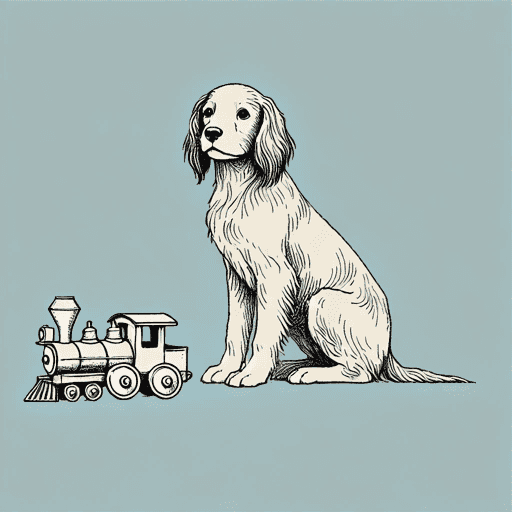
Around this time, a spaniel shows up outside the cave, emaciated and covered in sores. In Aman’s culture, dogs are kept outside. At first, Aman tries to chase her away by throwing stones, but he takes pity on her kind eyes. He sleeps next to her and tends to her wounded leg the next day. Local children chase the dog away, calling her a filthy foreign dog, but she returns. Aman discovers that she likes tripe, the only meat they can afford, so he feeds her the rotten leftover bits. His mother and grandmother chase her out of the cave, but she returns at night to be with Aman.
Chapter 7 Summary: “You Must Come to England”
For weeks, the dog visits Aman only when he is alone, waiting for Aman’s mother and grandmother to go to sleep. Early one morning, Aman awakes to find the dog gone, and his mother and grandmother are up early. His mother is crying. They say that they received a letter from Uncle Mir in England. Mir is Aman’s grandmother’s only son and his mother’s older brother. Aman has never met him. As a young man, Mir went to Kabul and married an Englishwoman. Everyone in the caves knows about him. Mir would write to the family, telling them to come to England where it is safe, even offering to send them money to help. Aman’s mother and grandmother would often argue about leaving. Aman’s grandmother’s bad legs made the journey impossible for her, but Aman’s mother refused to leave her behind.
Now, Aman’s grandmother is adamant that they respect her wishes and leave. She gives Aman’s mother an envelope with money from Mir, her jewelry, and even the jewels she has hidden away, instructing them to take Aman’s father’s donkey and head to Kabul, where they can escape. Aman’s mother finally agrees. In town, they make arrangements over the phone with Mir, and Aman talks to him for the first time. After learning that Mir is a Manchester United fan (Aman’s favorite soccer team), Aman is excited.
On the way back from the market, a man shouts at Aman’s mother as she tries to buy flour. In tears, Aman’s mother explains that he is one of the Taliban men who took Aman’s father away. The Taliban are still everywhere, hiding in plain sight. The man’s brother is the police officer who beat Aman’s mother. The man threatens to have her sent back to prison if they do not leave the valley.
That night, the spaniel returns. Aman buries his face in her fur, asking if things will be all right. Deep down, he knows that something terrible is about to happen.
Chapter 8 Summary: “Walk Tall, Aman”
The police come the next day while Aman’s mother is away. They knock his grandmother to the floor and beat Aman. The spaniel comes to Aman’s defense, but they beat her, too, driving her out of the cave. They break everything and even urinate on the mattress before leaving. Aman’s grandmother is unconscious, with a large gash on her head. Aman treats her as best he can until his mother returns. His grandmother never regains consciousness and dies that night.
They bury his grandmother the next day and leave for Kabul, taking turns riding his father’s donkey. The dog accompanies them, and strangers along the way help them out. Despite mourning his grandmother, Aman is excited to set off on a great adventure like Uncle Mir.
Near Kabul, they arrive at a police checkpoint, and Aman’s mother is terrified. The police drive the spaniel off with rocks. Aman is furious and shouts at them. The police call them “filthy Hazara dogs” and surround them (39). The dog returns to defend them, even biting one of the soldiers, until they shoot at her and she runs off again. Holding Aman and his mother at rifle point, the police search them, telling them that their papers are no good. They cut open the mattress and find the jewels and Uncle Mir’s money, taking all except a few coins, acting sarcastically generous. They decide to take the donkey, too. As Aman and his mother walk away, she tells him to walk tall and not let the police see them cry. However, an hour later, she begins sobbing. Aman is too angry to cry.
To Aman’s amazement, the dog returns. The spaniel even manages to lift Aman’s mother’s spirit. Aman’s mother says that she misjudged the dog and that they should welcome her: The dog is a friend, like a shadow that will not leave them. Aman decides to name her “Shadow.” Shadow gives them hope that they will still find their way to England.
Chapter 9 Summary: “Somehow”
After waiting for hours, Aman and his mother manage to get a ride in the back of a melon truck. They secretly eat several of the melons and reach Kabul the next morning. The crowded city is overwhelming. Most men are armed, and they seem suspicious of Shadow. Aman’s mother seeks out a phone: They are now totally reliant on the contact numbers that Uncle Mir wrote for them on the envelope.
Mir’s contact gives them food but becomes less helpful when they reveal that they were robbed of all their money. Aman does not trust the man, who keeps asking questions about Shadow. After affirming that Shadow is a tough fighter, he offers to help them out if they give Shadow to him to use as a fighting dog. Aman’s mother refuses, and the man loses his temper. He threatens dire consequences if they refuse to sell him the dog and locks them in a room.
Chapter 10 Summary: “Counting the Stars”
Aman and his mother manage to escape through the room’s high window by flipping the bed over and using it to climb through. With Shadow in tow, they flee through the alleyway outside and leave Kabul. After waiting hours in the cold night, a Hazara man gives them a ride. He turns out to be very kind and shares his food and water. As they drive, he asks about Shadow: He has only seen such foreign dogs with the Americans or British, mostly used to help detect roadside bombs.
Aman and his mother fell asleep. The driver wakes them when they reach his destination, Kandahar. He points them in the direction of the Iranian frontier but warns them that they will need papers to cross into Iran, which they do not have. He insists on giving them some money, saying, “You are Hazara, you are like family, your need is greater than mine” (45).
The generous man’s money is enough for a meal and bus fare. Unfortunately, the bus breaks down in the middle of the desert countryside. Aman and his mother walk for days in grueling conditions. The days are hot, and the nights are freezing, though the sky is blanketed with stars. They reach a village, but the villagers are not helpful. They seem more interested in Shadow than Aman and his mother.
As they continue down the road, some of the local children follow them curiously. Shadow, walking ahead of them, comes to a sudden stop at a crossroads, standing still and looking at the ground by the side of the road. Aman sees foreign soldiers approaching, sweeping the ground with a mine detector. He realizes that Shadow has detected a hidden bomb. Aman runs ahead, toward the bomb, shouting to the soldiers to warn them of the danger.
Chapters 5-10 Analysis
In this section of the novel, Aman takes over as the narrator, relaying the events that forced him and his mother to flee Afghanistan. Following the murder of his father at the hands of the Taliban, Aman assumes adult responsibilities at the age of six. He says,
It was up to me now to find enough rice or bread to live on. I begged for it. I stole it. I had to. I fetched the water from the stream, a long walk down the hill and a long walk up, and I tried to bring in enough sticks to keep the fire going (28).
The responsibilities that he assumes indicate an early loss of childhood, shaped by traumatic experiences. His mother and grandmother are emotionally incapacitated by the murder of Aman’s father, placing additional pressure on Aman.
The episode in which Aman is caught and beaten for stealing highlights the continued influence of Taliban-affiliated power structures, despite their official removal. Aman’s mother is imprisoned for a week and even tortured after she takes the blame for Aman’s theft of an apple. This threatens to drive a wedge between them. The revelation that the policeman who tortured her is the brother of the Taliban member who killed Aman’s father underscores the personal and political nature of their persecution. Aman and his mother are still targets, as shown by the police raiding the cave and physically injuring his grandmother in the scuffle, resulting in her death. These experiences reinforce the theme of Perseverance in the Face of Hardship, as they show that Aman and his mother are repeatedly faced with situations in which they encounter threats, instability, or personal loss.
Shadow enters Aman’s life during a period of emotional disconnection between Aman and his mother, and the comfort that he derives from his relationship with Shadow develops the theme of The Bond Between People and Dogs. After Aman’s mother is tortured in prison and then released, he says, “She turned her faced away from me, and would not speak to me. I wondered if she would ever speak to me again” (29). With his grandmother still confined to bed, Aman feels isolated and lonely, blaming himself for what happened to his mother. Tending to Shadow’s injuries gives him an external focus and distracts him. Aman and Shadow need each other: Their friendship helps them survive. Shadow would not have lived if it were not for Aman overcoming his culture’s prejudice against dogs, taking her in against his mother and grandmother’s wishes. In turn, Shadow saves Aman by giving him a sense of purpose and companionship. She also protects him by attacking the police when they raid the cave.
Eventually, Aman’s mother comes to appreciate the loyal bond that her son shares with the spaniel when Shadow tries to protect them when they are harassed and robbed at the checkpoint near Kabul. She says, “[A]t least, we have one friend left in this world. […] She may be a dog, but I think she is more like a friend than a dog, like a friendly shadow that does not want to leave us’” (40). Her acceptance of Shadow emphasizes that she and Aman see Shadow as a “friend” rather than just a pet. Later in the novel, Aman acknowledges that in England, perceptions of dogs differ significantly from in Afghanistan. In fact, thanks to Grandpa’s article, Aman’s relationship with Shadow humanizes him in the eyes of the English public, where perceptions of refugees are often shaped by fear or indifference. Aman himself observes the irony of this when he says, “Some people here like dogs better than they like children. Actually, I think if I was a dog, they would not shut me up in here like this” (29). His comparison highlights the tension of a society that treats dogs better than refugee children, indicating the selective nature of compassion in societies that claim to value human rights.
Throughout the first leg of their journey toward England, Aman and his mother face discrimination and hostility due to their poverty and ethnic identity. As members of a persecuted ethnic and religious minority, they are treated with suspicion and contempt, particularly by the Taliban. This is compounded by Aman’s deceased father’s allegiance to the anti-Taliban US military. Even outside of Bamiyan, Aman and his mother’s appearance and dialect makes them easy targets. Their attempts to seek help often make matters worse, such as when the police at the security checkpoint outside of Kabul rob them of all their wealth and Mir’s contact threatens to kidnap them if they refuse to give him Shadow to use as a fighting dog. The one friendly encounter during this stage of their journey is the Hazara man who gives them a ride outside of the city. His kindness toward them is evidence of solidarity and pride within marginalized communities. After they are harassed for being Hazara at the security checkpoint, Aman’s mother tells Aman to stand tall and not let the police see his tears. This, too, reflects a sense of pride in their identity as Hazaras and reflects the theme of perseverance in the face of hardship.

Unlock all 53 pages of this Study Guide
Get in-depth, chapter-by-chapter summaries and analysis from our literary experts.
- Grasp challenging concepts with clear, comprehensive explanations
- Revisit key plot points and ideas without rereading the book
- Share impressive insights in classes and book clubs