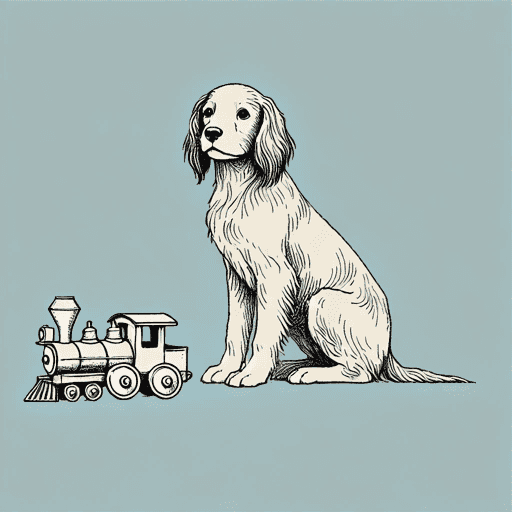
Shadow
53 pages • 1-hour read
Michael MorpurgoShadow
A modern alternative to SparkNotes and CliffsNotes, SuperSummary offers high-quality Study Guides with detailed chapter summaries and analysis of major themes, characters, and more.
Themes
Perseverance in the Face of Hardship
Content Warning: This section of the guide includes discussion of death, child death, animal cruelty, and mental illness.
At the heart of Shadow are individuals who persevere in the face of adversity. Aman’s tale about how he and his mother came to England as asylum seekers illustrates the toll of displacement, trauma, and injustice. Throughout their journey, they faced persecution from the Taliban, exposure to the elements in the harsh deserts of Afghanistan, robberies, attempted kidnappings, and, finally, incarceration due to government bureaucracy. Their journey has taken its toll, particularly on Aman’s mother, who has PTSD after being tortured in an Afghan jail. However, Aman and his mother refuse to give up, no matter how steep the odds are. This reflects their deep religious faith as well as their faith in themselves. Through learning Aman’s story and helping free the Khans, Matt and Grandpa are also inspired by their resilience.
The novel illustrates that the characters’ perseverance helps them through physically dangerous conditions as well as through psychological trauma. Aman and his mother’s journey to England is a relentless test of their endurance, forcing them to survive physical threats—such as crossing deserts, being smuggled in inhumane conditions, and escaping armed captors—and emotional ones, such as uncertainty, loss, and unfamiliarity. However, they persist despite the trauma of losing a young friend like Ahmed and their fear of never being granted asylum. Morpurgo shows that their acts of care are a type of perseverance: Aman comforts his mother during her panic attacks, and she refuses to give up hope even when she believes death is imminent. Their ability to keep moving forward, despite their fear and suffering, exemplifies their resilience.
However, their struggles come to a head during their time at the Yarl’s Wood detention center. Aman and his mother know that only danger and death await them in Afghanistan; therefore, they know it is imperative that they do whatever they can to prevent their deportation. When officials threaten to separate them, Aman and his mother respond by threatening to go on a hunger strike. This tactic works, so they continue resisting wherever possible. When the officials go as far as to put Aman and his mother on an airplane, they resist with all their strength. Aman recounts, “I had almost given up by then, but Mother never did. That’s why we’re still here because Mother didn’t give up” (77). Ultimately, when their own strength reaches its limits, they put their faith in others—Grandpa and Matt—to continue the fight on their behalf.
The protest that Grandpa and Matt help organize at the climax of the novel illustrates the importance of persevering against the odds. Despite his indignation at the unjust treatment Aman is suffering, Grandpa’s self-doubt almost causes him to give up, and Matt has to push Grandpa to write the article about Aman’s life that galvanizes public support for Aman and brings hundreds of people to protest outside Yarl’s Wood. Matt experiences numerous moments when he believes that all his efforts have failed. Aside from the false announcement that Aman and his mother have already been deported, rain is the biggest threat to their collective morale, until Grandpa steps up: “He started singing, in the rain. And that IS what he was singing too: ‘Singing in the Rain,’ from one of his favourite films, and [Matt’s] […] In no time, everyone was joining in, laughing, arms linked and singing and dancing in the rain” (92).
In addition to being a light-hearted gesture intended to keep the crowd’s spirits up, the song is a metaphor for resistance and resilience. The rain symbolizes hardship itself, while singing represents defiance. Grandpa’s song shows that hope can still exist in the darkest moments and that joy can be an act of defiance. By standing united in protest and song, the crowd demonstrates that perseverance is not just about enduring hardship but about meeting it with joy and hope.
The Bond Between People and Dogs
The novel explores the bond between humans and dogs, especially those that arise in unexpected contexts. In Aman’s hometown of Bamiyan, Afghanistan, dogs are not traditionally kept as pets. In fact, dogs are often considered unclean in many Islamic cultures and are typically only used as guard dogs. Shadow faces a double stigma: Not only is she a dog, but she is also a foreign bomb-sniffing dog who is associated with Western troops. Springer spaniels are not common in Afghanistan. Most people would never have seen a dog like Shadow, and if they did, it would have been in the company of foreign troops. When a group of local children see Aman walking with Shadow, Aman says that “as soon as [they] [a]re spotted, a whole bunch of kids c[o]me running down the track and chase[] her off. They thr[o]w stones at her, and shout[] at her, ‘Dirty dog, dirty foreign dog!’” (30). Despite the social stigma and danger associated with being seen with a foreign dog, Aman is drawn to Shadow’s gentle nature. Their first meeting is portrayed with a sense of mutual trust. Aman thinks, “She had kind eyes, friendly eyes. I knew she wouldn’t hurt me. So I lay down and slept beside her” (30). This moment signals their mutual trust and vulnerability.
Shadow’s presence in Aman’s life offers him comfort, protection, and a sense of emotional grounding during his most destabilizing experiences. Shadow becomes more than a pet: For the brief time she travels with Aman and his mother, she becomes a member of their family and a loyal presence in a world defined by unpredictability and loss. The bond between Aman and Shadow defies national borders, religious boundaries, and cultural expectations. It is a reminder that deep emotional connections can arise in unlikely circumstances and that these connections are not diminished by life’s hardships, whether forced migration, war, or even separation. So many of Aman’s human relationships in the novel are marked by trauma, dislocation, and loss; his enduring bond with Shadow becomes a rare and hopeful constant.
After being separated from Aman and his mother, Shadow continues her military work with Sergeant Brodie’s unit. However, her role changes following Brodie’s devastating injury from an IED—Shadow might have prevented this explosion had she been with him. She later becomes his seeing-eye dog and care companion. This transformation illustrates the healing nature of people’s bonds with dogs. Even amid tragedy, Shadow’s loyalty and intelligence allow her to continue to serve and enhance human lives. Sergeant Brodie and his daughter Jess’s decision to rename Polly as Shadow honors not just the dog’s history but also the enduring emotional legacy of her bond with Aman. This act of renaming is more than sentimental: It symbolically affirms the enduring impact of relationships formed under extraordinary circumstances. By choosing to keep the name Shadow, Brodie and Jess recognize that the dog’s identity was shaped by her time with Aman just as much as by her military training.
The Power of Friendship
Morpurgo presents friendship as a power that can help overcome even the most overwhelming odds. Aman’s journey, though marked by danger and uncertainty, is shaped by the bonds he forms with others. In addition to the strong bond that Aman forges with Shadow, his human friendships provide him with hope in his darkest moments. Matt’s friendship, in particular, is particularly meaningful for Aman. Early in his visit to Yarl’s Wood, Grandpa notices that the reticent Aman only lights up when Matt comes up in their conversation. For Aman, Matt represents a connection to safety, normalcy, and belonging. Likewise, Matt’s friendship with Aman helps him process his own grief over his grandmother’s death. Their friendship is also the catalyst that overcomes the workings of government bureaucracy and ultimately sets Aman free, showing how friendship is not only a source of comfort but also a powerful force for change.
Aman’s friendships also help sustain him during his traumatic journey to England from Afghanistan. From their first encounter, Shadow protects and comforts Aman, becoming his loyal companion. Additionally, the human friendships that Aman makes during his journey are just as meaningful, providing rare moments of joy among fear and desperation. His brief friendship with Ahmed, which is cut short by Ahmed’s death, provides Aman with a moment of childhood joy amid fear and uncertainty. Ahmed shows Aman his beloved toy train, and Aman tells him about his silver star badge, and the two laugh and play together. Their innocent friendship and ability to make the best of a dark situation even brighten the spirits of the adult migrants in the shipping container.
The relationship between Aman and Sergeant Brodie exemplifies a friendship based on mutual trust. After Aman warns the British soldiers about an IED, potentially saving their lives, they treat Aman like a hero—but more importantly, Sergeant Brodie treats him like a friend. As Aman recuperates from a foot injury, Sergeant Brodie spends time with him, teaching him to play Monopoly, which becomes one of Aman’s favorite board games. Though Aman is initially disappointed when Sergeant Brodie doesn’t write back to him, he never loses faith in his friend and is quick to forgive him when he finds out the reason behind the sergeant’s silence. Learning of Aman’s plight, Sergeant Brodie immediately intervenes, going up the chain of command and using his service medals as an inroad to talk to the minister himself. Sergeant Brodie’s words ultimately exemplify the spirit of friendship in the novel when he says, “Everyone should look after their friends, that’s what I told the Minister” (96). This moment emphasizes Morpurgo’s central message that friendship can inspire action and solve difficulties.

Unlock every key theme and why it matters
Get in-depth breakdowns of the book’s main ideas and how they connect and evolve.
- Explore how themes develop throughout the text
- Connect themes to characters, events, and symbols
- Support essays and discussions with thematic evidence