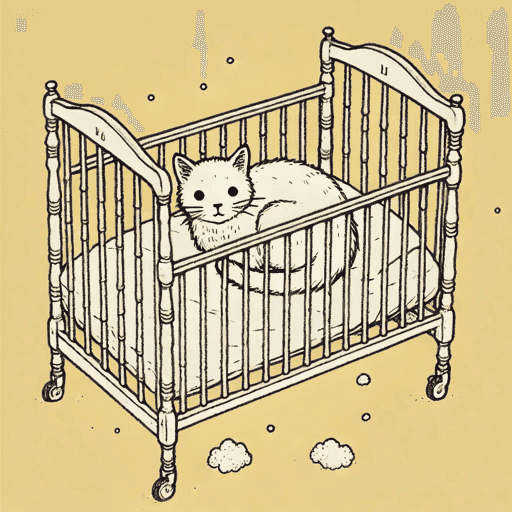
Socks
35 pages • 1-hour read
Beverly ClearySocks
A modern alternative to SparkNotes and CliffsNotes, SuperSummary offers high-quality Study Guides with detailed chapter summaries and analysis of major themes, characters, and more.
Background
Authorial Context: Beverly Cleary
Content Warning: This section of the guide includes discussion of racism.
American author Beverly Cleary (1916-2021) was a prolific author of children’s fiction that focused on family, animals, and children’s experiences. One of her most well-known series follows kid protagonist Ramona, a fearless, creative girl who navigates home and school life while never compromising her integrity. Book 1, Beezus and Ramona (1955), is told by Ramona’s older sister, Beezus, and introduces the reader to Ramona as the siblings learn to get along and Beezus learns to appreciate Ramona’s boldness. The following books—including Ramona the Pest (1968) and Ramona the Brave (1975)—follow Ramona from age five into her teen years as she navigates the trials of growing up through realistic struggles and triumphs for different ages. The Ramona series is also a spinoff of the Henry Huggins series, which includes Henry Huggins (1950) and Henry and the Paper Route (1984), which is about a boy who lives in Ramona’s neighborhood and his similar struggles.
Cleary is also known for her stories that highlight the animal experience. In Socks, Cleary shows this experience both through human and animal lenses as Socks’s feelings and thoughts are intermixed with Brickers’ lives. Other works offer a more personified animal perspective. The Ralph S. Mouse series, which includes The Mouse and the Motorcycle (1965) and Runaway Ralph (1970), follows a talking mouse who rides a toy motorcycle through his museum home and generally gets into trouble. As in Socks, the Ralph S. Mouse books show the trials of being an animal in a world run by humans, though Ralph’s experiences as a mouse (a more unwanted creature than a cat) highlight the struggles animals who aren’t kept as pets face. While Socks is generally a lighthearted story, it also deals with feelings of neglect and abandonment. By doing so through the lens of a cat, Cleary makes these emotions accessible to young readers and sets them up for deeper emotional exploration through stories like her epistolary novel Dear Mr. Henshaw (1983), which records the letters of a preteen boy as he deals with his parents’ divorce.
Historical Context: The American Family of the 1970s
Socks was published in 1973, and the novel reflects the culture of suburban America of the time. Thus, the setting of the novel offers additional characterization that Cleary does not directly cover in her children’s tale. Coming into the 1970s, the United States experienced a housing shortage in the post-World War II period. As a result, owning a home became a standard for achieving the “American dream,” while renting was seen as a sign of failure. (Dougherty, Conor. “Why Suburban American Homeowners Were Accused of Being a ‘Profit-Making Cartel’ in the 1970s.” TIME, 18 Feb. 2020). Bill and Marilyn both teach at the local college, which has afforded them the luxury of buying a home, owning a pet, and having a child comfortably. The layout of the Bricker home, combined with the quiet safety within their neighborhood, suggests the family is financially secure.
However, the Bricker family’s ability to achieve their slice of the American Dream was not something afforded to all Americans. Beginning in the 1930s, white Americans began to receive private loans from the Federal Housing Administration, which helped them access low-down-payment homes and join middle-class America through home ownership. However, redlining—a practice where color-coded maps created by the federal Home Owners’ Loan Corporation identified where households of color lived and classified those “redlined” areas as unsafe for lending—prevented Black families from obtaining the same benefits and subsidies. In the following decades, Black families continued to face racist housing discrimination. Restrictive covenants stipulated that new homes could only be sold or resold to white families; this led to lenders rejecting Black WWII veterans from receiving loans or purchasing houses. Urban renewal also threatened Black families’ stability, as it leveled Black homes and businesses to create new downtown office developments, civic spaces, and highways; this effectively stripped Black residents of their properties, forcing them to start over. While the 1968 Fair Housing Act prohibited racially restrictive covenants, it did not eradicate discriminatory housing practices. New zoning rules segregated communities by wealth and income, which drove up housing prices and prohibited lower-cost housing options such as attached homes or apartments. Those living in formerly redlined areas continued to be passed over for loans, without affordable entry points to homeownership, and would later be targeted by predatory mortgages and refinancing programs (“Historic housing discrimination in the U.S.” Habitat for Humanity). Housing discrimination continues to impact Black families today.
While the initial 1973 publication of Socks just features Socks on its cover, subsequent issues of the book include both Charles William and Socks on the cover. These covers—published by Dell and Scholastic, among others—depict Charles William as a white child with blonde hair. These depictions suggest that the Bricker family is white and, based on the segregationist principles within how home loans were given at the time, lived in a predominantly or exclusively white neighborhood. Thus, the setting of Socks is not an “every neighborhood,” nor is the Bricker family representative of all families. However, the emotional journeys present in the novel (such as dealing with new, difficult situations and finding belonging amid changing familial situations) are universal, making the story resonate with diverse young readers.

Unlock all 35 pages of this Study Guide
Get in-depth, chapter-by-chapter summaries and analysis from our literary experts.
- Grasp challenging concepts with clear, comprehensive explanations
- Revisit key plot points and ideas without rereading the book
- Share impressive insights in classes and book clubs