Socks
35 pages • 1-hour read
Beverly ClearySocks
A modern alternative to SparkNotes and CliffsNotes, SuperSummary offers high-quality Study Guides with detailed chapter summaries and analysis of major themes, characters, and more.
Important Quotes
“The girl with the stringy hair and sunburned arms picked him up and set him down in the midst of his wiggling, crawling, mewing brothers and sisters. He wanted to get out; she wanted him to stay in. The puzzling struggle had gone on all morning in the space between the mailbox and the newspaper rack near the door of the supermarket.”
(Chapter 1, Pages 1-2)
This excerpt from Chapter 1 introduces Socks and how Cleary uses his perspective in the story. Here, Socks is in a box with his siblings at the kitten sale, which confuses him. Socks is used to Debbie holding him, and he doesn’t understand why she keeps pushing him back into the box when he’s just trying to get her attention like he usually does. This scene also helps explain Socks’s quest for belonging. Before he went to live with the Brickers, he was used to a certain level of attention. Thus, the lack of attention after Charles William’s birth feels even more stark.
“‘Daddy says we should save up to have the mother cat shoveled, so she won’t have kittens all the time,’ answered Debbie.
‘Spayed,’ corrected George. ‘She means he said we should have the mother spayed.’”
(Chapter 1, Page 5)
Debbie and George speak these lines when a passing woman asks what the children will do with the money from the sale. Debbie’s answer suggests she didn’t pay close attention to what her parents said, likely because she didn’t want to sell the kittens to begin with. The casual way with which she offers the information also suggests she doesn’t understand what spaying a cat means, as she first describes it as “shoveled.”
“‘Not Socks. Please not Socks.’ There was desperation in Debbie’s whisper. Socks could feel thumping beneath her T-shirt as she held him closer. ‘They’re the kind that will squeeze him and forget to give him water. I can tell.’”
(Chapter 1, Page 10)
Debbie says this when the family with the loud children expresses interest in adopting Socks. Debbie clutches Socks close because she doesn’t want to give him up, showing again how Socks is predisposed to want attention. These lines also show both that Debbie understands Socks and that she makes judgments about others. She knows Socks doesn’t like to be squeezed, and she assumes these people will not treat Socks well, based only on how loud they are. Although Debbie has no such proof, her reaction highlights her care for Socks.
“Socks slipped and slid on the letters that crackled beneath his paws as he explored the dark mailbox. The place was sweltering, but it was free from other kittens. For the first time in seven weeks of life Socks had found a place where no one could step on his face or bite his tail. He lay down on the letters to catch up on the rest he had missed that morning.”
(Chapter 1, Page 13)
Here, George has put Socks in the mailbox to keep the loud family from taking him. This section shows how young Socks is and offers his take on the events of the day. For Socks, this dark place is nice because it is free of other kittens, even if it is uncomfortably warm. It also offers Socks a reprieve from what has felt like a strange day, which he appreciates after trying to get out of the kitten box all morning. Socks’s decision to take a nap highlights how often cats sleep and reveals that, when given the chance, Socks will do what he wants to do—not what others want him to do.
“The Brickers would have to work harder before Socks would forgive them. Owners must be disciplined. If they really wanted to be forgiven, they would have to tempt him with a snack from the refrigerator.”
(Chapter 2, Page 27)
Here, the Brickers have just laughed when Socks fell off Marilyn’s lap because there wasn’t enough room for him. Socks’s attitude exemplifies the human view of cats as arrogant, easily irritated creatures who dislike being mistreated or made a fool of themselves. Socks also thinks of himself as the most important creature in the house, as seen by how he wants to use this opportunity to train the Brickers so they will do what he wants them to do.
“Socks began to understand that the creature was not a pet but a new kind of person, a person so small that he left room on the lap for a cat. Very well. They would share the lap, but this concession did not mean he liked the new person.”
(Chapter 2, Pages 36-37)
These lines come shortly after Socks sees Charles William for the first time, and they exemplify Adapting to New Situations Through Acceptance, Not Resistance. Socks is irritated that Charles William has usurped his place on Bill’s lap, and this has made Socks decide he does not like Charles William. Realizing that Charles William is a human, not a pet, helps Socks feel a bit better, but he still does not understand why he isn’t the most important creature in the house. Socks’s decision to share Bill’s lap is Socks’s way of adapting to the situation, even though he doesn’t realize that he won’t be allowed to do so.
“‘What are we going to do?’ Mrs. Bricker sounded almost tearful. ‘If we don’t get the air bubble up, his stomach will go on hurting, and he’s too little to hurt.’
‘Feeding a baby can’t be this hard.’ The father no longer sounded confident. ‘The world is full of dumbbells who feed babies. How else do babies survive?’”
(Chapter 2, Pages 39-40)
This exchange between Bill and Marilyn highlights the struggles they face as new parents. Before these lines, both were confident they could feed Charles William without issue. Now, though, Charles William has been fussing for several minutes, and the parents have tried everything to get the baby to burp without success. Bill’s comment shows the difference between understanding something is possible and doing it. Up until now, he’s been aware that other people—even “dumbbells”—successfully feed their babies, but faced with doing it himself, he can’t comprehend why it’s more difficult than it looks. Thus, his confidence begins to falter.
“They were Charles William’s Uncle Walter, Aunt Cassie, and eight-year-old cousin Mike, who was carrying a package wrapped in paper printed with blue rabbits. Socks remembered these people. Aunt Cassie’s lap was narrow and hard. Uncle Walter enjoyed rumpling a cat’s fur so that the cat had to lick and lick and lick to get himself in order. Mike teased.”
(Chapter 3, Pages 47-48)
Here, relatives visit the Brickers to see Charles William, and this passage shows how Socks thinks of humans, further cementing his cat perspective. Instead of recognizing the relatives visually as a human might, Socks remembers them based on how they have made his life difficult in the past. Following this quotation, the boy teases Socks, which also highlights how Socks, as a cat, doesn’t necessarily put past events into context with the present. Though Socks knows the boy teases him, Socks still falls for the tricks.
“Charles William took one look at Uncle Walter and screamed. Socks came out from under the hat with a start and retreated under a chair. He recognized fear when he heard it and accepted the scream as a warning of danger. If Charles William was in danger, so was he. Maybe Charles William was of some use after all.”
(Chapter 3, Pages 48-49)
This is the first place where Socks acknowledges that Charles William might be useful, which foreshadows how the two come together at the end of the book. This excerpt again highlights Socks’s cat perspective. He takes Charles William’s scream as a warning and runs to hide, following his feline instincts. In truth, Charles William is just reacting as babies do, even though there is no threat. Socks doesn’t know this, though, and reacts the way he knows how.
“‘Say, Bill,’ said Uncle Walter to Mr. Bricker, ‘have you thought about buying the kid an encyclopedia? Now’s a good time. The price goes up the first of the year.’ […] ‘Say, hasn’t that cat put on a lot of weight?’ asked Uncle Walter, who had been forced to admit that Charles William would not be ready to read for a few years, and by then the encyclopedia might be out of date.”
(Chapter 3, Pages 53-55)
This excerpt dates the novel, both through characterization and common practices at the time. When Socks was published, print encyclopedias came in a set of volumes broken up alphabetically, and they were updated and released yearly. Uncle Walter’s suggesting them as a gift offers context to this process, including how the price went up each year. This also shows that Uncle Walter is out of touch with babies’ milestones, suggesting he did not have as active a role in raising his son as Bill has so far taken with Charles William.
“Even though Socks slept, his radar ears told him what was going on. The visitors departed. Charles William took his bottle. When the ears relayed the second burp to Socks’s brain, he came out from under the bed and, trailing dust from his whiskers, ran down the hall to the kitchen in time to meet Mr. Bricker with the formula bottle.”
(Chapter 3, Page 58)
These lines show that hiding and waiting are key strategies for Socks to get through situations he doesn’t like. This also highlights his cat perspective through his enhanced hearing, which keeps him informed even as he naps. Socks’s “radar ears” are particularly attuned to sounds that dictate when it’s time to eat. After weeks of learning patterns, Socks knows the baby’s second burp means formula is coming, and Socks acts accordingly because getting the formula is important to him.
“Socks, not so fortunate, still woke up at two o’clock expecting formula to be poured into his bowl. He felt cheated by the diet meals that his owners served him. After his small nutritious breakfast, he was allowed to sit beside the refrigerator all day without an offer of a bite to eat. He waited for food to be left on the counter so he could steal it, but his owners were too smart for him.”
(Chapter 4, Page 64)
These lines offer context to Socks’s relationship with food. As part of the patterns Socks has learned, he has come to expect a specific amount of food at specific times. When he doesn’t get fed according to this pattern, he believes that sitting by the fridge will eventually get him a snack because it has worked in the past. This doesn’t work either, which forces Socks to try increasingly desperate ideas, such as stealing food. However, this also doesn’t work. This change in Socks’s diet sets up his acting out in increasingly problematic ways.
“Socks now had Mrs. Bricker at a disadvantage. Both her hands and her lap were occupied, and she did not know whether her cat merely wanted to go out or whether he needed to.”
(Chapter 4, Page 66)
Before these lines, Marilyn has settled on the couch to feed Charles William. This irritates Socks because he is still mad that he won’t get the leftover formula. Instead of merely sitting and waiting in hopes of getting food, Socks has transitioned to showing his displeasure by inconveniencing his owners. Socks knows Marilyn won’t deny him going outside to do his business, and he purposefully waits until it’s difficult for her to let him out because he wants to get back at her for changing his diet.
“Charles William stared at his toe in astonishment. Never before had he experienced Scotch tape on his toe. He lay back and waved his foot. The tape stuck fast. Fascinating! ‘Ah-gah-gah,’ he said.”
(Chapter 4, Pages 77-78)
This section is one of the first places where Cleary explores Charles William’s perspective. Like Socks, Charles William’s thoughts reflect what a baby might be thinking as events unfold. Here, the sitter has just put tape on Charles William’s toe, and as intended, this catches Charles William’s attention because it is a new experience that he becomes very curious about. This moment also highlights how adults use simple tricks to distract babies.
“This was the moment Socks had been waiting for, too. He leaped lightly onto the sitter’s lap, which was large, soft, and sweetly perfumed by flower-scented soap. Mrs. Risley possessed the perfect lap, a lap rarely experienced by a cat who lived in a world of people determined to stay thin.”
(Chapter 4, Page 80)
Here, Socks gets lap time for the first time in ages, and his description of the sitter’s lap shows Socks’s priorities where laps are concerned. For Socks, the sitter’s lap is comfortable and soft, and his thoughts represent how there is no one right body shape. Further, this supports Socks’s relationship with food. The sitter is a larger woman, and Socks sees nothing wrong with this, which partially explains why he is so annoyed with the Brickers changing his diet.
“A puzzling and, to Socks, inconvenient change took place in the behavior of his mistress. Mrs. Bricker, who usually spent the least possible time housekeeping, now upset the household by a thorough cleaning. Socks had to rewash his paws after he walked across the kitchen floor wet from the mop. The vacuum cleaner drove him from one room to another, and the smell of the ammonia that Mrs. Bricker used to wash the windows drove him out of the house. The only good that came from all this house-cleaning was the disappearance of dust from under the bed. Socks could now retreat in safety without sneezing.”
(Chapter 5, Pages 83-84)
Here, Marilyn prepares for her mother-in-law’s visit, which involves changing her usual behavior. Seen from Socks’s perspective, the cat is confused about why Marilyn is acting differently, and this excerpt also highlights Socks’s cat perspective through the inconveniences he experiences because of Marilyn cleaning. Similarly, Socks also notes how the cleaning helps him, as it takes the dust from his favorite hiding spot.
“When he tried to jump on her lap, his claw snagged her knit dress and he was scolded. Her nylon stockings dancing over the heat vent as they dried in the bathroom were irresistible to him, and he could not understand why she felt he had misbehaved when he pulled them down and played with them. Couldn’t she understand that a cat needed to play?”
(Chapter 5, Page 88)
This excerpt of Socks’s cat perspective offers a unique look at how cats and humans interpret actions differently. For Socks, jumping up onto someone’s lap is just something he does. To the mother-in-law, though, it is a problem because Socks’s claws catch on her dress. Similarly, the drying stockings are a tempting toy that Socks can’t resist, and he sees nothing wrong with this because he’s just playing with things that interest him. However, the mother-in-law doesn’t want Socks to play with the stockings, which Socks can’t understand.
“Socks sprang on the hair, caught it in his claws, tossed it into the air, and let it fall on the carpet. Then he pounced. He hugged the soft bundle of fibers with his front paws and kicked it with his strong hind feet. He rolled over with the hair still clutched to his body. With his movements muffled by the carpet, he tussled and scuffled and wrestled. He dropped the hair, hid behind a chair, and pounced again. He pretended to ignore it before he surprised it by catching it in his claws and tossing it into the air.”
(Chapter 5, Page 93)
Here, Socks plays with the mother-in-law’s wig, and this excerpt shows how Socks thinks about playtime. At first, the hair is a neat toy he can tussle with, and his description of playtime shows him taking full advantage of what he can do to the wig. As play progresses, Socks gets more creative, almost thinking of the hair as a small animal he can sneak up on. These lines again show how Socks isn’t intentionally being destructive. He is following his feline instincts, which tell him to play when he finds something worth playing with.
“‘Socks!’ Mr. Bricker shouted in such a terrible voice that Socks was stunned. Never had his master spoken to him that way. He cringed against a cupboard and looked up at Mr. Bricker with wide, frightened eyes.”
(Chapter 5, Page 101)
These lines follow Socks biting Marilyn. This moment is unlike any Socks has experienced before, as seen by how Socks reacts more fearfully to the tone of Bill’s voice. As with play, this moment also shows that Socks is not intentionally causing harm. His desire for attention hit a breaking point, and he snapped. Unfortunately, his snap is seen as an act of aggression and, more importantly, a potential danger to Charles William, which leads to Socks being kicked out of the house.
“‘A cat’s heart is where his dish is,’ said Mr. Bricker.
Mr. Bricker was wrong. Socks’s dish and water bowl had been moved to the back step, and his bed had been moved to the garage, where a window was left open so he could come and go. Still, his heart remained in the house with his family.”
(Chapter 6, Page 106)
Throughout the novel, Cleary explores the cat’s perspective on humans. Here, though, she reverses this examination through Bill’s dialogue. Cats are often thought of as less loving than dogs, and Bill’s dialogue shows he believes this because he doesn’t think Socks cares about the family. In the following paragraph, Socks’s thoughts prove Bill wrong. In fact, Socks does care. He is just more aggressive about getting attention than is acceptable due to Overcoming Struggles in Changing Relationships to Form Lasting Bonds.
“‘Socks should learn to roll over on his back and kick with his hind feet when he gets in a fight,’ said Mr. Bricker, who was interested in all sports. ‘His strength is in his hind legs. He should hang on with his front paws and give Old Taylor everything he’s got with his hind legs.’”
(Chapter 6, Pages 115-116)
Before this dialogue from Bill, Socks was injured in the fight with Old Taylor. The technique Bill describes here is how Old Taylor fought, which shows that Bill understands cat anatomy and how they can best use it to their advantage. These lines also play to the stereotype that men like sports and are knowledgeable enough about them to coach others.
“Socks was forgotten. Charles William had spoken a word—well, almost. Ticky! Imagine that. Charles William had called Socks Ticky. His mother would write his first word in his baby book. His father would write the news to Nana, maybe even phone collect. Charles William, overwhelmed with his own cleverness, heaved the spoon across the kitchen.”
(Chapter 6, Page 119)
After the Brickers bring Socks inside and make sure he’s okay, Charles William recaptures his parents’ attention by saying a word. As in the past, Charles William pulls attention away from Socks, but Socks doesn’t immediately get mad about it because he now has proof that the Brickers care about him, which solidifies The Search for Belonging Amid Shifting Familial Dynamics. Though collect calling still exists today, it has been made largely irrelevant by cell phones. It was common at the time Socks was published, though, for people to make long-distance phone calls “collect,” meaning the recipient of the call would pay any charges the call incurred.
“Socks learned to put up with Charles William and, when necessary, to escape under the dining room table where he was fenced in by chair legs.
‘See, the kitty’s tired,’ said Mrs. Bricker to Charles William, when Socks had fled to safety. Actually Mrs. Bricker was the one who was tired.”
(Chapter 7, Page 126)
These lines support both Socks’s cat perspective and Cleary’s commentary on new parenthood. Following the incident with Old Taylor, Charles William has taken a new and greater interest in Socks, which means the cat is frequently the subject of the baby’s attention. Rather than get annoyed as Socks might have before, the recent proof that he’s cared for allows him to endure this attention, even if it is now more than he would like. The second paragraph is an example of the type of lines parents use when they want to encourage their children to settle down. By making tiredness about Socks, Charles William is more likely to listen because he cares more about the cat than how his mother feels.
“There was nothing Socks enjoyed so much as a warm body to lean against while he washed, but as soon as he settled himself against Mrs. Bricker and was grooming himself with long, hard licks, pausing to chew the rough spots, she pushed him to the floor. ‘Socks, please,’ she said. ‘Be a good cat.’
In a moment Socks was back against the exhausted mother, licking, chewing, and occasionally scratching until his fur was sleek and his paws snowy.”
(Chapter 7, Page 127)
This excerpt is another example of how cats and humans view a situation differently. Marilyn has put Charles William down for a nap and is exhausted, so she lies down for a rest. To Socks, however, Marilyn is finally free of the baby and, thus, available for his use. Socks ignores Marilyn’s request for Socks to be a good cat because Socks’s priority is grooming himself, and Marilyn makes an excellent leaning post for this process.
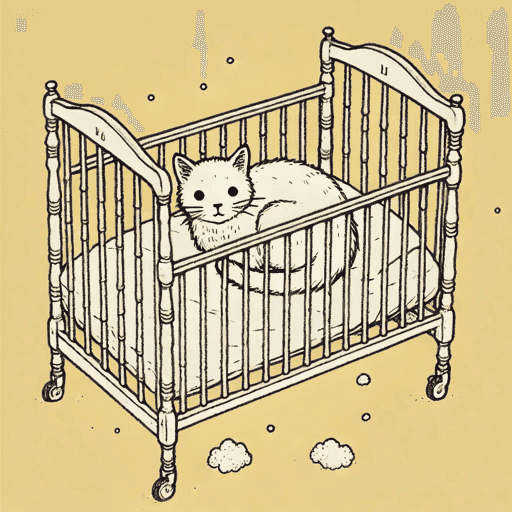
“The crib was comfortable, the room quiet. The rustle of Charles William’s plastic pants inside his corduroy overalls was friendly and soothing. Socks now had a playmate and companion.”
(Chapter 7, Page 137)
In the past, Socks has noted sensory details (such as the hardness or softness of laps) as key elements of a situation. Here, Socks’s observations about Charles William show how the baby has become a source of comfort, rather than unwanted attention. Socks specifically notes that the sound of Charles William’s diaper is soothing, which means Socks also associates being near the baby with contentment. The final line confirms this to make it clear that Socks’s character arc is complete, particularly regarding Overcoming Struggles in Changing Relationships to Form Lasting Bonds.

Unlock every key quote and its meaning
Get 25 quotes with page numbers and clear analysis to help you reference, write, and discuss with confidence.
- Cite quotes accurately with exact page numbers
- Understand what each quote really means
- Strengthen your analysis in essays or discussions