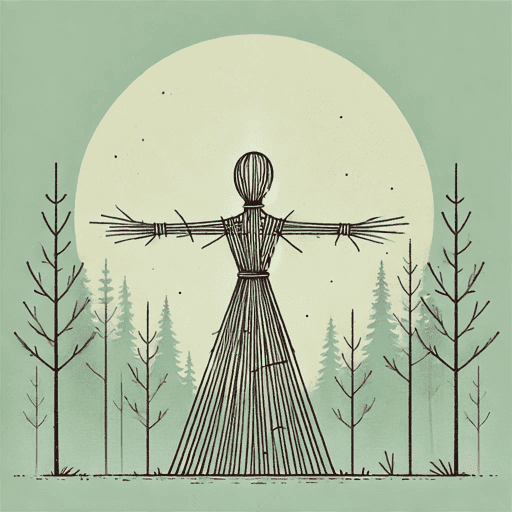
The Empusium: A Health Resort Horror Story
A modern alternative to SparkNotes and CliffsNotes, SuperSummary offers high-quality Study Guides with detailed chapter summaries and analysis of major themes, characters, and more.
Summaries & Analyses
Quizzes
NEWReading Tools
Games
Background
Authorial Context: Olga Tokarczuk
Olga Tokarczuk is a Polish novelist, essayist, and psychologist, widely regarded as one of the most important literary figures of contemporary Europe. She was born on January 29, 1962. Her parents were both teachers. She studied psychology at the University of Warsaw, where she was influenced by Carl Jung’s theories on the unconscious and archetypes, elements that would later surface in her literary work.
Following her studies, she worked as a therapist in Wałbrzych, though she soon gravitated toward writing. Tokarczuk debuted as a novelist in 1993 with The Journey of the Book-People (Podróż ludzi Księgi), a philosophical novel set in 17th-century France. Her second novel, E.E. (1995), was an exploration of spiritualism, mysticism, and psychological depth, themes that would recur throughout her career. Her breakthrough novel came in 1996 with Primeval and Other Times (Prawiek i inne czasy), an ambitious, multi-generational narrative chronicling the fictional village of Prawiek. The novel, reminiscent of magical realism, draws from Polish folklore and history while examining the cyclical nature of time. It earned Tokarczuk widespread recognition and established her as a major voice in contemporary Polish literature.
Tokarczuk’s writing is characterized by its fluidity, philosophical depth, and a penchant for questioning established narratives. One of her most significant works, House of Day, House of Night (Dom dzienny, dom nocny, 1998), is a fragmented, dreamlike novel that blends fiction, memoir, myth, and historical speculation. In 2007, she published Flights (Bieguni), a novel that would later win the Man Booker International Prize in 2018. The novel’s unconventional structure and deeply poetic prose solidified her reputation as a boundary-pushing writer. Her 2014 novel The Books of Jacob (Księgi Jakubowe) is one of her most ambitious works. A historical epic exceeding 900 pages, it chronicles the life and spiritual movement of Jacob Frank, an 18th-century Jewish mystic and religious leader. The novel delves into themes of religious syncretism, cultural identity, and the shifting tides of history, earning Tokarczuk both praise and controversy in Poland due to its unflinching examination of Polish-Jewish history.
In contrast to her historical epics, Drive Your Plow Over the Bones of the Dead (Prowadź swój pług przez kości umarłych, 2009) is a murder mystery infused with ecological and philosophical themes. The novel, which follows an aging woman investigating a series of mysterious deaths in a remote Polish village, is both a noir thriller and a meditation on animal rights, fate, and justice. It has drawn comparisons to the works of Franz Kafka and Thomas Pynchon.
Beyond literature, Tokarczuk has been an outspoken advocate for progressive social causes, including feminism, LGBTQ+ rights, and environmentalism. Her criticism of Polish nationalism and the country’s conservative politics has made her a controversial figure, but she remains a steadfast voice for tolerance and inclusivity. Her willingness to confront uncomfortable aspects of Polish history, particularly regarding antisemitism and xenophobia, has sparked both admiration and backlash.
Her winning of the 2018 Man Booker International Prize for Flights was a turning point in her international reputation, introducing her to English-speaking readers. In 2019, she was awarded the Nobel Prize in Literature for 2018. This accolade cemented her status as one of the foremost contemporary writers.
Literary Context: Thomas Mann and The Magic Mountain
The Empusium borrows heavily from Thomas Mann’s The Magic Mountain (Der Zauberberg), published in 1924. Set in a tuberculosis sanatorium in the Swiss Alps before World War I, The Magic Mountain follows Hans Castorp, a young German engineer, who initially visits his ailing cousin Joachim Ziemssen for a three-week stay. However, he soon finds himself ensnared by the sanatorium’s atmosphere and the existential conversations among its eclectic residents, staying on for seven years. Hans falls under the influence of two contrasting figures: Lodovico Settembrini, a liberal humanist advocating for progress and enlightenment, and Leo Naphta, a radical Jesuit who embraces mysticism, authoritarianism, and nihilism.
The Empusium is significantly influenced by The Magic Mountain, both thematically and structurally. Like Mann’s novel, The Empusium is set in a sanatorium, though Tokarczuk’s take on the setting infuses it with Gothic horror, feminist critique, and gender fluidity. In both novels, the sanatorium is not just a medical institution but a metaphysical space where characters undergo psychological and existential transformations. Tokarczuk, however, shifts the focus from Mann’s exploration of time and ideology to gender and societal oppression. The setting in The Empusium serves as a locus of supernatural and psychological upheaval, questioning rigid identities.
While The Magic Mountain uses illness to reflect pre-war European decadence, The Empusium employs disease as a critique of gender roles and patriarchal oppression. Tokarczuk’s protagonist, Mieczysław Wojnicz, arrives at a remote spa, much like Hans Castorp, and becomes ensnared in an eerie, claustrophobic world where reality is unstable. The patients in Tokarczuk’s novel, much like those in Mann’s, experience sickness not only as a medical condition but as an existential state. Both novels use the mountain setting as a place detached from normal reality, where characters engage in heightened philosophical, mystical, and sometimes supernatural experiences. Mann’s mountain is a liminal space between life and death, while Tokarczuk’s takes on a more explicitly Gothic and uncanny quality, infused with supernatural elements and feminist horror. Tokarczuk subverts Mann’s intellectual tradition by focusing on voices marginalized in history, including women, queer individuals, and those outside rigid social norms.
Through The Empusium, Tokarczuk both pays homage to The Magic Mountain and subverts its framework, offering a fresh, contemporary lens on the themes of illness, transformation, and societal decay. In doing so, she crafts a novel that is in dialogue with The Magic Mountain while establishing its own unique ideas and perspective.
Literary Context: Empusa
As well as The Magic Mountain, The Empusium plays on the Greek literary figure of Empusa. Empusa is a fearsome and supernatural creature from Greek mythology, often associated with Hecate, the goddess of magic, witchcraft, and the underworld.
Empusa belongs to a category of spirits or daemonic beings known as empusae, which were said to haunt roads and devour unsuspecting travelers. She is typically depicted as a monstrous figure with a shape-shifting nature, sometimes appearing as a beautiful woman to lure her victims before revealing her true terrifying form. This theme of deception and entrapment is central to Empusa’s myth and would later influence various supernatural folklore traditions. Empusa is often characterized by her ability to transform, her insatiable hunger for human flesh, and her association with nightmares and illusions. The earliest references to her suggest she was a spectral figure meant to instill fear, particularly in children and lone wanderers. Over time, her myth evolved, and she became emblematic of the dangers of deception, supernatural trickery, and the unseen forces of the night.
Empusa appears in several key works of ancient Greek literature, where she is portrayed as both a terrifying and comedic figure. One of the earliest and most famous references to Empusa comes from Aristophanes’s comedy The Frogs (5th century BCE). In this play, the god Dionysus and his servant Xanthias travel to the Underworld, where they encounter Empusa. Another notable reference to Empusa occurs in Philostratus’s Life of Apollonius of Tyana (3rd century CE), a semi-biographical account of the philosopher and mystic Apollonius. In this work, Apollonius and his followers encounter an empusa disguised as a beautiful woman while traveling through India. When one of the men begins to fall under her spell, Apollonius exposes her true nature, causing her to flee in fear. This version of the myth portrays the empusae as vampiric creatures that feed on human flesh and energy, much like the later European legends of succubi or demonic seductresses.
The myth of Empusa has had a lasting impact on later literary and folkloric traditions, particularly in Gothic literature and horror fiction. The empusae share many characteristics with later legends of vampires and succubi, particularly their ability to lure victims through illusion and consume their life force. This connection can be seen in works like Goethe’s The Bride of Corinth (1797), which tells the story of a vampiric woman who deceives a young man before revealing her true nature. The Empusium reimagines the concept of the empusae as a commentary on gender and transformation. Tokarczuk’s work explores the supernatural and the monstrous as metaphors for societal oppression and identity fluidity, drawing upon the ancient myth while infusing it with contemporary significance.

Get in-depth, chapter-by-chapter summaries and analysis from our literary experts.
- Grasp challenging concepts with clear, comprehensive explanations
- Revisit key plot points and ideas without rereading the book
- Share impressive insights in classes and book clubs
Related Titles
By these authors


Featured Collections
Appearance Versus Reality
View Collection
Books that Feature the Theme of...
View Collection
Books that Feature the Theme of...
View Collection
Challenging Authority
View Collection
Fear
View Collection
Mortality & Death
View Collection
Power
View Collection
Required Reading Lists
View Collection
Safety & Danger
View Collection
The Past
View Collection