The Marvelous Land of Oz
45 pages • 1-hour read
L. Frank BaumThe Marvelous Land of Oz
A modern alternative to SparkNotes and CliffsNotes, SuperSummary offers high-quality Study Guides with detailed chapter summaries and analysis of major themes, characters, and more.
Character Analysis
Content Warning: This section of the guide includes discussion of emotional abuse.
Tip/Princess Ozma
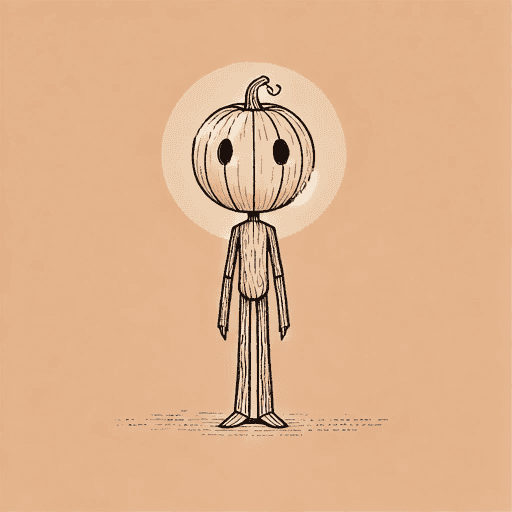
As the novel’s protagonist, Tip undergoes the most significant transformation, which is both literal and central to the story’s exploration of identity. Initially a mischievous and resourceful boy, Tip lives under the cruel guardianship of the witch Mombi. His cleverness is immediately evident through his creation of Jack Pumpkinhead, a figure initially intended as a simple prank to frighten Mombi. This act of creation, however, unexpectedly burdens him with a sense of responsibility when Mombi brings Jack to life. Tip’s relationship with Jack evolves from that of an inventor to that of a reluctant parent, as he accepts Jack’s declaration: “[Y]ou must be my creator—my parent—my father!” (20). This dynamic forces Tip to mature, shifting his motivations from self-preservation to the protection of his creation. His flight from Mombi isn’t just an escape from servitude but the beginning of a journey toward self-discovery, though the true nature of that self remains hidden from him.
Tip’s ingenuity and adaptability define his character. When faced with the challenge of Jack’s fragile wooden joints, he demonstrates his cleverness again by animating the Saw-Horse using the stolen Powder of Life. This act further solidifies his role as a creator, grappling with the consequences of bringing inanimate objects to life. Throughout the group’s travels to the Emerald City, he’s the group’s practical leader, providing explanations of Oz’s history to Jack and navigating the challenges they encounter. Despite his youth, he displays courage and a growing awareness of the world beyond Mombi’s farm. His initial goal is simply to find freedom and a place of safety, but he’s quickly swept up in the political turmoil of Oz, aligning himself with the deposed Scarecrow.
The culmination of Tip’s journey is the revelation that he’s the enchanted Princess Ozma, the rightful heir to the throne of Oz. This discovery is the ultimate thematic expression of The Malleability of Identity. His resistance to this change is resolute, immediate, and relatable: “I want to stay a boy […] I don’t want to be a girl!” (193). This protest highlights the conflict between one’s perceived identity, shaped by experience, and an inherent identity dictated by birthright. Tip’s acceptance of his transformation into Ozma is a pivotal moment, representing a maturation from a boy concerned with his own desires to a ruler who must fulfill her duty. As a round and dynamic character, Tip’s physical and psychological journey from a rebellious boy to a wise and just princess questions the fixed nature of self and gender, ultimately suggesting that identity is a combination of origin, experience, and acceptance of one’s role.
Jack Pumpkinhead
The novel’s principal deuteragonist, Jack Pumpkinhead, is a man initially created from found objects. His existence directly explores the responsibilities of a creator and the nature of consciousness. Mombi’s Powder of Life brings Jack to life from a wooden frame and a pumpkin head carved by Tip. Jack is a static yet round character. The first moments of his life establish his personality: He’s unfailingly polite and naive, and he possesses a perpetually smiling face that masks a constant, deep-seated anxiety. This core anxiety centers on his own mortality, specifically his fear of spoiling. He repeatedly voices this concern, stating, “I am in constant terror of the day when I shall spoil” (88). This fear makes him a fragile and sympathetic figure, a being who, despite his artificial origins, possesses a real and relatable dread of his own demise. His identity is given to him, not developed, yet he’s imbued with a consciousness that makes him more than a simple automaton.
Jack’s primary role in the story is as a foil and a dependent for Tip. He immediately identifies the boy as his “father,” establishing a relationship that forces Tip into a position of responsibility. Jack’s physical awkwardness, given his easily twisted head and fragile joints, necessitates constant care, which in turn helps develop Tip’s nurturing instincts. Jack’s innocence and ignorance about the world are also a useful world-building device, as Tip’s explanations to him provide readers with essential background on the history and geography of Oz. Despite his limitations and his sometimes “decayed intellect” (130), Jack is a loyal companion whose simple observations can be surprisingly insightful. He’s a key figure in the thematic exploration of The Moral Ambiguity Inherent in Artificially Creating Life, as his existence forces other characters, and the reader, to consider whether a “made” person is any less alive than a born one. His kindness and gentle nature, coupled with his persistent anxieties, make him a complex and memorable character whose core personality remains unchanged by the extraordinary events around him.
General Jinjur
The story’s primary antagonist, General Jinjur, is a charismatic and ambitious young woman who leads the all-female Army of Revolt. As a flat and static character, she represents a satirical critique of both political ambition and early 20th-century gender stereotypes. Her motivation for overthrowing the Scarecrow is straightforward and openly declared: “Because the Emerald City has been ruled by men long enough” (58). This statement positions her as a radical figure fighting for female empowerment, a clear nod to the contemporary women’s suffrage movement. However, her rebellion is portrayed with significant irony. Her army is armed not with swords, but with “two long, glittering knitting-needles” (59), and their primary goals after seizing power are to acquire gems for jewelry and force the city’s men to perform domestic chores.
Jinjur’s leadership, while initially successful, is incompetent and superficial. She easily conquers the city not through military prowess but because the Scarecrow’s army consists of a single, nonconfrontational soldier. Once in power, Jinjur’s reign is characterized by frivolity; she’s found eating caramels on the throne, and her soldiers spend their time making fudge. Her army’s greatest weakness is a stereotypical fear of mice, which the Scarecrow exploits to recapture the palace with comical ease. Through Jinjur, the novel thematically explores The Absurdity of Societal Obsession Over Gender Roles and Power. While Jinjur successfully usurps power, her inability to rule effectively suggests that fitness to govern is based on merit and character, not gender. Her eventual defeat and the restoration of Princess Ozma, the rightful female heir, reinforce this idea, replacing the illegitimate female usurper with a legitimate female monarch. The book doesn’t portray Jinjur as evil but as a misguided and ultimately foolish leader whose rebellion is more about acquiring luxury and reversing domestic roles than about genuine governance.
The Scarecrow
The former protagonist of The Wonderful Wizard of Oz, the Scarecrow, returns in a significant supporting role as the deposed king of the Emerald City. He remains a static character, retaining the key traits of wisdom, kindness, and unflappable calm that defined him in the first book. His “brains,” once a mere aspiration, are now a source of quiet pride, and he often pauses to “indulge in a quiet think” (132) before proposing clever solutions to the party’s dilemmas. He reacts to General Jinjur’s army overthrowing him not with anger or despair but with thoughtful resignation. Jinjur admits that being a monarch is a “tiresome job” and is more concerned for his personal safety than for his lost throne. This detachment from power reinforces his nature as a wise fool, a ruler who understands the burdens of leadership and isn’t attached to its splendors.
His primary role in the plot is to initiate the quest to regain the throne, which leads him to seek the help of his old friend, the Tin Woodman. Throughout the journey, he’s the group’s chief strategist. His ideas include escaping the besieged palace by building a flying machine and using field mice to frighten Jinjur’s army. His most notable intellectual contribution comes when he deduces that the Gump’s head must be animated for the flying machine to be controlled. Later, after the Jackdaws have scattered his straw stuffing, he’s restuffed with money, becoming what the Tin Woodman calls “a Royal Treasurer who is made of money” (204). This transformation doesn’t alter his personality, highlighting how his identity resides in his mind and character, not his physical composition. Ultimately, the Scarecrow willingly cedes his claim to the throne upon learning of Princess Ozma’s existence, demonstrating that his quest was motivated by a desire for justice rather than personal power.
The Tin Woodman
The Emperor of the Winkies, the Tin Woodman, appears late in the novel but plays a crucial role as a powerful and loyal ally. Like the Scarecrow, he’s a static character, cherished for his unwavering compassion and bravery. His defining trait is his heart, which he believes is the “warmest and most admirable in the whole world” (143). This capacity for empathy makes him quick to offer assistance to his good friend, the Scarecrow, and to feel sympathy for the plight of Jack Pumpkinhead and the Gump. In addition, he’s fiercely loyal and courageous, immediately resolving to march on the Emerald City with his “gleaming axe” to restore his friend to the throne. This combination of sentimentality and formidable strength makes him the group’s emotional core and its most capable warrior.
Beyond his emotional depth, the Tin Woodman is characterized by a touch of vanity regarding his physical appearance. He has had himself nickel-plated to maintain his shine and is greatly concerned about scratches or blemishes. This pride in his polished exterior provides a source of gentle humor but also reflects his meticulous nature as a skilled craftsman. His mechanical abilities are essential to the party’s success. He repairs and improves Jack Pumpkinhead’s wooden limbs, carves a new leg for the Saw-Horse, and assembles the Gump into a functional flying machine from a bizarre collection of household items. Without his skill as a mechanic, the group’s escape from the besieged palace would be impossible. The Tin Woodman embodies the ideal of a compassionate hero, a figure whose strength is matched only by his kindness.
Mombi
The story’s secondary antagonist, Mombi, catalyzes its central plot. A cruel and cunning sorceress from the Country of the Gillikin, she’s Tip’s abusive guardian at the start of the novel. Her magical abilities are significant, though limited by the decree of the Good Witch of the South. Her possession of the magical Powder of Life initiates the main events of the story; by using it on Jack Pumpkinhead, she unwittingly provides Tip with a companion for his escape. Mombi’s primary motivation is fearful protection of her self-interest, and her defining traits are her vengeful nature and her skill at deceptive transformations. After Tip escapes, she allies herself with General Jinjur, not out of political conviction but out of a desire to recapture Tip and punish him.
Mombi’s most critical role in the novel is her connection to the lost Princess Ozma. As Glinda the Good reveals, Mombi was tasked by the Wizard of Oz with hiding the infant princess. Her solution was to use her magic to transform the girl into a boy, Tip. Mombi is therefore the sole keeper of the secret that resolves the entire conflict over the throne of the Emerald City. Her series of transformations to evade capture by Glinda, shifting from a rose to a shadow and finally to a Griffin, highlights her slippery and deceitful nature. When finally captured and forced to reveal the truth, she points her finger at Tip and declares, “[T]hat is the Princess Ozma” (193). This confession untangles the novel’s central mystery and enables the restoration of legitimate rule in Oz. As a static and flat character, Mombi is a classic wicked witch archetype, a force of corrupt magic whose actions, while malicious, are necessary for the restoration of order and truth.
The Woggle-Bug
Mr. H. M. Woggle-Bug, T. E., is a comical supporting character who joins the Scarecrow’s party midway through their journey. His very existence is a thematic testament to the malleability of identity, as his formal title establishes his identity as something achieved through transformation, not inherent at birth. Originally a common woggle-bug, he was caught by a professor, was projected through a magnifying lens, and permanently became “Highly Magnified” (which defines the “H. M.” identifier preceding his name). In addition, during his time living in a schoolhouse, he became “Thoroughly Educated” (which defines the “T. E.” identifier following his name), a fact he announces with immense pride to everyone he meets. His sense of self is thus based on both physical change and intellectual attainment.
As a static and flat character, the Woggle-Bug is a satirical representation of academic pedantry and a cultured gentleman. He’s pompous, verbose, and obsessed with demonstrating his intellectual superiority, most often through the use of groan-inducing puns that annoy his companions. His proud, almost pedantic, self-definition satirizes academic pretension while reinforcing the novel’s central idea that identity can be a deliberate act of construction.
Despite his pretensions, the Woggle-Bug’s education does occasionally prove useful. His understanding of language allows him to see the value in the Scarecrow’s “rare” brains. In addition, the Woggle-Bug’s knowledge of societal customs makes him a unique, if eccentric, addition to the royal court. His most significant contribution is his act of courage in swallowing one of Dr. Nikidik’s wishing pills, which he uses to mend the Gump’s broken wings, allowing the party to escape the Jackdaws’ nest. While he’s often a figure of ridicule for his over-the-top pronouncements and flawed logic, the Woggle-Bug is a loyal and ultimately harmless companion. His character provides a lighthearted critique of the belief that education alone equates to wisdom, showing that even a “Thoroughly Educated” insect can lack common sense.
The Saw-Horse
The Saw-Horse is an inanimate object that Tip brings to life by using the Powder of Life. Initially animated to provide a steed for the fragile Jack Pumpkinhead, the Saw-Horse quickly develops a distinct and cantankerous personality, making it another thematic example of the moral ambiguity inherent in artificially creating life. As a static and flat character, its primary traits are gruffness, practicality, and surprising moments of insight. Unlike the polite Jack, the Saw-Horse is often blunt and scornful, complaining about its “brittle” anatomy and engaging in quarrels with Jack. It’s a creature of pure utility, built for endurance and speed, and its wooden limbs prove tireless in escaping Mombi and, later, in chasing down the witch for Glinda.
One of the Saw-Horse’s most significant moments is when the travelers are stymied by the instructions for the wishing pills, which require them to “count seventeen by twos” (148). While the Scarecrow’s brains and the Woggle-Bug’s education fail to solve the riddle, the Saw-Horse offers the simple, lateral solution: “‘Why not start counting at a half of one?’” (160). This unexpected display of logic from the least intellectual member of the group is a quiet commentary on the nature of intelligence, suggesting that practical sense can be more effective than complex reasoning. The Saw-Horse’s role is primarily functional, providing transportation for the heroes, but its distinct personality and surprising practical wisdom make it a memorable and essential member of the party. Ultimately, it becomes the personal steed of Princess Ozma, shod with gold shoes and cherished for its loyalty.
The Gump
A flying machine that the Tin Woodman constructs and Tip brings to life, the Gump is assembled from two sofas, a broom, four palm-leaf wings, and the mounted head of a Gump. It’s the ultimate product of collaborative ingenuity. As a character, the Gump is a “conglomerate personality” with a wry, melancholic, and resigned disposition. Voiced through the Gump head, it expresses constant surprise and mild shame at its bizarre form.
The Gump’s first words establish its existential confusion, stemming from its assembled nature: “‘This,’ said the Gump, in a squeaky voice not at all proportioned to the size of its great body, ‘is the most novel experience I ever heart of. […] Am I a Gump, or am I a juggernaut?’” (142). Given that the Gump is a functional whole created from disparate parts, its query highlights its nascent consciousness attempting to reconcile its composite identity. This thematically engages with the moral ambiguity inherent in creating artificial life, while the diction (“squeaky voice” versus “great body”) emphasizes the Gump’s incongruous construction.
It serves its masters obediently but unenthusiastically, viewing its existence as a strange and temporary state of servitude. Its most poignant moment comes after it safely delivers the adventurers to Glinda’s palace, when it voices its one desire: “‘[P]lease take me to pieces. I did not wish to be brought to life, and I am greatly ashamed of my conglomerate personality’” (201). This request thematically touches on the moral ambiguity inherent in artificially creating life, suggesting that a created being may not desire the consciousness thrust upon it. Its wish is granted, and its parts are returned to their original functions, although the head retains its ability to speak, serving as a strange memento of the adventure.
Glinda the Good
As the powerful and wise Sorceress of the South, Glinda the Good is, in effect, a deus ex machina. She’s a static and flat character who represents ultimate justice, wisdom, and legitimate authority in the Land of Oz. Her magical knowledge and vast library of records allow her to uncover the truth about Mombi’s involvement with the Wizard and the disappearance of Princess Ozma.
Unlike Mombi, whose magic is deceptive and selfish, Glinda uses her power to restore rightful order and expose falsehoods. She’s serene and commanding, easily defeating Mombi’s transformations and leading her own disciplined army to the Emerald City. Her presence in the novel’s conclusion is essential to the resolution. She orchestrates the capture of Mombi, forces the confession that reveals Tip’s true identity, and presides over the transformation that restores Princess Ozma to her proper form. Glinda becomes a mentor to the new queen, ensuring that the throne of Oz is occupied by its just and rightful heir, which solidifies her role as the guardian of peace and stability in the land.

Unlock analysis of every major character
Get a detailed breakdown of each character’s role, motivations, and development.
- Explore in-depth profiles for every important character
- Trace character arcs, turning points, and relationships
- Connect characters to key themes and plot points