The Marvelous Land of Oz
The Marvelous Land of Oz
A modern alternative to SparkNotes and CliffsNotes, SuperSummary offers high-quality Study Guides with detailed chapter summaries and analysis of major themes, characters, and more.
Summaries & Analyses
Quizzes
NEWReading Tools
Themes
Content Warning: This section of the guide includes discussion of gender and/or transgender discrimination.
The Malleability of Identity
The Marvelous Land of Oz presents identity not as a fixed state but as a fluid and constructed quality shaped by experience and relationships. Through characters who are physically assembled, magically transformed, or radically reconfigured, Baum suggests that one’s sense of self is defined less by origin or physical form than by the role one chooses to fulfill. He explores this theme through the creation of artificial beings and the startling transformation of the protagonist, revealing that identity is a malleable and emergent property.
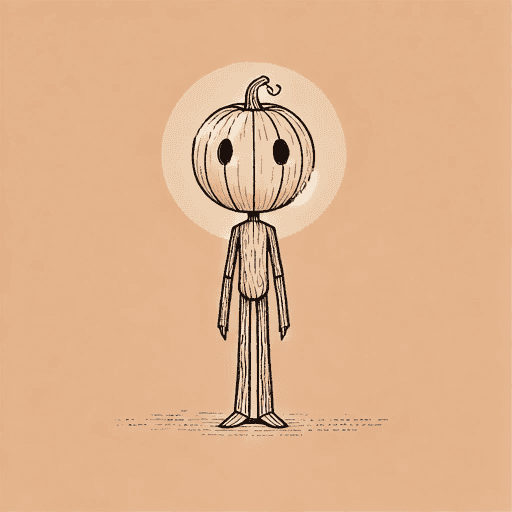
The novel first introduces this concept through characters who are literally built. Tip manufactures Jack Pumpkinhead as a simple prank, a wooden man with a pumpkin head intended to frighten Mombi. Once brought to life, however, Jack develops his own consciousness and immediately seeks a relational identity, calling Tip “my creator—my parent—my father!” (20). This declaration transforms Tip from a mere inventor into a guardian and turns Jack from a witless collection of animated objects into a son. Similarly, the Saw-Horse, animated from a woodcutter’s tool, quickly develops a distinct, obstinate personality. These characters, assembled from inanimate parts, demonstrate that a cohesive identity can be constructed from disparate elements, grounded in their experiences and interactions rather than a natural origin. Their identities aren’t inherent but are built and then lived.
The theme deepens through the novel’s depiction of characters who undergo personal transformations. The Woggle-Bug begins as an ordinary insect, but after being “Highly Magnified” (“H. M.”), he adopts the identity of a cultured, “Thoroughly Educated” (“T. E.”) gentleman, a persona entirely divorced from his humble beginnings. The most significant exploration of malleable identity is the final revelation that Tip, the protagonist, is the enchanted Princess Ozma. Forcibly transformed into a boy by Mombi to hide his lineage, Tip lives an identity that is authentic to his experience, even if it contradicts his “true” form. His resistance to becoming a girl underscores the power of lived experience in shaping one’s sense of self. Baum ultimately suggests that identity isn’t a static truth to be discovered but a dynamic process of becoming, shaped by the roles that individuals inhabit and by the relationships they forge. Like Tip, successful individuals embrace all constructive aspects of themselves, leaving fear and destructive tendencies behind, and find common ground in their communities despite differing perspectives.
The Absurdity of Societal Obsession Over Gender Roles and Power
The novel satirizes popular sentiments regarding early 20th-century gender roles and the fierce public debate over the women’s suffrage movement, particularly the idea that gender determines fitness for societal leadership or power. Lampooning the era’s propaganda and the many caricatures suggesting women’s lack of fitness for leadership, the novel depicts a female-led rebellion that is both comically incompetent and ideologically driven. Baum uses General Jinjur’s Army of Revolt to critique simplistic notions of gender-based power but avoids endorsing the patriarchal status quo. By ultimately replacing both the male king and the female usurper with a rightful female heir, the story suggests that competence and character, rather than gender, are the true qualifications for governance. The effective leaders in the novel are compassionate, just, and cooperative, and they value differences and unique contributions to the community rather than conformity. In addition, they want to lead rather than wield power, and they define wealth in terms of inner contentment rather than material concerns.
The novel’s broadly cast satire is most evident in its portrayal of Jinjur’s rebellion. The army, composed entirely of girls, justifies its coup with the simple declaration that “the Emerald City has been ruled by men long enough” (58). Their methods, however, rely on gender stereotypes for comedic effect. They wield knitting needles as their primary weapons and are thrown into a panic by the sight of mice, which the Scarecrow uses to effortlessly retake the palace. After conquering the city, they invert traditional domestic roles, forcing men to perform housework and childcare. This chaotic and ultimately ineffective governance gently mocks the idea that replacing incompetent men with incompetent women could solve societal problems, critiquing a superficial understanding of power dynamics and qualifications.
The novel neither advocates a return to male rule nor embraces female rule. The Scarecrow, the male king, proves an ineffectual leader (despite his intelligence), admitting that his crown gives him a headache and that he finds ruling tiresome. The novel’s resolution isn’t his restoration but the discovery and crowning of the throne’s rightful heir: Princess Ozma (whom Mombi hid and transformed into the boy Tip because of her alliances). Princess Ozma’s return is significant, as it validates female leadership while rejecting Jinjur’s chaotic usurping of power. Ozma’s right to rule is based on her lineage, wisdom, and inherent fitness for the role because of her character, not her gender. Unlike Jinjur, she cares about her subjects and values internal contentment, justice, compassion, and building community rather than material wealth or power for its own sake. By illuminating the differences in character between Jinjur and Princess Ozma, Baum critiques any system of power based solely on gender. The story rejects Jinjur’s claim that women should rule because they’re women. Likewise, it rejects any assumption that the Scarecrow should rule because he’s male. Instead, the story endorses a leader whose authority is rooted in justice and in positive, community-based values.
The Moral Ambiguity Inherent in Artificially Creating Life
The Marvelous Land of Oz explores the philosophical ambiguities inherent in artificially creating life and blurs the lines between natural and created beings. Through the animation of characters like Jack Pumpkinhead and the Gump, the novel suggests that once life is bestowed, no matter the form, its existence is accompanied by consciousness, desire, and fear. This emergent personhood obligates creators to treat their creations compassionately, implying that life’s origin doesn’t determine its value.
The theme first develops through the relationship between Tip and his creation, Jack Pumpkinhead. Tip initially builds Jack as a prank, a mere object to frighten Mombi. However, the moment the Powder of Life animates the wooden figure, Tip’s relationship with him fundamentally changes. Jack’s immediate adoption of Tip as his “father” shifts Tip’s role from that of a detached creator to that of a responsible guardian. Tip’s concern for Jack’s well-being, demonstrated by his decision to rescue him from becoming Mombi’s captive experimental canvas for potentially harmful magic, illustrates the moral responsibility that accompanies the creation of life. The creator can’t remain indifferent to the fate of a being they willed into existence, especially once that being demonstrates its own capacity for attachment and dependence, as Jack repeatedly does throughout the story.
The novel further complicates the distinction between “real” and “made” by endowing its artificial beings with complex inner lives. These characters aren’t simply automatons; they possess unique subjectivities. Jack Pumpkinhead lives in “constant terror of the day when I shall spoil” (88), a distinct form of mortality that drives his anxieties and decisions. His fear is as valid as any biological creature’s fear of death. The Gump, an absurd amalgam of furniture and a taxidermy head, experiences existential confusion, questioning its own identity and eventually requesting to be disassembled. This desire for non-existence, born of its “conglomerate personality” (201), is a significant philosophical reflection on the nature of being. By giving these creations fears, desires, and a sense of self, Baum argues that their lives are as meaningful and deserving of respect as any other. This highlights the importance of acceptance and cooperation as a means to help individuals, suggesting that existence derives meaning from interaction.

Unlock every key theme and why it matters
Get in-depth breakdowns of the book’s main ideas and how they connect and evolve.
- Explore how themes develop throughout the text
- Connect themes to characters, events, and symbols
- Support essays and discussions with thematic evidence