The Marvelous Land of Oz
The Marvelous Land of Oz
A modern alternative to SparkNotes and CliffsNotes, SuperSummary offers high-quality Study Guides with detailed chapter summaries and analysis of major themes, characters, and more.
Summaries & Analyses
Quizzes
NEWReading Tools
Symbols & Motifs
Transformations
The motif of transformations is central to The Marvelous Land of Oz, exploring the theme that identity isn’t a fixed state but a fluid, often deceptive condition. Throughout the novel, magical changes in form force characters and readers to question the relationships among appearance, self-perception, and true nature.
While many characters transform, the most significant is the revelation that the protagonist, the boy Tip, is the enchanted Princess Ozma. This climactic change resolves the novel’s central conflict, suggesting that one’s ultimate identity is a matter of destiny and rightful inheritance rather than the form one inhabits or the life one remembers. Tip’s initial resistance to his fate underscores this tension; upon learning he must become a girl, he protests, “I don’t want to be a girl!” (193). His objection highlights the conflict between his lived experience as a boy and the innate royal identity that Glinda reveals.
Tip’s eventual acceptance and transformation into the beautiful and just ruler, Ozma, is the novel’s ultimate message on identity: True selfhood is found not in personal choice but in fulfilling one’s inherent role. Mombi’s selfish and evasive transformations offer a stark contrast, as she repeatedly alters her form to escape accountability, such as when she becomes “a huge Griffin” (184) to flee Glinda. Her magic is a tool of deception, meant to obscure the truth, while the transformation of Tip into Ozma is a restoration of it.
Rebellion and Rulership
The motif of rebellion and rulership drives the novel’s central plot, framing its satirical critique of power and gender roles. The central conflict isn’t a simple quest but a political one, initiated when General Jinjur’s all-female Army of Revolt conquers the Emerald City. Jinjur’s justification is explicitly based on gender, claiming that “the Emerald City has been ruled by men long enough” (58). However, Baum satirizes this rebellion by depicting the army as comically inept, armed with knitting needles and focused on acquiring jewels for personal adornment. By depicting the city’s men being forced into domestic roles, the novel creates a farcical inversion of early 20th-century societal norms. These portrayals critique the idea of a power grab based on gender alone, suggesting that the desire for power without a foundation in justice and competence leads to chaos rather than effective governance, and supports the novel’s thematic The Absurdity of Societal Obsession Over Gender Roles and Power.
The motif finds its resolution not in restoring the male Scarecrow to the throne but in installing the rightful female heir, Princess Ozma. This nuanced conclusion rejects both the illegitimate rule of the usurper Jinjur and the well-intentioned but ultimately temporary reign of the Scarecrow. Glinda the Good solidifies this by identifying Ozma as “the rightful heir to the throne” (169), shifting the basis of power from gender or conquest to legitimate succession. The novel thus moves from a chaotic rebellion to an orderly matriarchy, ultimately arguing that true authority and fitness to rule stem from character, not gender.
The Powder of Life
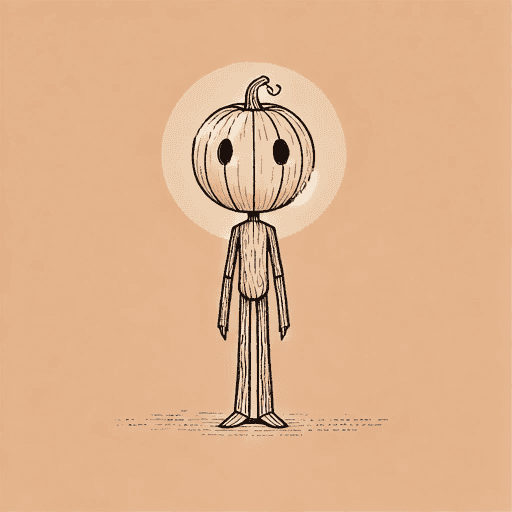
Symbolizing the mysterious and arbitrary nature of creation, the Powder of Life, comically, can bestow the power of life when used by those who know the ritual. The Powder of Life triggers the novel’s central exploration of artificial life and the moral complexities inherent in creating it. Contained in a common pepper-box, this magical substance grants consciousness to inanimate objects, blurring the line between the “real” and the “made.” Its first use brings Jack Pumpkinhead to life, transforming Tip’s childish prank into a lesson on the responsibility of a creator. Jack, an assemblage of wood and pumpkin, immediately establishes a relationship with the boy, declaring, “[Y]ou must be my creator—my parent—my father!” (20). This forces Tip to accept a duty of care, demonstrating that once life is granted (no matter how artificially), the created being possesses a consciousness that demands compassion. The powder’s power and the questions it raises are most fully realized in the creation of the Gump. Assembled from a mismatched collection of household items, including two sofas and a mounted animal head, the Gump is a “conglomerate personality” (201) whose existence is a constant source of confusion and shame for it. The creature’s final request to be disassembled, or “dispersed” (201), is a poignant commentary on the potential burden of an unwanted and unnatural consciousness. Through the beings it animates, the Powder of Life symbolizes the idea that creation is an ethical act, obligating the creator to consider the fears, desires, and inherent rights of their creation.

Unlock the meaning behind every key symbol & motif
See how recurring imagery, objects, and ideas shape the narrative.
- Explore how the author builds meaning through symbolism
- Understand what symbols & motifs represent in the text
- Connect recurring ideas to themes, characters, and events