The Night War
The Night War
A modern alternative to SparkNotes and CliffsNotes, SuperSummary offers high-quality Study Guides with detailed chapter summaries and analysis of major themes, characters, and more.
Summaries & Analyses
Quizzes
NEWReading Tools
Games
Chapters 1-14Chapter Summaries & Analyses
Chapter 1 Summary: “July 10, 1942—Paris, France”
Content Warning: This section of the guide includes discussion of death and religious discrimination.
Twelve-year-old Miriam “Miri” Schrieber climbs onto the rooftop of the sixth-floor apartment where she lives with her mother, “Mama.” Miri hears sirens and is fearful; Mama assures her that it is a fire engine. Miri remembers when Monsieur Rosenbaum, a neighbor and close family friend, was beaten in the street and taken by Nazi officers. She also recalls Kristallnacht, the event that prompted Miri and her mother to leave their home in Berlin, Germany.
Nora, the Rosenbaums’ two-year-old daughter, visits Miri’s family with her mother, Madame Rosenbaum. Miri helps Nora learn French, as Mama and Madame Rosenbaum don’t speak much French. Mama has saved a piece of dried lemon for Nora, who is sickly.
Chapter 2 Summary
Miri is sent to pick up groceries for the two families with their ration books. She is afraid of the soldiers. She picks up her identity card from their concierge. She breathes calmly to manage her anxiety and pictures a beautiful imagined world of unafraid people all speaking Yiddish.
Miri wishes “Gut Shabbos” to Anna (13), a school friend, as she waits in the bakery line. Miri is relieved that they still have bread, but the baker will only sell her three, not five, loaves. She is excited to buy a large tomato—a rare find. While walking home, she trips. A French policeman, Monsieur Thireau, stops her from falling.
Mama is thrilled with the tomato. She and Miri remember their garden’s abundance in Germany, where they grew many vegetables and flowers. Now, they only have a potted geranium in their small apartment. They prepare for their Shabbos feast. Miri’s father, “Papa,” arrives home.
Chapter 3 Summary
The principal of Miri’s school warns Miri that the Nazis are planning a roundup of Jews. Thinking that men will be targeted, as in previous roundups, Papa hides, leaving Mama and Miri alone in the apartment.
Miri goes out to buy bread. She comes home to their apartment building and hears a gunshot. Her family’s apartment door is hanging open. Madame Rosenbaum comes out of her apartment and pretends that Miri is her daughter; confused, Miri plays along while frantically worrying that her mother has been shot. Monsieur Thireau, who is participating in the roundup, slaps Miri in the face. As they leave the apartment, Miri sees their potted geranium smashed on the street.
Chapter 4 Summary
Miri notes that, unlike previous roundups, it’s not only men of working age who are being rounded up but Jews of all ages. They are loaded onto buses. Madame Rosenbaum encourages Miri to covertly take off her sweater with her Star of David on it, which signifies her status as a Jew. Madame Rosenbaum also takes off Nora’s star. She asks Miri to run and take Nora with her.
Chapter 5 Summary
The buses have stopped outside the Vélodrome d’Hiver, an indoor stadium. Miri is terrified. She wants to remain with Madame Rosenbaum and also hopes to find her mother, but Madame Rosenbaum points out that, with her accent-less French, Miri can escape with Nora and save them both. Madame Rosenbaum tells Miri about her cousin in Switzerland, whom Miri should try to reach. Miri, carrying Nora, slips between buses. A woman stands in front of her, shielding her.
Miri tries to blend in with the crowd on the other side of the street. A German soldier stops her and asks for her papers. Miri panics. A Catholic nun steps forward and tells the soldier that Miri is a simple girl who lives at the convent and leads her away.
Chapter 6 Summary
The nun, Sister Félicité, takes Miri back to her convent; she tells Miri that she should go by the name Marie. She leaves Nora and Miri in a small room as she discusses what to do with the Sister Superior. Sister Félicité locks Miri and Nora in the room, explaining that she has to keep their presence a secret from other nuns, who might not be as sympathetic.
Chapter 7 Summary
Miri starts to sing a Hebrew song to Nora but realizes that it is no longer safe for Nora to speak in Hebrew or Yiddish.
Chapter 8 Summary
The next morning, Sister Félicité tells Miri that all the Jews are being held in the vélodrome under armed guard without food or water. She prepares fake identity papers for Miri and Nora.
The next night, Miri realizes that she can climb out of the window of the small room, but she feels overwhelmed with panic at the idea of being out on the unfriendly streets at night, so she remains.
Chapter 9 Summary
Sister Félicité tells Miri that the people in the vélodrome have been taken away, tightly packed into buses. Miri is then given her and Nora’s new cartités (identity cards). The nuns have arranged for them to hide in the back of a truck and be driven to a new, safe place by two men.
Miri falls asleep in the truck bed. When she wakes up, Nora is gone. She screams for Nora to be returned to her, but the men tell her that she has been housed with a family. She is pointed toward the door of a building and is told that she is expected.
Chapter 10 Summary
On the street, Miri makes eye contact with a severe-looking lady in old-fashioned clothing. The lady seems amazed to see Miri.
Miri knocks on the door she has been directed to and is greeted by a nun who introduces herself as Mother Agnès. The building is a convent school where she is to live. Mother Agnès tells her that Nora is living with a Catholic family and that she cannot see her. Another nun, Sister Dominique, reassures Miri, who is clearly distraught. She is shown around the convent and is excited to be shown a vegetable garden.
Chapter 11 Summary
Miri meets the other two girls living at the convent over the summer (more girls will arrive in September): Beatrice and Jacqueline. Miri continues to use her pseudonym, Marie. The girls have been told that Miri’s family are communists. They ask about Miri’s life in Paris and her family; Miri is evasive. The girls help Miri tend to the garden.
Chapter 12 Summary
At dinner, Miri meets Sister Annunciata, whom the girls call “Sister Anchovy” behind her back because she smells like fish. Sister Annunciata runs a bath for Miri and provides her with clean clothes. In the bath, Miri reflects on how much she misses Nora. She was told by Mother Agnès that Nora has been placed with a loving, childless Catholic couple. She wonders how she can find her and travel to Zurich.
As they pray the rosary that night, Miri quietly mutters a Jewish prayer, but Beatrice snaps at her to say the Catholic prayer.
Chapter 13 Summary
Jacqueline offers to help Miri learn her prayers. Later, Miri sneaks out the front door, hoping to find Nora, but Mother Agnès finds her on the street and reprimands her for leaving the convent without permission. Guessing what Miri was doing, she tells her that Nora is far away and that she won’t find her. Miri again sees the severe, old-fashioned woman and wonders about her identity.
Chapter 14 Summary
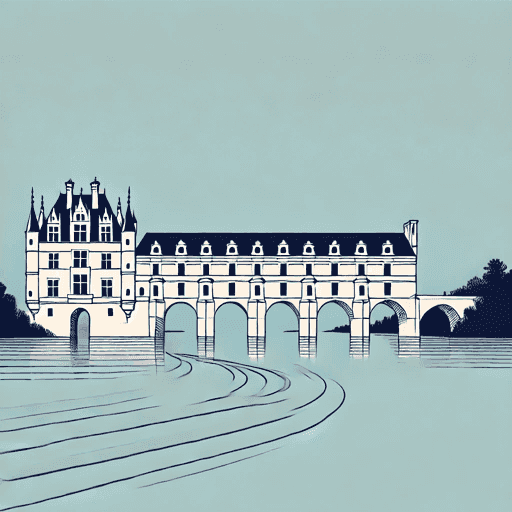
Miri returns to help Jacqueline and Beatrice in the garden. Sister Dominique takes the girls to see Chenonceau, the village castle. The village, Chenonceaux, is named after it. Beatrice tells Miri about the women who used to live in the castle, including Catherine de’ Medici, a queen who lived in the 1500s. Beatrice tells Miri that she was horrible and persecuted people for their religious beliefs.
Beatrice tries to find out more about Miri, reassuring her that she is trustworthy, but Miri insists that she has nothing to hide; she knows that revealing her Jewish identity would be too dangerous.
Chapters 1-14 Analysis
Through the incidents in these chapters, the author begins her depiction of The Cumulative Horrors of Antisemitic Prejudice and Genocide. Miri’s first moment is one of fear, and her panic at hearing sirens in Chapter 1—“sirens meant trouble” (1)—contextualizes the atmosphere of fear in wartime France, particularly for Jews. Miri’s family’s circumstances have changed drastically due to the Nazi regime, which forced them to flee their comfortable life in Germany to live in poverty in the crowded Pletzl in Paris, where they constantly fear deportation or violence. Miri’s family’s Jewish identity is established in Mama’s “soft Yiddish” as she speaks to Miri (1); Yiddish was widely spoken by European Jews in the 1940s. Furthermore, the character names, such as Monsieur Rosenbaum and Miriam, are recognizably Jewish. Miri’s mother mends Miri’s “other dress” (5), implying that Miri only owns two; the family struggles in poverty, as do the Rosenbaums next door.
Food is also scarce; this is illustrated in families’ ration books, which regulate the amount of food allotted to each person. Furthermore, the baker insists that he can only sell Miri three loaves of bread when she goes to buy food for the two families. Brubaker Bradley’s characters’ experiences reveal that food and supplies in occupied France were stretched thin; food was sent to German citizens and soldiers, meaning that French soldiers, refugees, and citizens’ supplies and food were strictly rationed. In particular, there is a dire absence of fresh fruit and vegetables; this scarcity affects Nora’s health, further emphasizing the families’ poverty and demonstrating the poverty afflicting many in wartime Paris: “She wasn’t growing as well as she should” (8). Miri’s father’s careful preservation of the slice of dried lemon for Nora illustrates the scarcity of fresh produce on the streets of Paris during the war. Furthermore, the tomato, which Miri buys for the families’ Shabbos feast, is treated with reverence: “Mama turned the tomato gently in her hands. ‘This is beautiful’” (12). The family’s change in circumstances is further established in the contrast between Miri and Mama’s wonder over the tomato and Miri’s memories of their lush vegetable garden in Berlin; they grew such an abundance of tomatoes that they gave them away: “We grew as many tomatoes as we could possibly want and still had extra to share with our friends” (12). Miri recalls that “[they]’d have green space and beautiful things” (8).
Miri’s family’s loss of wealth is made clear; they needed to flee for their safety, and their home and possessions were seized by the Third Reich. Brubaker Bradley refers to the dispossession of Jewish homes and possessions in Germany (and other parts of Europe occupied by the Nazis). Jews were declared enemies of the state and were deported to concentration or death camps; they no longer legally owned their possessions or property. The seizure of Jewish homes, property, and wealth was a central component of Hitler’s desire to remove Jews from the German economy. Hitler asserted that the Jews had gained their wealth through theft from the “Aryans,” one of many untrue statements that became a rationale for the Jewish genocide.
The increasing discrimination against Jews in Paris through the course of 1942 is characterized by Monsieur Thireau’s changing behavior toward Miri. In Chapter 2, he catches Miri when she falls and smiles at her. His kindness and friendly manner toward her—“‘You’re Miriam, yes?’ he said, smiling” (11)—illustrates his sympathy toward Miri and other Jews. This changes drastically as 1942 progresses; French police are responsible for the ruthless roundup of Jews from the Pletzl. The violence and indiscriminate nature of the roundup are emphasized. This one was not just recruiting workers for factories, as in previous roundups, but targeting all Jewish people for extermination at death camps: “They dragged every person they found out into the street: a few men, but also women and children and babies and frail old people who walked with stick[s]” (22). Their violence and cruelty are further characterized by Monsieur Thireau slapping Miri in the face; this is a significant change in his manner toward her. In a broader sense, Thireau’s unprovoked aggression and participation in the roundup symbolize the collusion of French authorities and police with systemic antisemitism, which led to the murder of millions of Jewish people. This is echoed in Sister Félicité’s description of the deportation of the Parisian Jews from the vélodrome: “‘They’re taking people out of the vélodrome,’ she said. ‘They’re loading them into trucks, packed tight. No one knows where they’re going. The people are wretched. They’re suffering. They’re being shown no mercy’” (33).
As Miri navigates her circumstances, she demonstrates Bravery in the Face of Danger, even as she still has moments of fear and concern. She is continually shown as having to overcome fear in small tasks—shopping for her family—and in more considerable feats of courage—such as escaping with Nora. The bravery of others is also on display: Madame Rosenbaum, who gives Nora to Miri to save her life; Sister Félicité, who finds a way to save both girls; the men who drive the girls to safety; and the other nuns who provide long-term shelter for Miri and other Jewish girls.
The danger of being a Jew in France after the roundup is illustrated in the creation of the fake cartités for Miri and Nora, as well as their adoption of Christian pseudonyms, all steps to disguise their true identity. Later, Miri learns that other Jewish children are hiding in French homes and schools. Beatrice is initially characterized as “the sort of girl Nazis loved” (40). With her blonde hair and blue eyes, Beatrice seems to fit the stereotypical “Aryan” appearance prized by the Nazi Party. Furthermore, Beatrice devoutly recites the Catholic prayers and hymns, criticizing Miri when Miri errs. This red herring leads the reader away from the truth of Beatrice’s Jewish identity. Beatrice’s extremely devout manner and her questioning of Miri—“Beatrice’s blond hair swung as she turned to glare at me. ‘What were you muttering?’ she said. ‘I could hear you. It didn’t sound right’” (46)—are actually motivated by a desire to keep Miri safe.
Gardens, especially those that grow vegetables, are established as a motif that denotes safety and plenty; Miri remembers the family’s plentiful tomatoes in Berlin during a time of safety and abundance. When Miri reaches the convent school, she feels comforted by the smell and sight of the kitchen garden: “A hot, heavy smell rose from them, one I remembered from our garden in Berlin, the pungent smell of soil and tomato plants in sun. How wonderful those tomatoes would taste, sweet and warm and tangy” (39). Tellingly, Miri feels comfort in this setting: “For the first time in days, I felt myself relax” (39). After the years of scarcity in Paris, Miri is reminded of the days of plenty in Berlin. The convent is established as a place where Miri can have access to plentiful, fresh food.
The mystery of Catherine de’ Medici is introduced in these chapters. The stern woman’s true identity (as a ghost only visible to her respective gardeners) is hinted at in her surprise when Miri looks at her: “An old woman in a long black dress—was still staring at me. When I looked back at her, her eyes widened and her gaze sharpened” (36).

Get in-depth, chapter-by-chapter summaries and analysis from our literary experts.
- Grasp challenging concepts with clear, comprehensive explanations
- Revisit key plot points and ideas without rereading the book
- Share impressive insights in classes and book clubs