54 pages • 1-hour read
The Night War
A modern alternative to SparkNotes and CliffsNotes, SuperSummary offers high-quality Study Guides with detailed chapter summaries and analysis of major themes, characters, and more.
Chapters 15-28Chapter Summaries & Analyses
Chapter 15 Summary
Content Warning: This section of the guide includes discussion of death and religious discrimination.
Miri is spooked by the soldiers around the castle. Sister Dominique quietly tells her that the other side of the river (which the castle spans) is the Vichy border.
Chapter 16 Summary
Miri is shocked when Sister Dominique calls her Miri instead of Marie and instructs her to pay closer attention.
Chapter 17 Summary
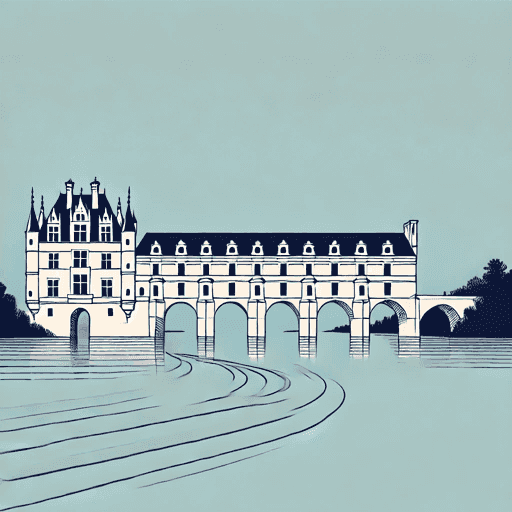
Miri looks at the castle spanning the river. She is rejoined by Beatrice, who continues telling her about the historical figures of King Henri, his wife, and his mistress. Miri sees the prim, old-fashioned woman again, this time walking around the gardens. She wonders who she is.
That night, Miri wakes up from a nightmare about the raiding of the Pletzl. Beatrice is watching her.
Chapter 18 Summary
Miri learns that on Fridays, the students and nuns eat simply as a penitential act. She reflects that it is Shabbos. She hopes that she is brave enough to escape with Nora eventually.
Chapter 19 Summary
Beatrice tells Miri that Catherine de’ Medici had a special garden at the castle.
Sister Dominique falls down the stairs and breaks her leg. Beatrice reveals that her father was a doctor. Miri wonders about her use of past tense, but Beatrice makes it clear that no questions would be welcome.
Chapter 20 Summary
Sister Annunciata tells Miri that she and Sister Dominique are involved in smuggling people through the castle to the Vichy. Sister Annunciata says that her smell is too noticeable. Miri volunteers to help in Sister Dominique’s stead.
Chapter 21 Summary
Beatrice asks where Miri is going, but Miri refuses to tell her. Miri is given a bag of sugar; if soldiers intercept her, she will say that she is smuggling sugar. Miri finds a woman hiding in the bushes outside the castle—it is Miri’s job to help her through the castle to safety.
Chapter 22 Summary
Miri is hiding with the woman, watching the guards on their patrol, when an unfamiliar voice in her ear loudly asks what she is doing. Miri cries out in surprise. It is the old-fashioned woman dressed in black. The woman in black warns Miri that the guard has heard her and advises her to hide the other woman and tell the guard that she is here alone. She recommends that Miri should say that the gardener has died. Miri leaves the woman she has been charged with transporting hiding in the bushes.
Chapter 23 Summary
The guard is startled when Miri runs up to him, sobbing, explaining that the gardener is dead and that she must tell Bette, the castle manager. The soldier escorts Miri to the castle. Bette joins in with Miri’s story, adding that Miri was the gardener’s great-niece and that Miri had been helping him in his old age. The soldier, satisfied with the story, leaves them. Bette feeds Miri. Miri starts to tell Bette the full story, but Bette silences Miri, insisting that she can’t betray what she doesn’t know. Miri goes back into the night and finds the hiding woman.
Chapter 24 Summary
They cross two bridges together and reach the last bridge, a long, ornate ballroom crossing the river. Miri opens the door, and they crawl on the floor to avoid being visible through the windows lining the room.
On the other side, Miri finds another woman waiting in the dark trees. Miri says, “A fine night for star gazing,” and the woman replies, “Until the moon rises” (74). The first statement is the password that Miri was told to use, and the reply is the one that she was told to expect. The correct reply confirms that the woman is a passeur—a smuggler.
Chapter 25 Summary
Bette has left a pillow and a blanket out for Miri, who sleeps. The next morning, she pauses in the castle gardens on her way back to the convent school. The old-fashioned woman in black approaches her. She wants Miri to garden for her. Miri, who explains that she loves gardening, is pleased, especially when the woman tells her that she can eat as many of the vegetables grown there as she likes. Miri promises to return with some girls from the convent to help, although the woman continues to insist that the flower gardens are more important than the vegetable garden, which Miri disagrees with.
Chapter 26 Summary
Miri manages to convey to Sister Annunciata that all went well with assisting the woman to the Vichy side of the river. Beatrice greets Miri with suspicion. She tries to convince Miri that she is trustworthy and wants to know what she was doing while she was gone from the convent, but Miri will not tell her.
Chapter 27 Summary
Miri convinces Sister Annunciata to let her, Jacqueline, and Beatrice garden at the castle, explaining that there is a lot of food growing there. On the way, Jacqueline continues to ask Miri about the strange story of her alleged great-uncle, who was a gardener at the castle and died the night before (the story that Miri concocted to explain her presence at the castle). Miri is evasive, not wanting to be caught in the lie. Beatrice convinces Jacqueline to drop it.
Chapter 28 Summary
Miri leaves Jacqueline and Beatrice to find the woman in black, whom she mistakenly believes to be Madame Simone. They discuss gardening. Miri is excited about the kitchen garden, but the woman in black insists that she wants Miri to focus her efforts on the flower garden known as Catherine’s garden.
The woman tells Miri that her own mother died when she was young and asks whether Miri’s mother is dead. Miri is upset by this. Miri tells the woman about the roundup in the Pletzl and sings the Hebrew bedtime song that her mother used to sing for her.
Chapters 15-28 Analysis
These chapters explore Bravery in the Face of Danger as a pivotal theme in Miri’s coming of age. Miri’s bravery is apparent. With regret and shame, Miri remembers “cowering in the convent in Paris” as the roundup took place (59). For Miri, the word “cowering” conveys her perception of her weakness, inaction, and cowardice. However, she then reflects on the amazing and terrifying things she has taken on before and after the roundup:
I had been brave enough to walk away from the vélodrome. I’d been brave enough to carry Nora with me. Brave enough to walk out of this school and try to find her in an unknown town. Brave enough to ask if I could return to the castle today, despite knowing there were soldiers there (60).
In this moment, Miri confronts her own limiting beliefs about herself and concludes—based on the evidence of her actions—that she has, in fact, become a brave person, as she had always hoped to be. Her role as a passeur builds her confidence that she will be able to escape with Nora later: “I had been brave. I could be brave again” (75).
Miri’s bravery is further established when she volunteers to smuggle the woman through the dark castle past the Nazi guards—a life-endangering task to help a stranger. This represents significant character development for Miri, who—in the opening chapters—felt fearful of going into the Pletzl for bread. With pride, Miri reflects that the escaping woman had chosen to trust her, just a child, to lead her to safety and that she “had proven [her]self trustworthy” in bringing the woman to the Vichy side of the river without alerting the guards to the woman’s presence (80). Miri’s confidence in herself continues to grow as the challenging circumstances of her life demand more and more from her and as she rises to meet these challenges.
Beatrice’s identity as a Jew, still unknown by Miri, continues to be hinted at in these chapters. Beatrice accidentally invites Miri’s curiosity when she says, “My father was a doctor,” prompting Miri to wonder, “Was a doctor. Was. Not is. Was her father no longer a doctor? Did her father no longer exist?” (62). Beatrice’s fear of her identity being revealed is illustrated through her antagonistic and defensive glare: “Beatrice glared at me as though I’d asked the questions out loud” (62). Beatrice’s apparent unfriendliness is motivated by fear; like Miri, Beatrice fears being discovered as a Jew. The Cumulative Horrors of Antisemitic Prejudice and Genocide are insinuated in the girls’ secrecy and fear; it is extremely dangerous to live as a Jew in occupied France. Both girls have experienced great trauma because of the persecution of Jews.
As Beatrice’s suspicion about Miri’s Jewish identity increases, she begins to defend Miri from Jacqueline’s curiosity; Miri notices this change in Beatrice’s manner, although she doesn’t yet understand the reason behind Beatrice’s new loyalty: “I looked at Beatrice from the corner of my eye. Just a few days ago she’d been the one with all the questions. Now that she knew I had something to hide, she’d stopped asking. At least in front of Jacqueline” (81). Beatrice’s role shifts from an antagonist to an ally in these chapters, although Miri is still reluctant to trust her: “Beatrice sidled up to me. ‘You can trust me,’ she said. ‘I know you don’t believe it, but you can’” (79).
Sisters Dominique and Annunciata prove themselves to be trustworthy in these chapters; they reveal knowledge of Miri’s true identity and are involved in underground smuggling to help Jews in France escape. When Sister Dominique takes Miri to the castle and shows her where the Vichy border starts, she reveals that she is also showing Miri her path to freedom: “‘God gave you a brain, Miri, and courage. Use them.’ I stared at her. Miri. Had she said Miri? Or had my mind turned Marie into my own name?” (56).
The true identity of the woman in black—the ghost of Catherine de’ Medici—is also hinted at in these chapters. Miri mistakenly thinks that the woman is Madame Simone; this incorrect assumption is contradicted by Sister Annunciata: “‘Madame Simone?’ Sister Anchovy frowned. ‘I thought she was living in Paris’” (80). Furthermore, Catherine’s true identity is implied in her haughty and regal manner. She behaves like royalty, speaking down to staff and wanting a garden that reflects her status: “I don’t want bushes. I want elegant. A garden for royals, not commoners” (84). Catherine’s reference to scythes and her “old-fashioned cloak” also suggest that she’s from a different historical era (67). Miri strays close to the truth when she reflects on the strangeness of the woman’s requests: “‘I don’t know how to use a scythe!’ I knew what one was, but barely. What did she think this was, the eighteenth century? When peasants brought in their wheat harvests by hand?” (85).
Even though Miri’s Jewish identity endangers her, she also draws on it as a source of strength. Her Yiddish language enables her to act as a passeur—a people smuggler—and to save the life of the woman—also presumably a Jew. This act brings Miri pride and self-confidence and renews her determination to eventually smuggle herself and Nora out. Jewish Identity as a Source of Strength is referred to here; Miri refuses to internalize the damaging messages of the Nazi Party, which imply that Jews are lesser. She remembers her mother singing in Hebrew; this calms and comforts her: “I was standing by my mother’s side in our snug house in Germany, the table set with white linen and silver, my mother singing: ‘Hamal’ach hago’el osi, Hamal’ach hago’el osi mikol rah’” (86).

Unlock all 54 pages of this Study Guide
Get in-depth, chapter-by-chapter summaries and analysis from our literary experts.
- Grasp challenging concepts with clear, comprehensive explanations
- Revisit key plot points and ideas without rereading the book
- Share impressive insights in classes and book clubs