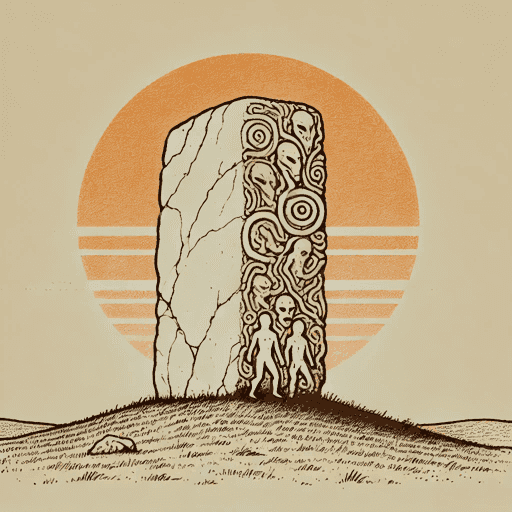
The Twisted Ones
54 pages • 1-hour read
T. KingfisherThe Twisted Ones
A modern alternative to SparkNotes and CliffsNotes, SuperSummary offers high-quality Study Guides with detailed chapter summaries and analysis of major themes, characters, and more.
Background
Content Warning: This section of the guide includes discussion of child death.
Literary Context: Reimagining Folk and Cosmic Horror through Arthur Machen
The Twisted Ones is a reimagination of Arthur Machen’s influential 1904 short story, “The White People.” In her author’s note, T. Kingfisher confirms that the mysterious “Green Book” found by the protagonist is the same Green Book that features in Machen’s text. “The White People” presents the Green Book in full (though the story itself is fragmented and unfinished), framed by a discussion between two men, Cotgrave and Ambrose, reimagined by Kingfisher as Mouse’s step-grandfather and his old friend. In Machen’s story, as in Kingfisher’s, Ambrose gives the Green Book to Cotgrave as an example of what he terms “sin”—a violation of the natural order, often through the pursuit of esoteric knowledge. The story that follows is largely as The Twisted Ones describes: A girl becomes enmeshed in a hidden world, partly through her nurse’s influence, dabbling in witchcraft and encountering mysterious “white people.” These supernatural beings are variants on the fairies of European folklore, originally conceived of as, at best, amoral creatures known to kidnap human children and replace them with “changelings”—fairy children with strange and unnerving traits. Machen’s story concludes with the girl’s death by poisoning; her pregnancy, a key plot point in The Twisted Ones, was inspired by writer H. P. Lovecraft’s interpretation of “The White Ones” but is not explicit in the text itself.
Lovecraft’s familiarity with the story speaks to its far-reaching influence. “The White People” is considered a foundational work of “weird fiction,” an umbrella term for speculative fiction that emphasizes the uncanny, transgressive, surreal, etc. Weird fiction is closely related to cosmic horror, a genre that had not been defined at the time Machen wrote “The White People” but that the story certainly prefigured with its hints of hidden worlds and ancient evils lurking just beyond human perception. The story also anticipated many of the conventions of the folk horror subgenre. This tradition was codified on screen by a trio of British films from the late 1960s and early 1970s—Witchfinder General, The Blood on Satan’s Claw, and The Wicker Man—which established the core tropes of the folk horror genre: isolated rural settings, a clash between modernity and pagan tradition, and a malevolent, sentient landscape.
Like its inspiration, The Twisted Ones does not sit within one genre. Its remote North Carolina setting and the mysterious “holler people” who create monstrous effigies from natural materials reflect the folk horror tradition, while the emphasis on forbidden knowledge and its devastating impact invokes the existential dread that is at the heart of cosmic horror. However, Kingfisher subverts the horror genre’s typically somber tone by filtering the story through a modern, witty narrator. Protagonist Mouse’s sarcastic, down-to-earth voice provides a sharp contrast to the uncanny horrors she confronts, grounding the supernatural in a contemporary mindset. This blend of classic literary horror with an ordinary, humorous protagonist allows the novel to honor its influences while creating a uniquely modern experience.

Unlock all 54 pages of this Study Guide
Get in-depth, chapter-by-chapter summaries and analysis from our literary experts.
- Grasp challenging concepts with clear, comprehensive explanations
- Revisit key plot points and ideas without rereading the book
- Share impressive insights in classes and book clubs