The Twisted Ones
A modern alternative to SparkNotes and CliffsNotes, SuperSummary offers high-quality Study Guides with detailed chapter summaries and analysis of major themes, characters, and more.
Summaries & Analyses
Quizzes
NEWReading Tools
Character Analysis
Content Warning: This section of the guide includes discussion of emotional abuse, death, and cursing.
Melissa “Mouse”
As the protagonist and first-person narrator of the novel, Melissa, who goes by “Mouse,” provides the pragmatic and often cynical lens through which the supernatural events unfold. She is a dynamic and round character, beginning the story as a freelance editor seeking temporary escape from a bad breakup and ending as the survivor of a confrontation with a hostile, alternate reality. Her profession is central to her characterization and to the novel’s exploration of The Double-Edged Power of Narrative; she is an interpreter of texts, a person who imposes order on chaotic narratives. This role makes her uniquely vulnerable to the primary horror of the novel, which is transmitted through a found manuscript. Her initial analysis of her step-grandfather’s journal is purely editorial: “It’s either she hid the book or she has hidden the book. Pick one and commit” (30).
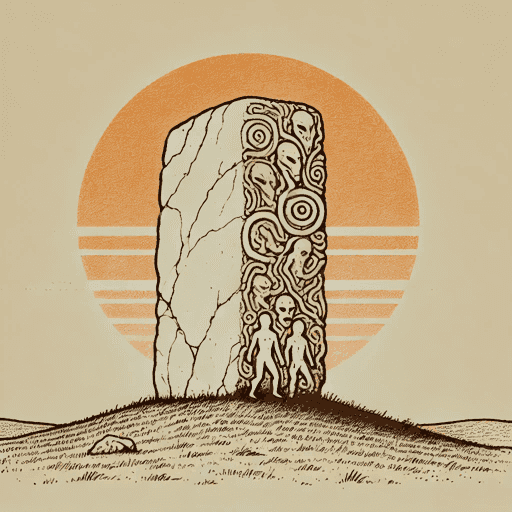
This analytical detachment gradually erodes as the horrors described in the text manifest in her reality, directly engaging with the theme of The Thin Veil Between Reality and Nightmare. When she discovers the strangely carved stone in the yard, she initially dismisses her dog’s alarm by remarking, “It’s a rock, genius” (45). This initial skepticism speaks to her rational worldview, which ultimately proves fragile: Mouse’s journey is one of forced belief, moving from a position of disbelief to one of terrified acceptance.
Mouse’s character is defined by a deep-seated loyalty, particularly toward her aging father. It is this loyalty that serves as the catalyst for the entire plot, as she agrees to take on the “shit job” of cleaning out her abusive grandmother’s house, a task her father is emotionally and physically unable to face. This act positions her as the one to finally confront the family’s dysfunction, a key element of The Unsettling Inheritance of Family Trauma. This sense of duty extends to the memory of her step-grandfather, Frederick Cotgrave, whose tragic journal entries inspire in her a protective empathy that fuels her investigation. Her relationships, particularly with her dog, Bongo, and her new friends at the neighboring commune, ground her.
Mouse also proves highly resilient, as evidenced by her wry, self-deprecating narrative voice. Faced with the overwhelming squalor of her grandmother’s house, her first reaction is a repeated, deadpan “Oh shit” (10). This pragmatic sarcasm serves as a coping mechanism, allowing her to process the escalating horror without succumbing to panic. She survives not through any special power, but through a combination of stubbornness, loyalty, and the reluctant courage to face a reality that defies all reason.
Frederick Cotgrave
Frederick Cotgrave is a posthumous character whose presence permeates the novel through the discovery of his journal. He functions as a tragic mentor figure, providing Mouse with the only guide to the supernatural horrors she faces. His narrative reveals a round character: a man trapped between the mundane, psychological cruelty of his wife, Mouse’s grandmother, and the cosmic, existential terror of the “white people” and their creations. His background as a World War II veteran, introduced through his “Kilroy Was Here” doodles, positions him as a man who has already witnessed the horrors of the conventional world, only to find a far stranger and more insidious enemy in his own home. This doodle becomes a critical point of connection for Mouse, a shared piece of humanity that bridges the decades and solidifies her loyalty to his memory.
Cotgrave’s journal entries chronicle his slow descent, documenting both his wife’s casual abuse, such as preventing him from napping, and his struggle to maintain his equilibrium against an encroaching supernatural force he barely understands. Alongside the transcribed manuscript, the journal is the central symbol of the perilous nature of knowledge, functioning as both a map and a trap for Mouse. It contains the litany, “I made faces like the faces on the rocks, and I twisted myself about like the twisted ones, and I lay down flat on the ground like the dead ones” (31), a memetic hazard that infects his mind and later threatens Mouse’s.
Cotgrave’s ultimate fate is the novel’s most explicit synthesis of its themes. After he dies of exposure in the woods behind the house, his bones are scavenged by the effigies and incorporated into a new creature. This effigy becomes a haunting presence, endlessly trying to return to the home where he was tormented and ultimately recreating his tormenter in effigy form. He is, in the end, consumed and redefined by the very forces he spent his final years trying to escape.
The Grandmother
Though deceased before the novel begins, Mouse’s grandmother is a primary antagonist whose malevolence is the catalyst for the story’s events. She is a static and flat character, defined entirely by her profound cruelty. Described by Mouse as a “nasty, vicious woman” (2), she has left an indelible stain on both her family and her physical surroundings. Her most significant character trait is her hoarding, which serves as a central motif. The house, packed with decades of refuse, is a direct manifestation of her toxic presence. Cleaning the hoard thus becomes a metaphor for confronting generations of trauma, making her a central figure in the theme of inherited family trauma.
The grandmother’s malice is so potent that it has a supernatural effect. Cotgrave notes in his journal that the “white people” or “twisted ones” actively avoid her, suggesting that her mundane, human wickedness is a force repellent even to otherworldly entities. This creates a complex dynamic where the human antagonist inadvertently functions as a shield against the supernatural one. She is a source of pure negativity, a “dead skunk” whose foulness keeps other horrors at bay. Her death lifts this unintentional protection, allowing the supernatural forces to encroach upon the property and draw Mouse into their world.
Her legacy is ultimately embodied by the “hoarding effigy,” a monstrous creature the Cotgrave effigy creates from the junk she left behind, including her collection of “dead baby” dolls. This creature is a final, violent manifestation of her character that serves as one of the story’s climactic threats and links the novel’s domestic themes to its supernatural elements.
Foxy
Foxy is a key supporting character who functions as an ally and mentor to Mouse. She is a resident of the neighboring commune and embodies a form of folk wisdom that contrasts sharply with Mouse’s analytical, urban worldview. Described as looking like “a cross between a drag queen and a wildflower meadow” (97), she combines a larger-than-life appearance with a pragmatic, no-nonsense attitude, defying stereotypes of backwoods mystics. Her pragmatism extends to her methods for dealing with the supernatural; she believes in the protective power of hickory beads but also carries a handgun.
Foxy is a round, static character whose primary role is to provide Mouse with exposition about the local supernatural phenomena, which she refers to as the “holler people,” and to provide both practical and emotional support, preventing Mouse from being completely isolated in her terrifying ordeal. She offers food, shelter, a sympathetic ear, and, most importantly, validation. Unlike Mouse, Foxy accepts the existence of this alternate reality without question, noting of the hill with the carved stones, “[S]ometimes it’s there; sometimes it ain’t” (105). By confirming the reality of the supernatural threat, she helps Mouse trust her own perceptions. She represents a bridge between the mundane and the magical, a person who has learned to navigate the boundaries between worlds with a combination of folk remedies and common sense. Her fierce loyalty and grounded perspective make her an indispensable anchor for Mouse as the world unravels.
Anna
Anna is a complex antagonist and a foil to Mouse, appearing late in the narrative to reveal the secrets of the holler people. She is a human descendant of this otherworldly race, tasked with continuing their bloodline, but is now the last of her kind other than the ancient Uriah. Trapped in the “voorish dome,” she has become desperate to escape, a goal she pursues with ruthless self-interest. Initially appearing as a mysterious and powerful figure, she later reveals herself to be a prisoner of the very effigies her ancestors created. This duality symbolically encapsulates her role as both a victim and a perpetrator.
Anna’s primary motivation is self-preservation. She orchestrates Mouse’s capture with the hope of offering her as a replacement, a plan that stems from her mistaken belief that Mouse also carries the blood of the holler people. When this fails, she sees Mouse and Foxy merely as tools for her own escape, showing no remorse for luring them into danger or for murdering Uriah to create a diversion. Her actions stand in stark contrast to Mouse’s loyalty to her friends and family. While Mouse is defined by her connections to others, Anna is defined by her isolation and her willingness to sacrifice anyone to end it. While Anna herself may not wish to bear children, her story provides a dark and contrasting conclusion to the theme of inherited burdens, symbolically evoking a lineage that has ceased to care about anything but perpetuating itself.
Bongo
Bongo, Mouse’s redbone coonhound, serves as a crucial supporting character, acting as an emotional anchor, a plot device, and a symbol of animal innocence in the face of cosmic horror. Described by Mouse as “not that smart” and “simple and made of nose” (8, 9), he is motivated by the pursuit of scents and food. His simplicity is his defining trait. While his animal senses often allow him to detect the supernatural before Mouse does, his reactions are unreliable; he is as likely to bark at a garbage can as he is at a monstrous effigy. This unreliability prevents him from being a simple supernatural alarm system and instead adds to Mouse’s confusion and doubt.
Despite this, Bongo plays a pivotal role in the plot’s progression. It is his keen sense of smell that first leads Mouse through the tunnel to the impossible hill of carved stones. Later, when he runs off, he becomes the unwitting messenger for Anna, returning with the “HELP” note that deepens Mouse’s involvement. His disappearance provides the critical motivation for Mouse to stay at the house and confront the horror rather than flee. He represents a connection to the normal world, and Mouse’s fierce, protective love for him provides her with the resolve to survive when she might otherwise have given up.
Tomas and Skip
Tomas and Skip are minor supporting characters who, along with Foxy, form the small commune across the road from the grandmother’s house. As a collective, they function as a “found family” that offers a compassionate and supportive alternative to Mouse’s dysfunctional biological family. They are static, flat characters who serve to ground the story in a recognizable, mundane reality, making the supernatural intrusions more impactful. Tomas is practical and kind, offering physical assistance in moving heavy objects and providing a friendly, nonjudgmental presence. Skip is a quiet, artistic potter with a sly sense of humor who offers his own form of wisdom. Together, they represent a pocket of warmth and normalcy in a world that is becoming increasingly hostile and strange. Their immediate willingness to help and protect Mouse, a near stranger, highlights the novel’s quiet emphasis on the importance of community in the face of overwhelming horror.

Unlock analysis of every major character
Get a detailed breakdown of each character’s role, motivations, and development.
- Explore in-depth profiles for every important character
- Trace character arcs, turning points, and relationships
- Connect characters to key themes and plot points
Related Titles
By T. Kingfisher