Summaries & Analyses
Quizzes
NEWReading Tools
Character List
Meet the key characters, with insights into their roles, motivations, and relationships—spoiler-free.
Major Characters
Alcestis is the Queen of Thessaly and the only person willing to sacrifice her own life to save her husband from a fated death. She prepares for her end meticulously by bathing, dressing in fine clothing, and praying for her children. Deeply concerned with her domestic duties and her reputation as an ideal wife, she faces her mortality with a steady, stoic composure that contrasts with the emotional outbursts of those around her.
Admetus is the King of Thessaly who previously earned the favor of the god Apollo through his exceptional hospitality. Desperate to escape a premature death, he accepts a divine bargain that requires a substitute to die in his place. He relies heavily on the laws of guest-friendship and struggles with the heavy guilt of surviving at the cost of his wife.
Heracles is a larger-than-life hero known for his immense physical strength and boisterous personality. Unaware of the true nature of the household's grief, he stops to rest at Admetus's home and indulges in heavy drinking and singing. He approaches life with a hedonistic philosophy, firmly believing that mortals should enjoy their brief time on earth rather than worrying about the future.
Guest and Friend of Admetus
Troublesome Guest of Servant
The Chorus consists of the male elders and citizens of Pherae. They act as observers and commentators on the unfolding events, providing context on the inescapable nature of mortality. They express deep admiration for the queen's sacrifice while attempting to mediate the conflicts that erupt within the royal family.
Supporting Characters
Pheres is the elderly father of Admetus and the former ruler of the kingdom. Despite his advanced age, he adamantly refuses to give up his life to save his son from death. He values his own existence highly and feels no customary or moral obligation to die simply because he is old, making him a blunt, practical voice against the demands placed upon him.
Apollo is the Greek god of arts and healing who was temporarily forced to serve as a mortal's slave. Because he was treated with respect during his servitude, he acts as a divine protector for the royal house. His attempt to repay human kindness by bending the rules of mortality initiates the central crisis of the story.
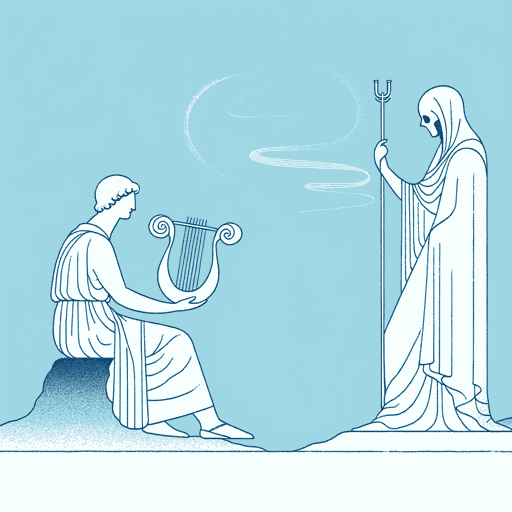
Death is a chthonic deity, also known as Thanatos, who represents the inescapable end of all mortal life. He operates with strict adherence to his duties and refuses to grant special favors or delays. He views attempts to cheat mortality as insulting and eagerly anticipates collecting the souls owed to the Underworld.
A female attendant working inside the royal household. She provides an intimate account of the private grief occurring indoors, describing how her mistress bathed, dressed, and wept over her marriage bed. She serves as a witness to the profound sorrow affecting the domestic staff.
A male staff member tasked with serving food and drinks to visitors. Following strict orders from his master to conceal the household's mourning, he grows increasingly frustrated by the loud, insensitive revelry of the man he is forced to wait upon.