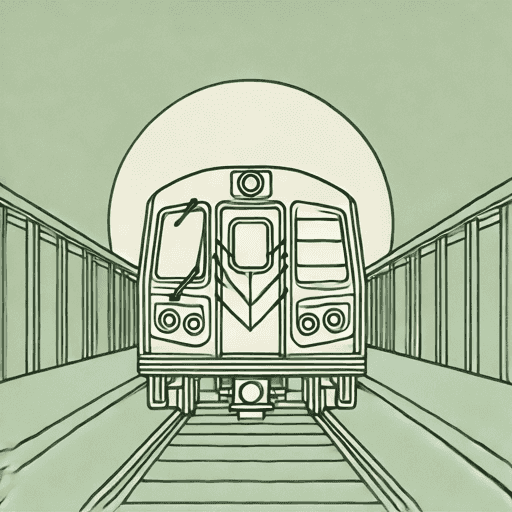
Cool Machine
A modern alternative to SparkNotes and CliffsNotes, SuperSummary offers high-quality Study Guides with detailed chapter summaries and analysis of major themes, characters, and more.
Summaries & Analyses
Author Insights
Quizzes
NEWReading Tools
Summary and Study Guide
Overview
Colson Whitehead’s Cool Machine (2026) is a work of literary crime fiction and the final installment in the Harlem Trilogy, which also includes Harlem Shuffle (2021) and Crook Manifesto (2023). Whitehead is a two-time Pulitzer Prize winner for his novels The Underground Railroad (2016) and The Nickel Boys (2019). This novel concludes the story of Ray Carney, a Harlem furniture dealer who leads a double life as a fence for stolen goods. Set in 1980s New York, the narrative follows Carney and his longtime associate, Pepper, across three interconnected stories set in 1981, 1983, and 1986. Carney’s renewed involvement in crime brings him into conflict with the legendary criminal Uncle Rich, while Pepper becomes entangled in the downtown art and club scene. In the novel’s final section, Carney and Pepper reunite as Carney tries to protect his late cousin Freddie’s son Robert from the criminal world that has shaped generations of his family.
The novel uses the framework of a crime thriller to address social and historical concerns rooted in 1980s New York. The Churn of Urban Change emerges through the city’s redevelopment, displacement, changing neighborhoods, and political corruption. Carney’s efforts to help Robert after he witnesses a murder and steals Mob money illustrate The Burden of Family Inheritance, particularly the continuing influence of the Carney family’s involvement in crime. The Uncertain Distinction Between Art and Crime appears through the downtown art scene, the emergence of rap music, and the theft and circulation of cultural artifacts.
This guide refers to the 2026 First Doubleday hardcover edition.
Content Warning: The source material and guide feature depictions of illness, death, death by suicide, graphic violence, racism, gender discrimination, and cursing.
Plot Summary
In 1981, Harlem furniture dealer Ray Carney lives a double life, fencing stolen goods to supplement his legitimate income. He has been selected as Sterling Quality’s “Northeast Regional Dealer of the Month” and is interviewed for the trade magazine (4), crafting an upstanding image and hiding his criminal dealings. Since his wife, Elizabeth Carney, has faced prejudiced rejections for a loan to expand her travel agency, Carney has taken on riskier work to raise the money himself. He accepted a high-value Cartier necklace from a small-time thief, Flinch Wilson, which led him to a meeting with a man calling himself Dwayne. Dwayne revealed that the necklace was a test and offered Carney a lucrative partnership. Carney agreed, and Dwayne—who is actually the legendary, supposedly deceased criminal mastermind Uncle Rich—gave him a large sapphire to move. Carney took the gem to his broker, Martin Green, and now, after receiving a coded message from Green, Carney finds him being held hostage by two enforcers, Buzz Caldera and Orson. Buzz claims that Rich stole the sapphire from him years ago. They beat Green and force Carney to set a trap for Rich at a local chicken joint.
Instead of complying, Carney uses a contact number to meet Uncle Rich at a secret hideout. There, Rich recounts his faked death and the story of the Amici Sapphires job in Los Angeles, California, where he planned the heist but was cut out of the score by Buzz, prompting Rich to retaliate by stealing the sapphires and other loot from him. He has returned to New York to carry out a final series of jobs before retiring. As he speaks, Buzz’s crew attacks the hideout. A young member of Rich’s crew, Rita, helps Carney escape through a series of backyards, where Buzz’s men pursue them. After a violent struggle, they get away. Discovering that his own home is being watched, Carney decides to continue working with Rich and rejoins the crew. The following night, he participates in their “money job”: stealing a truckload of coaxial cable from a New Jersey warehouse to capitalize on the city’s cable TV boom. Rich later reveals their main target: Jesse Owens’s 1936 Olympic gold medal, which they will steal from an auction preview at the Waldorf Astoria Hotel by entering the hotel through Track 61, a disused rail platform beneath the Waldorf.
The crew—Carney, Uncle Rich, and siblings Rita and Jeff—successfully breaks into the hotel’s watch boutique and cracks the safe, retrieving the medal. On their way out through the tunnels, Buzz and his men ambush them. The fight turns when a group of unhoused men living in the tunnels, whom Rich has befriended, emerge from the darkness and attack Buzz’s crew. In the chaos, Carney escapes with Rich while Rita and Jeff flee separately. Buzz survives the confrontation and pursues Carney and Rich through the tunnel. He catches up with them and prepares to shoot Carney, but Rich shoots and kills Buzz first. Safely on the street, Rich examines the medal and indicates that he considers himself only its temporary custodian before leaving Carney. Afterward, Carney returns to his legitimate life and remains out of criminal activity for the next several years.
Two years later, Elizabeth’s client Wade Patterson, a wealthy businessman from Indianapolis, Indiana, arrives in town to buy a rare Ngil mask from the Fang people in a cash transaction involving stolen art. Elizabeth recommends Carney’s old associate, Pepper, for security, and Pepper, now aging and suffering from a stomach ailment, takes the job. The deal originates with Nando Schmidt, the owner of Zilch Gallery, but his assistant, Dee Void, secretly takes control of the transaction and arranges the exchange at the downtown club Shoot the Hostages. During the chaotic event, Void snatches Patterson’s briefcase of $80,000 and flees. Pepper is incapacitated by his illness and can’t stop him. A young woman at the club, LJ, approaches Pepper and offers to lead him to Void for a fee. They track Void to another bar, where Pepper finds him in a bathroom stall, murdered, with his face cut off. The briefcase and mask are gone. Pepper collapses on the street, and LJ takes him to her apartment to recover. She reveals that she’s the personal assistant to filmmaker and African art collector Aaron “Zippo” Flood, who had also been negotiating to buy the mask. Flood and LJ are involved in efforts to return looted African artifacts to their places of origin. Pepper and LJ subsequently learn that the mask was stolen from collector Jurgen Roos’s home by a thief named D’Angelo, who passed it to a fence named Harold in Providence, Rhode Island, before Schmidt acquired it. D’Angelo, Harold, and Void are all murdered and have their faces removed. The killer is the “Melancholy Hitman,” an enforcer employed by Roos, who has sent him to recover the stolen mask.
Pepper and LJ learn from Void’s bandmate that he rented a basement rehearsal space, and Pepper goes there alone to search it. There, he finds both the Ngil mask and Patterson’s stolen money. He’s ambushed by the Melancholy Hitman, and the two fight in the basement. The hitman gains the upper hand and begins choking Pepper, but Pepper manages to gouge out both of the man’s eyes, blinding him. Pepper then strikes him on the head with a heavy amplifier, killing him. He returns Patterson’s money but keeps the mask instead of returning it to Patterson. Later, Pepper gives the mask to LJ so that she and Zippo can return it to Gabon as part of their restitution work.
By 1986, Carney has been living a completely legitimate life for years. He experiences three “visitations” in which his dead cousin Freddie appears to him, beginning with the “Ghost of Apartments Past” (252). Soon afterward, his nephew, Freddie’s son Robert Dupree, goes missing. Robert’s boss, Queens lawyer Ned Garrity, has been murdered, and the police want to question Robert. Robert contacts Carney and reveals that he witnessed the murder. Garrity was a middleman in a corrupt arrangement involving a bribe for a Queens cable-installation contract. Carmine Lombardi Junior had paid a bribe through Garrity to secure the contract, but when the arrangement fell through, Junior demanded the money back and shot Garrity during the ensuing argument. Robert fled the scene, but not before taking the briefcase of money, which Carney estimates contains $100,000. Carney sends Robert into hiding and enlists Pepper, who has retired from criminal work, to help.
While investigating, Pepper is ambushed at Robert’s mother’s apartment by Carlo “the Rabbit” Blasi, Junior’s uncle and a longtime Mafia killer, who injures Pepper’s back in a fight before fleeing. Knowing that Robert is in danger because he witnessed Garrity’s murder and stole the bribe money, Carney devises a plan to bargain with Junior. He adds $100,000 from his accumulated criminal earnings to the $100,000 that Robert took and arranges a meeting with Junior and the Rabbit. At the meeting, Carney uses the language of a furniture salesman to offer Junior the full $200,000 and guarantee that Robert will disappear and never return. Junior rejects the offer and signals the Rabbit to kill Carney, but the Rabbit instead kills his nephew, deciding that Junior’s actions have created too many problems and attracted too much attention. The Rabbit accepts Carney’s bargain and allows him to leave. Carney gives Robert $3,000 before Robert leaves for California. Later, Carney and Elizabeth discuss a massive offer from Van Wyck Realty to buy his properties on 125th Street for a planned office development. The sum is large enough for Carney to relocate the store, expand, or stop working altogether, and the novel ends with Carney and Elizabeth weighing what the offer could mean for their future.

Get in-depth, chapter-by-chapter summaries and analysis from our literary experts.
- Grasp challenging concepts with clear, comprehensive explanations
- Revisit key plot points and ideas without rereading the book
- Share impressive insights in classes and book clubs
Related Titles
By Colson Whitehead