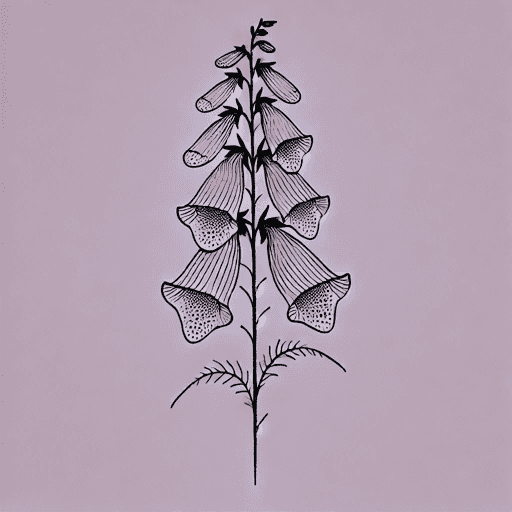
Foxglove
Foxglove
A modern alternative to SparkNotes and CliffsNotes, SuperSummary offers high-quality Study Guides with detailed chapter summaries and analysis of major themes, characters, and more.
Summaries & Analyses
Quizzes
NEWReading Tools
Important Quotes
Content Warning: This section of the guide includes discussion of gender discrimination, pregnancy termination, and sexual content.
“Where Death was dark intrigue, Fate shimmered as if a beacon for all the world’s light.”
(Part 1, Chapter 1, Page 17)
This quote reveals Signa’s thoughts upon first meeting Fate. She immediately compares the two brothers, recognizing that they could hardly be more different and thus setting up Fate as an antagonist to Death. The use of metaphor and simile highlight the otherworldliness of the brothers, emphasizing their supernatural presence along with Signa’s feelings about them.
“Signa didn’t care much for being referred to as one of Fate’s ‘creations.’ After all she’d overcome, boiling her choices down to Fate made her success feel unearned. Like he somehow had a hand in all her hardest decisions and her biggest triumphs.”
(Part 1, Chapter 2, Page 25)
Signa thinks this when she learns that Fate believes he is in total control of all human lives. Not only does this early quote allude to the final actions of the previous novel in which Signa faced great hardships, but it also continues to show her disdain for Fate. This quote relates to the major theme of Fate Versus Free Will as Signa questions how much of her life can be attributed to either.
“‘You cannot protect me from who I am.’ As she said it, the realization of those words sank in. Already Signa had accepted the dark power within her. Still, there would always be that whisper. The one that she had grown up with, that had made her believe everything about her was wrong.”
(Part 1, Chapter 2, Page 29)
Signa tells this to Death while they discuss her powers as a reaper and how she traded Percy’s life for Blythe’s at the end of Belladonna. Signa had questioned her use of her deathly powers in the previous novel and still struggles with them here. This quote foreshadows the disdain Signa later feels for her destructive powers and shows why she might prefer the powers of creation possessed by Life.
“Blythe had only just begun to feel well enough to venture back into society, and already she was exhausted by the stares and the gossip surrounding her home and family. Her mind swirled with the memory of the shocked faces that had watched Lord Wakefield fall—the faces that had turned their attention to her father as the cause. Blythe’s hands balled into fists. Nothing would please her more than to stuff socks into every bystander’s mouth to stop such ludicrous gossip. Yes, her family had suffered great tragedies of late. And yes, she supposed Thorn Grove was a little strange with its odd decor and general dreariness, but there was nothing supernatural about any of it. At least…she certainly hoped there wasn’t.”
(Part 1, Chapter 3, Page 32)
Blythe thinks this when she considers how all of her community turned against the Hawthornes when Elijah was accused of murder. This quote highlights her hatred of traditional Victorian values and the insipid gossip that was rampant in her society. The final sentence of this quote also gives readers an insight into how Blythe feels about the rumors surrounding Thorn Grove as a whole, suggesting that Blythe is growing more and more uncertain about the people closest to her.
“Those actions were perhaps not the most reassuring sign of the young woman’s state of mind, but Signa still admired Blythe’s complete lack of regard for societal expectations—envied it, too, considering that she herself had risen early to get dressed for the day. Given all that had happened the night prior, such a thing felt ridiculous”
(Part 1, Chapter 4, Page 40)
Signa thinks this about Blythe when she comes down to breakfast still dressed in her underclothes, something that would be very inappropriate for a Victorian woman even in her own house. This reveals how both Blythe and Signa understand that these social norms are ridiculous while also illustrating how Signa still feels the need to adhere to them. While Blythe has somewhat more social power than Signa as the direct heir of Thorn Grove and having a generally good reputation in society, Signa feels she is still an outcast and so must behave as normally as she can.
“One more time. One more mystery. And then she could finally—finally—have the peaceful life she’d always wanted. No more murders. No more mysteries that kept her mind churning at all hours of the night. Just a peaceful life with the Hawthornes, and the man that she loved.”
(Part 1, Chapter 7, Page 59)
Signa’s thoughts about Julius’s murder and the overall turmoil at Thorn Grove show how she has lived most of her life in a state of chaos and confusion. Just before the murder, Signa was feeling like everything was falling into place and she could “finally” rid herself of her troubles. This quote also shows Signa’s main motivations—her love of her family and her love of Death—emphasizing the theme of The Power of Familial and Romantic Love.
“But to be concerned about it would be silly, for being the subject of gossip always had an expiration date and the vultures would move on the moment the next scandal reared its ugly head. And when they decided to welcome her again—when they tried to get on her good side and exchange gossip like it was gold—ha! She would eat them alive. Because Blythe Hawthorne was not nearly as forgiving as her cousin, and she had no desire to be.”
(Part 1, Chapter 10, Page 79)
This quote shows Blythe’s thoughts about gossip and its place in upper-class British society. Though Blythe understands that she cannot avoid it, she knows the damage that rumors can cause firsthand. Once again, this highlights how Blythe’s views of society were relatively unique for the time, setting her apart from more conventional characters.
“It was there whenever someone was in need of entertainment, and while it was important to at least make an effort to keep one’s name from the scandal sheets, it mattered little in the grand scheme. So long as she had money and status, the vultures would return to shove their greedy little beaks into her pockets soon enough. And that was a fine way of things. Blythe didn’t need pity, nor did she need anyone’s protection. For too long she’d been treated like some fragile heirloom meant to sit on a shelf, too precious to be taken out into the world. But she was no delicate artifact, nor the soft doll that her family seemed to think her.”
(Part 1, Chapter 10, Page 79)
This quote shows Blythe recalling the view of society that she shares with her father. Again, Blythe shows her unique point of view but also points out how she is not nearly as fragile as people tend to think of her and thus can take her revenge on those who wrong her. Her continued comparison of the town gossips and those who gawked at Julius’s murder to “vultures” shows how she sees herself as someone separate from the normal bounds of society.
“Fate was all I had for many ages. Our relationship was not perfect—he has always felt that I should interfere with the human world less, while I have always suggested that he interfere more. That he listens to the requests of the souls whose lives he weaves, and take them into account. But Fate believes himself to be the perfect artist. Once a story is woven, he moves on to the next and doesn’t look back. We didn’t always agree on each other’s methods, but at the end of the day we were all each other had. Until, one day, we weren’t.”
(Part 1, Chapter 13, Page 106)
This quote comes from Death as he tells Signa the story of his relationship with Fate. This gives great insight into Fate’s character, particularly how he views himself as being in control of all things while continuing to contrast his character with Death’s character. The brief final sentence of this quote also shows how abruptly the end of their relationship came and how finite the rift between the brothers seems.
“But as much as she craved the thrum of this power coursing through her, Fate’s suspicions still beat against the back of her mind. If he was right—if her hands really could bring life instead of death—then shouldn’t that be the power she craved? She didn’t want to believe it could be true, and yet the idea had burrowed too deeply into her mind, a constant itch she couldn’t scratch.”
(Part 1, Chapter 15, Page 122)
Signa thinks this after she learns that Fate believes she is Life reincarnated and has Life’s powers of creation. This quote highlights Signa’s uncertainty about her powers and how she can use them. Here Signa questions this herself, not wanting to believe Fate but wanting powers that make her feel like she could help others rather than hurt them
“Signa had told herself that she wasn’t keeping this secret for her own sake but for Blythe’s. But as guilt pressed against her, Signa realized how deeply she’d been lying to herself. She wanted to spare Blythe, of course. More than anything, though, Signa was terrified of losing her. She was terrified of returning alone to Foxglove, once again left behind by those she loved. Had Death not been gripping her, she would have reverted into human form, if only to reach out to her cousin. To apologize for everything she’d had to do to save Blythe’s life that night in the woods.”
(Part 1, Chapter 15, Page 126)
Signa thinks this when she and Death see Blythe looking into Byron’s notes about Percy’s disappearance. Previously in the novel, Signa had mentioned a few times how she wanted to tell Blythe her secrets about her powers so she wouldn’t be keeping anything from her. This quote, however, gets to the heart of Signa’s motivations; while she loves Blythe and wants to be honest with her, she could not bear the truth ruining their relationship.
“He and Death truly could not have been more different, and Signa found herself pondering what an eternity spent with Fate’s powers would be like. Though there was a chance that every day might feel rich and exciting, she wondered if everything else seemed to dull in comparison. How unsatisfying every day must have felt when you were always on the hunt for something more beautiful or more luxurious than the last.”
(Part 1, Chapter 17, Page 149)
Here Signa compares Death and Fate again, showing how her first impression of Fate continues to hold despite her increasing sympathy for him. Death and Fate seem to have completely different views on life and relationships, and though Signa feels for Fate she still relates much more to Death. As with many other small instances in the novel, this quote foreshadows how Signa is nothing like Life and could never be Fate’s reincarnated wife.
“Signa couldn’t say exactly when the feeling had started—perhaps it had always been there to some extent—but the pressure of so many expectations was rapidly mounting: Blythe expected Signa to be a good cousin, a normal cousin, while Byron wanted her to be a prim and proper lady aiding the restoration of the family name. Fate expected her to be another woman entirely, one with powers that Signa would have once given the world for. As for herself…Well, Signa needed to solve a murder, protect everyone she loved, and get to the root of who she was and what she could do. It was exhausting.”
(Part 1, Chapter 19, Page 162)
This quote highlights all of the many ways Signa feels like she is being pulled in different directions. As evidenced in Chapter 7, Signa wants few things other than peace and to be with those she loves, yet the expectations of her family and society keep getting in the way of this wish. As the novel continues, Signa’s exhaustion with this becomes more apparent and ultimately leads her to confess her secret to Blythe.
“‘I feel like I’m being pulled in a thousand directions.’ The admission was quiet, whispered from her most fragile depths. ‘I’m tired of people being afraid of me. I’m tired of feeling like I’m not enough. No matter what I do, I’m disappointing someone. But the one I truly feel most disappointed in is myself, because I hate feeling like this, Death. I thought I was done.’”
(Part 1, Chapter 23, Page 191)
Here, Signa tells Death of all the feelings of exhaustion she has been hiding from him and others. As with the previous quote, Signa highlights the various expectations laid out before her, noting that she doesn’t want to follow any of them. In confiding in Death—something she had been somewhat reluctant to do until this part of the novel—Signa grows closer with him and closer to the life with him she desires.
“Perhaps it was silly, but throughout her life, Death had been her one constant. He, more than anyone else in this world, had helped her feel comfortable in her own skin. As everything and everyone was working to tear that apart, telling her who she was and what she should be, it made sense that she needed him more than anything else.”
(Part 1, Chapter 23, Page 192)
Signa thinks this after Blythe banishes her from Thorn Grove, and she feels like she has lost everything but Death. Not only does this show Death’s immediate importance in Signa’s life, but this quote also highlights just how much the concept of death has shaped her. This thought also signals another way that Signa is nothing like Life.
“She’d been wrong to fear change—wrong to fear Foxglove, for it was the perfect canvas. A strange, misunderstood place she could explore to her heart’s content. Like, it seemed, had called to like. Here, she would grow roots of her own, and no one could ever force her to leave. Perhaps being alone wasn’t always such a bad thing.”
(Part 2, Chapter 28, Page 241)
This quote comes after Signa has started to settle into Foxglove along with her newfound powers. Previously, Signa had been frightened and wary of her home, yet Foxglove Manor is representative of Signa’s own emotions and thus she begins to accept her new home just as she accepts her new powers. Though Signa feels like she can finally start over, she also relates to Foxglove as a “misunderstood” place.
“He was every bit a prince as he assessed her—like a predator before its prey. A boot ready to squish an insect beneath it. Blythe could imagine how many people had shrunk back from those eyes; there was a second when even she felt the urge to. But she would be damned before a prince made her feel less than, and so she squared her shoulders and stared right back at him.”
(Part 2, Chapter 32, Page 266)
Blythe thinks this about Prince Aris when the two of them are alone together. Not only does this quote show Fate’s determination, but it also depicts Blythe’s bravery in facing him head-on. This instance mirrors their first meeting, when Blythe confronted Fate about unjustly accusing her father of murder, and emphasizes the equal match between the two, despite their tumultuous relationship.
“Foolish as my brother may be, for once I agree with him. You have seen firsthand the cost of keeping someone alive, Little Bird. Imagine what the cost might be for bringing them back from the dead.”
(Part 2, Chapter 34, Page 288)
Death tells this to Signa when Fate says she cannot use Life’s powers to bring Elijah back from the dead after his hanging. Despite their hatred of one another, Fate and Death agree on the natural order of things and don’t interfere with one another when it comes to using their powers, something they believe Signa should abstain from as well. This quote also highlights Death’s feelings about Life’s death and its aftermath, showing how he still feels guilty for the incident and grieves Life as Fate does.
“If Signa was a killer, why would she have fought so hard to save her? If she was out to get the Hawthorne family, she could have let Death take Blythe several times over. Instead, she and Percy together had brought Blythe the Calabar bean that spared her. It didn’t make sense that Signa would harm Percy; it had to have been Death’s hand pulling the strings.”
(Part 3, Chapter 37, Page 301)
This quote shows Blythe’s rationale about Signa’s powers and why she killed Percy. Despite the decline of their relationship, Blythe still wants to believe Signa is a good person and tries to make excuses for her actions, blaming Death for the murder of her brother. This shows how attached the cousins still are, but also how Blythe is trying to make sense of the unnatural situation in which she has found herself.
“It was perhaps that moment in which Signa saw Fate for who he was—a man as tired of people dying around him as Signa had once been. A man who was willing to do anything for the life he wanted, just as she was.”
(Part 3, Chapter 38, Page 314)
Signa thinks this about Fate when she asks him to care about the humans around him and he mentions that Death will only take them from him if he does. This quote shows a rare comparison between Fate and Signa, furthering her sympathy for her. Though Signa had seen glimpses of Fate’s true self before this moment, here she finally understands exactly what motivates all of his decisions.
“Yet both she and Blythe held their tongues because, despite everything, there was a truth that hung between them—in Eliza’s place, either of them might have been just as desperate. It was no wonder Eliza had gone to Fate’s ball only a week after Lord Wakefield’s death; she’d been desperate to find a husband. If Eliza had known of her pregnancy before the duke’s death, that meant she was at least several months pregnant.”
(Part 3, Chapter 39, Page 326)
This quote comes moments after Blythe and Signa realize that Eliza is pregnant and don’t blame her for trying to end her pregnancy or find a husband. Highlighting the strict expectations of their time, this shows the solidarity of the women as they all know what it is like to try to live freely in Victorian society. This also shows exactly why no one can accuse Eliza of murder as both Signa and Blythe believe she is as innocent in the accidental death of Julius as Elijah is.
“Too often the world did not consider women as people but as stepping stones for men. A woman was ostracized the moment she strayed from the prescribed path, left to fend for herself in a world with too few opportunities. Signa wished there was a safer option than these herbs, but she couldn’t fault Eliza for her choice.”
(Part 3, Chapter 39, Page 327)
This quote continues to highlight the treatment of women in Victorian society. Though Grace shows women from different social classes and circumstances throughout the series, Eliza’s lack of options shows the prevalence of sexism in society regardless of the woman in question. Significantly, Signa does not fault Eliza when she believes she is trying to end her pregnancy, merely wishing Eliza had a safer way of making decisions about her own life and body.
“That was precisely what was bothering her. Whether Blythe understood it or not, it was difficult to ignore that being with Death at every moment seemed to be precisely what her cousin wanted. Never had Blythe seen Signa with such tenderness or adoration upon her face. It wasn’t infatuation or a morbid curiosity, but real love that Blythe was going to rip from her. All because of Aris. All because of Fate.”
(Part 3, Chapter 41, Page 344)
This quote shows the moment when Blythe recognizes just how much her blood oath with Fate will impact Signa. Here Blythe’s feelings about Death also begin to shift now that she understands why Percy was killed. This shows Blythe’s love for her cousin, which never left despite the changes in their relationship.
“There was no masking his rage. His sorrow. Yet Signa could not pity him. He had laid this trap; he shouldn’t have been surprised to have ended up caught in it.”
(Part 3, Chapter 43, Page 353)
Signa thinks this just after Blythe outwits Fate and binds herself to marry him, in turn saving Signa. While Signa gains sympathy and pity for Fate throughout the novel, she also understands that his actions are sometimes irredeemable as they cause pain to others for his benefit. This also emphasizes the general nature of fate: even Fate cannot escape destiny.
“It would seem, Little Bird, that fate always has a way of working itself out in the end.”
(Part 3, Chapter 43, Page 357)
Death tells this to Signa just as he discovers that Blythe is the reincarnation of Life and that Fate has just become engaged to the exact person for whom he had come looking. This raises questions about the nature of Fate Versus Free Will, as Blythe’s seeming act of free will only brings her closer to her prescribed fate. Death and Signa’s decision not to tell Fate or Blythe about this further shows their belief that destiny will ultimately make things right with the couple.

Unlock every key quote and its meaning
Get 25 quotes with page numbers and clear analysis to help you reference, write, and discuss with confidence.
- Cite quotes accurately with exact page numbers
- Understand what each quote really means
- Strengthen your analysis in essays or discussions