God's Country
A modern alternative to SparkNotes and CliffsNotes, SuperSummary offers high-quality Study Guides with detailed chapter summaries and analysis of major themes, characters, and more.
Summaries & Analyses
Quizzes
NEWReading Tools
Part 2, Chapters 29-39Chapter Summaries & Analyses
Content Warning: This section of the guide features discussion of graphic violence, illness, death, and physical abuse.
Part 2: “The Heart of Darkness”
Part 2, Chapter 29 Summary
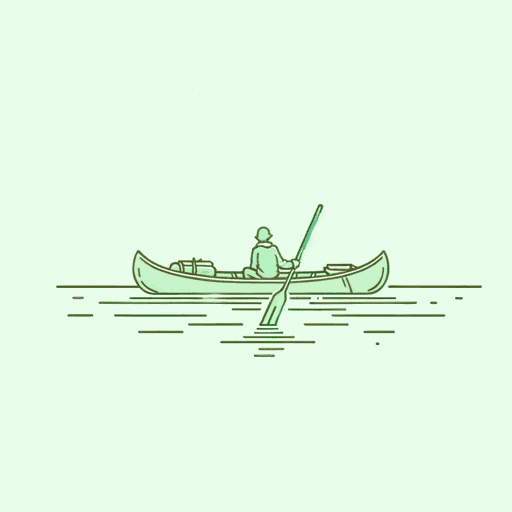
Cork O’Connor wakes up tied to a tree, sore from a beating and in the middle of a thunderstorm. The Kennedy brothers, Ollie and Stan, are unprepared for the rain. Stan urges them to break camp, revealing they are on a tight schedule to meet someone named Jeanette and escape the authorities. Ollie, aggressive and complaining of back pain, forces Cork to make breakfast and break down their camp, punching him in the head when he hesitates. Cork leads them to his hidden Wenonah canoe and, during the difficult portage, manipulates the situation so that the complaining Ollie has to carry a heavy pack. While paddling against a strong current, Cork realizes he is doing most of the work, as Stan lacks upper-body strength. The brothers reveal they are half-siblings and that Ollie is the eldest by 18 months. His mother died giving birth to him, and their father soon married another woman who was unkind to Ollie. Crispin was the son of a woman with whom their father had an affair, and both Stan and Ollie agree that their father favored Crispin. As evidence, they cite the fact that their father told Crispin the location of the secret pack but refused to tell them. They then gloat over the fact that Crispin is now dead, while they have the pack, prompting Cork to reflect that family is no guarantee of love or loyalty. During a break, Stan uses a can of deet he has secretly found, smirking while Ollie, ignorant of the spray, covers himself in a foul-smelling mixture of mud and urine.
Part 2, Chapter 30 Summary
To wear the brothers down, Cork deliberately leads them on a series of difficult portages. They make camp early in the afternoon, with Ollie exhausted from his back pain and Stan suffering from blisters. Under threat of another beating, Cork is forced to set up their tents. Ollie immediately goes to sleep, cradling the valuable pack. While Stan stands guard, Cork attempts to create conflict by asking if Stan has ever considered keeping the pack’s contents for himself. Stan doesn’t answer but seems to contemplate the idea. The brothers then tie Cork to a tree for the night. As he sleeps, Cork experiences an intensely realistic vision in which he is a wolf-like predator. He stalks and brutally kills a human, who, in the final moments, is revealed to have Cork’s own face. As the human Cork silently pleads for compassion, the beast-self revels in the kill, feeling that this is its true, instinctual nature.
Part 2, Chapter 31 Summary
Stan wakes Cork at dusk. Ollie emerges from his tent still reeking of urine, and Stan mocks him, revealing the can of deet he has been secretly carrying. At Stan’s instruction, a furious Ollie washes off in a nearby pool of water and emerges covered in leeches, causing him to panic. Cork calmly plucks them off after Ollie refuses to touch them. After dinner, the brothers tie Cork to the tree again. Loosened by whiskey, Ollie reveals that his gangster father was partners with a man named Wollersheim, who double-crossed them and fled Canada. He also mentions that Stan is divorced and has two sons. Later that night, a large black bear, attracted by the food Ollie foolishly kept in his tent, rips the tent open and steals their BearVault food canister. Stan wants to pursue it with their gun, but Cork warns him that the bear would kill him. Now without food, the brothers are completely dependent on Cork, who promises he can find sustenance in the wilderness, feeling a surge of power over his captors.
Part 2, Chapter 32 Summary
The next morning, Cork tracks the bear and finds the destroyed food canister, salvaging only oil, coffee, and powdered milk. He uses a fishing rod from Cordell’s pack and leeches as bait to catch three bass, which he cooks for breakfast. After taunting the brothers about their incompetence, Cork agrees to guide them further. While portaging, they spot a canoe carrying a young man and woman. Seizing a moment when the brothers are distracted, Cork snatches the Glock from Stan’s belt. He forces them to act normally and allow the couple to pass unharmed. When Ollie attacks him afterward, Cork hits him on the head with the pistol. Stan asks why Cork didn’t take the opportunity to escape. Cork claims he is a man of his word and will guide them to Canada. In truth, he doesn’t want to allow them an opportunity to harm anyone else, but his deepest motivation is darker: He wants to prolong their suffering.
Part 2, Chapter 33 Summary
Cork forces a complaining Ollie to help paddle, and they make camp early on Big Woman Lake. To get away from the insects, Cork persuades Stan to go fishing with him in the canoe. Out on the water, Stan expresses a new appreciation for nature and speaks about his sons. They hear a low-flying floatplane, which Cork suspects is searching for them, and he quickly hides the canoe in the reeds. Stan questions why Cork is helping them hide. Cork proposes a deal: If the brothers make no attempt to retake the gun, he will get them to Canada, explaining that his goal is to prevent them from harming anyone else. Stan agrees. Though Cork doesn’t fully trust him, he privately weighs his own options, which include killing the brothers himself.
Part 2, Chapter 34 Summary
While Stan gets the fire started, Cork goes foraging and finds a variety of edible mushrooms, including chanterelles, lobsters, and morels, which he privately notes cause severe diarrhea if not fully cooked. He overhears Stan telling an angry Ollie about the deal he made. Stan insists they need Cork and vows that if Ollie tries anything, he’ll help Cork tie him up and leave him to starve. At dinner, a suspicious Ollie makes Cork eat his portion first to prove he is not serving them poison. Cork eats everything on his plate, then secretly adds slices of raw morel to Ollie’s plate. After the meal, Stan recounts how their father used to punish Ollie by locking him in a dark basement, which is the source of his fear of the dark. A loud crashing noise from the woods terrifies Ollie, and Cork tells him that the noise was caused by the Windigo. When Ollie doesn’t know what the Windigo is, Cork begins telling them the story.
Part 2, Chapter 35 Summary
Stan becomes suspicious of their meandering route, but Cork claims he is deliberately avoiding the main paths where search parties would be looking. To protect himself from an attack, Cork hangs his hammock far from the campsite. During the night, Ollie becomes violently ill from the raw morels. In the morning, Cork is fishing when Stan emerges, reporting Ollie’s sickness. Cork suggests it’s a parasite from drinking lake water. As Cork cooks the fish he caught, a lone canoeist approaches the shore. While Cork’s attention is momentarily diverted, Ollie attacks him from behind with a cast-iron skillet, knocking him unconscious.
Part 2, Chapter 36 Summary
Cork awakens to find Ollie holding the Glock to his head while Stan lures the lone canoeist ashore. Ollie explains they are commandeering the man’s supplies and demand he guide them to Canada. The man offers them his food and map but refuses to take them. Sensing Ollie’s intent, Cork and Stan both try to intervene, but Ollie shoves Cork aside and shoots the man dead. When Ollie then turns the gun on Cork, stating that they now have a map and no longer need Cork, Stan quickly throws the stranger’s map into the fire, destroying it and forcing them to keep their guide alive. Cork agrees to continue leading them on one condition: They must place the victim’s body in his canoe and anchor it in the lake so he can be found and returned to his family. Stan helps him do so, and Cork silently regrets his choices: If he had tied up the Kennedy brothers and left to alert the authorities, that man might not have been killed. He makes a silent vow that no one else will die except him or the Kennedy brothers.
Part 2, Chapter 37 Summary
While stopped for lunch, Stan confronts Cork for stalling, but Cork repeats his excuse about avoiding search parties. Stan offers a remorseful apology for the murder, which Cork coldly rejects. Later, as a search plane flies overhead, Cork steers their canoe toward Sand River Falls. He lies that it’s just a stretch of rough water. Before the brothers can react, the canoe plunges over the falls. Cork, who had secretly put on his life vest, is thrown clear of the dangerous rocks below. He watches Stan and Ollie get swept away by the current. Downstream, Cork finds Stan clinging to a fallen tree. Ollie soon appears from the woods, still holding the Glock and the precious pack, and forces Cork at gunpoint to rescue his brother. Once they are all on shore, Stan warns Cork that if he deviates from a northward path again, he will not stop Ollie from killing him.
Part 2, Chapter 38 Summary
After collecting what gear they can, the three men reach Lost Man Lake, which Cork plans to use to disorient them. At their new campsite, Ollie forces Cork to gather firewood at gunpoint. Cork gets him talking about the people he has killed as a way to distract him, hoping he’ll have a chance to hit him on the head with a large stick. Ollie boasts about his first kill as a teenager, when he murdered a hitman sent after him and Stan. Cork readies a heavy branch to use as a club, but his plan is thwarted when Stan shouts that he has spotted a canoe with two women. Stan reports that the women saw their camp and paddled to a nearby island. Ollie wants to pursue them, and Cork realizes that Ollie would likely rape and murder both women if given the chance. Stan forcefully argues against the dangerous and time-consuming diversion, and Ollie reluctantly agrees to wait until morning.
Part 2, Chapter 39 Summary
That night, Ollie watches the women’s distant campfire and reaffirms his intention to go after them. After tying Cork to a tree, Ollie places the food canister next to him, stating that if another bear comes into their camp, he wants it drawn to Cork and not to him. He takes Cork’s life vest for a pillow before going to his tent to sleep. Stan, kept awake by Ollie’s loud snoring, stays by the fire. He tells Cork he is worried about what Ollie will do to the women and promises to prevent it. Their conversation is interrupted by the appearance of a large gray wolf at the edge of the camp. Stan panics and raises the Glock, but Cork, who feels a spiritual connection to the animal as a member of the Ma’iingan (Wolf Clan), calms him. The wolf howls once, waking Ollie, then vanishes. Stan is deeply affected by the encounter. Soon after, the northern lights appear. Cork explains the Anishinaabe belief that the lights are the spirits of their ancestors, and the two men watch the display in silent awe.
Part 2, Chapters 29-39 Analysis
Cork’s intensely realistic vision of becoming a wolf and killing his human self provides an allegory for his internal conflict. In the dream, he fully inhabits the violent, predatory impulses he normally suppresses—the “wolf of hate” that now threatens to take over his personality. The beast-self experiences the world with heightened senses, leading Cork to conclude that “This instinctual beast is the true me” (147). The vision directly answers the epigraph’s question about the two wolves—“Which one wins the battle? The one you feed” (137)—a warning to Cork of what he may become if he goes too far in trying to punish his tormentors. This shift is an important development in the theme of The Corrupting Force of Vengeance. His subsequent actions are no longer driven purely by survival or a desire to protect others; they are calculated acts of retribution. He poisons Ollie, attempts to kill both brothers, and privately admits his desire to prolong their suffering, thinking, “The wolf in me wasn’t finished feeding. Not by a long shot” (161). The vision’s self-destructive imagery—the beast-self destroying the human-self—foreshadows the spiritual cost of this path, suggesting that in his quest for justice, Cork risks consuming his own humanity.
The natural world of the Boundary Waters repeatedly intervenes to upend the power dynamics between Cork and his captors, highlighting the theme of Wilderness as a Spiritual Crucible. A sudden thunderstorm exposes the brothers’ incompetence, and later, a large black bear rips open Ollie’s tent and steals their food, rendering them completely dependent on Cork’s expertise. Though these events can be seen as punishment for the brothers’ cruelty, greed, and disrespect for nature, they are also natural consequences of their ignorant choices: the bear is drawn specifically to the food Ollie foolishly keeps in his tent, punishing his particular blend of arrogance and carelessness. The wilderness exposes the Kennedys’ unfitness, for example by contrasting Ollie’s panicked reaction to leeches with Cork’s practical use of them for bait. While the brothers view the landscape as an obstacle to be conquered, the environment acts as a great equalizer, humbling their violence and constantly reasserting its own authority. It rewards knowledge and respect while punishing ignorance and greed.
When Cork seizes the Glock from an unsuspecting Stan, he gains power and therefore a greater degree of responsibility for his actions. Prior to this point, he has been a captive whose choices can be justified by the need to survive. Now, Cork has control, yet he chooses not to escape but to orchestrate a performance for the passing canoeists, forcing the brothers to act normal. This decision reveals his changing motivations; his goal is no longer just survival but a prolonged, controlled vengeance. This act initiates a series of gambits where Cork leverages his wilderness knowledge against his captors’ brute force. He leads them on grueling, unnecessary portages, poisons Ollie with raw morels, and, after losing the gun again to Ollie, steers their canoe over Sand River Falls in an attempt to drown them. As his superior knowledge becomes a form of power, its moral valence changes: Previously, Cork’s knowledge was a sign of his humility and respect for nature, but now it fuels his increasing arrogance and vengefulness.
Stan’s conversation with Cork on the shore of Lost Lake presents him with an opportunity to reconsider his life. Confronted with the likelihood that his brother will rape and murder two innocent women in the morning, Stan begins to ask himself whether her wants to remain tethered to this sadistic, destructive man. The gray wolf that walks into their midst in this moment symbolizes the compassionate side of Stan’s nature, the “wolf of love” that he could choose if he had the courage. Tellingly, Stan’s first instinct in confronting this wolf is fear and violence; he raises the Glock. But Cork’s calm, spiritual interpretation of the animal as “Ma’iingan, Wolf Clan,” (193) a brother, forces Stan to pause. His fear gives way to awe, leaving him deeply affected by the encounter. This event primes him for the spiritual wonder of the aurora borealis, which he has never seen in his urban life. When Cork explains the Anishinaabe belief that the lights are the “heart light” of ancestors, Stan is offered a glimpse into a worldview based on connection and reverence, a stark contrast to his own family’s legacy of violence and greed. This scene charts Stan’s internal conflict. It builds on his growing unease, which manifests in his remorse for the murdered canoeist, his discussions about his sons, and his promise to protect the women on the island. However, his burgeoning conscience remains fragile. He makes a deal with Cork to prevent more violence but ultimately sides with his brother after the plunge over the falls, warning Cork not to deviate from their northward path. Stan is caught between his brutal family loyalty and the moral clarity offered by the wilderness, able to recognize the beauty of the spiritual world but unable to fully break from his own dark inheritance.
Ollie Kennedy’s senseless murder of the lone canoeist is an act of pure sadism, committed not for supplies—which the man freely offered—but for the assertion of brutal power. This act crystallizes the theme of Greed as a Dehumanizing Force and aligns him directly with the Anishinaabe myth of the Windigo, a recurring symbol representing this theme. Like the Windigo, a human transformed into a monster by an insatiable appetite, Ollie is driven by a hunger that extends beyond the money in the pack. He consumes food greedily, desires the women on the island for “entertainment,” and boasts about the visceral pleasure of his first kill, a brutal memory he savors and recounts in detail. His reminiscence shows him feeding on past violence, much as the mythical monster feeds on flesh. When Cork tells the frightening story of the Windigo, a “cannibal beast” with a “heart of ice” (172), he is, in effect, describing his captor. Ollie’s behavior—marked by a lack of empathy, a constant need for gratification, and a predatory nature—positions him as a real-world manifestation of the legend: a man whose consuming greed has stripped him of his humanity.

Get in-depth, chapter-by-chapter summaries and analysis from our literary experts.
- Grasp challenging concepts with clear, comprehensive explanations
- Revisit key plot points and ideas without rereading the book
- Share impressive insights in classes and book clubs
Related Titles
By William Kent Krueger