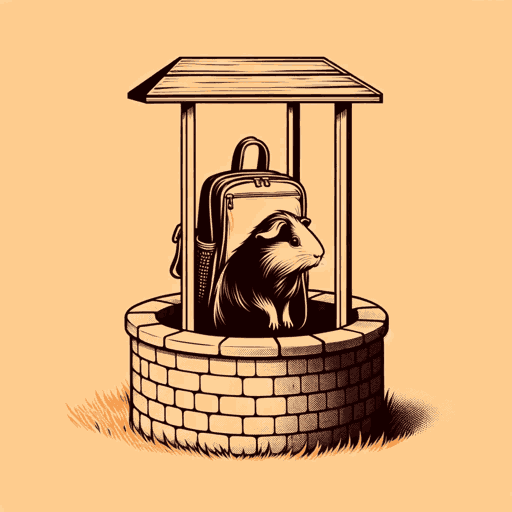
Hello, Universe
Hello, Universe
A modern alternative to SparkNotes and CliffsNotes, SuperSummary offers high-quality Study Guides with detailed chapter summaries and analysis of major themes, characters, and more. For select classroom titles, we also provide Teaching Guides with discussion and quiz questions to prompt student engagement.
Summaries & Analyses
Author Insights
Quizzes
NEWReading Tools
Erin Entrada Kelly on Hello, Universe
In her own words: quotes and insights from the author.Why she wrote it
A boy in the dark, a girl who can’t hear himBefore any character had a name or a story arc, the book existed as a single visual: Kelly saw it whole in one flash, and that image determined everything that followed, including the reason Valencia exists at all.
In the case of Hello, Universe, I had an image of a boy who’s trapped in a dark place, and he’s afraid, and he’s calling for help, and there’s a girl, but she can’t hear him, and that’s how Valencia came to be.
Virgil’s shyness, his sensitivity, his distance from anything athletic were never incidental character details. Kelly was responding to a specific imbalance she saw in the fiction available to young readers.
I knew it was important to me to write a boy character who has those traits, because we’re seeing a lot more, very vocal and present girl characters, which is important. But it’s also important on the flip side to see sensitive boys.
Kelly grew up embarrassed by her Filipino heritage and spent years getting past that. Lola, Virgil’s grandmother, carries the weight of that reckoning in the novel, and her role was designed with a particular family dynamic in mind.
Sometimes parents can’t see their children for who they really are. Lola is able to see Virgil just as he is. She is also the family storyteller, which is important in the book.
 thehidingspot.blogspot.com, “The Hiding Spot: An Interview with Erin Entrada Kelly, author of Hello, Universe”
The imagined protective figures who visit Virgil while he is trapped in the well came directly from Kelly’s own childhood. Growing up lonely and without the protection she needed, she invented adult presences in her mind to keep her company at night.
Children will find ways to parent and comfort themselves. It was such an important part of me that I used that as a resource when writing my books. So it’s something that appears in Hello, Universe. [paraphrased from audio]
The book pushes against a familiar arc in children’s fiction: the quiet kid who learns to speak up, comes out of his shell, and is rewarded for becoming someone else. Kelly wanted that arc examined, not reproduced.
The big thing I try to get across in my books is that you don’t have to change to be better. So, in ‘Hello, Universe,’ Virgil’s parents really want him to come out of his shell, because they feel like he’s too shy. And I want us to ask the question, ‘why can’t he just be shy?’ Being true to who you are and being the best version of yourself is the key.
How she wrote it
Four voices, one well, months of hard questionsThe four-perspective structure, where readers follow Virgil, Valencia, Kaori the self-styled psychic, and the bully Chet through a single converging day, solved a specific narrative problem Kelly identified early. She described the logic of that choice in a video recorded after the Newbery win.
In ‘Hello, Universe’ it was important for me to show the characters, their lives kind of coming to an apex, and the best way to do that was to write them in different points of view. [paraphrased from audio]
Within that multi-perspective structure, Valencia gets different grammatical treatment from the other three characters. The reasoning goes deeper than style: it is a workaround for a technical problem posed by her isolation at the novel’s opening.
Valencia’s chapters are in first person because she doesn’t interact with many people in the beginning of the novel. One way readers learn about characters is seeing them interact with other people. By writing her chapters in first person, she’s able to interact with the reader.
Writing Valencia, who is deaf, was the hardest part of the book to commit to. Kelly’s first instinct, when the research ahead of her became clear, was to protect herself from the risk of getting it wrong.
There was a period of time when I thought, ‘You know what, just forget it. I’m just gonna make Valencia hearing. I don’t wanna make a mistake. I don’t wanna disrespect anyone.’... She wasn’t the same character if I tried to do that.
Once Kelly committed to Valencia as a deaf character, she built a research process that went well beyond reading. She enrolled in ASL classes, made contact with an advocacy organization, and formed a working friendship with a deaf author whose own memoir had documented exactly the kind of isolation Valencia experiences.
Before I started writing, I contacted the American Society for Deaf Children and was immediately connected to Gina Oliva, author of Alone in the Mainstream, and a well-known Deaf advocate. Gina and I became good friends. I also took an American Sign Language class through a local advocacy group, and the manuscript went through several reads with professors at Gallaudet University.
thehidingspot.blogspot.com, “The Hiding Spot: An Interview with Erin Entrada Kelly, author of Hello, Universe”The research demanded more than fact-gathering. Kelly insisted that writing authentically about a community outside her own experience required turning the lens inward and accounting for assumptions she did not know she was carrying.
I also knew that if I was gonna do this, I would have to confront every stereotype and misconception that I had... We all think that we are progressive-minded people, but all of us have stereotypes and misconceptions, and you have to be willing to confront them.
Gina Oliva’s patience with those questions mattered. Kelly noted that Oliva was unsurprised by anything she asked, because every question Kelly brought was already part of Oliva’s daily lived experience.
The personal thread
The heritage she was once embarrassed to claimLola’s stories about Filipino folklore, the dark spirits and creatures she narrates to Virgil, are not decorative. They reflect Kelly’s own late-arriving pride in a tradition she spent years distancing herself from, and her conviction that most western readers have no idea the tradition exists.
The Philippines is rich with folklore, stories, imagination, and magic. Not a lot of people know that, except the people who live in the Philippines and who have Filipino heritage, and more people need to know about the rich, rich stories that come from the Philippines. Many of them are dark, like the ones that Lola tells Virgil. [paraphrased from audio]
Kelly grew up in Lake Charles, Louisiana in the 1980s as the only Filipino in her community. The children’s books available to her at that time contained no one whose household looked or sounded like hers. She described, in a Cedar Rapids Public Library interview, what those missing books would have meant.
It would have been very affirming for me. If those books had existed, I would have felt very much seen and less alone in the world. [paraphrased from audio]
Virgil, the shy Filipino American boy whose parents want him to be louder and more athletic, is in part the character Kelly would have needed to find on a shelf when she was his age.
What she wants us to sit with
Quiet as its own kind of strengthThe book’s argument about strength is aimed beyond its middle-grade audience. Kelly made the scope of that argument explicit in a video recorded after winning the 2018 Newbery Medal for Hello, Universe.
The message for young readers that I hope they will take away, not just young readers but readers of all ages, is that there are many different ways to be strong. I think we equate strength a lot of times not just with physical strength but also being the loudest person in the room... it was very important for me in ‘Hello, Universe’ specifically to write about a shy, sensitive boy, who is not good at sports and doesn’t have these what we consider traditional masculine qualities... There’s something special about being small but mighty, or quiet but mighty, and I think those are traits that we need to celebrate more, especially today. [paraphrased from audio]
Kelly distinguishes between two levels of ambition for her books. The first is immediate and modest: company during the hours of reading. The second is larger and harder to achieve, and she articulates both without pretending the second is guaranteed.
My hope with each of my books is that at the very least for the time that they’re reading the book, or that they’re with the characters, they feel less alone in the world. My bigger hope is that when they put the book away it stays with them, and changes them, and evolves their world view.