Innamorata
A modern alternative to SparkNotes and CliffsNotes, SuperSummary offers high-quality Study Guides with detailed chapter summaries and analysis of major themes, characters, and more.
Summaries & Analyses
Quizzes
NEWReading Tools
Symbols & Motifs
Teeth
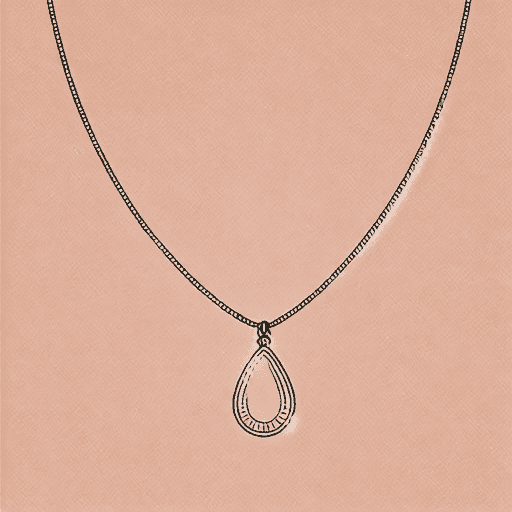
Teeth symbolize the ancestral legacy and the power of the House of Teeth. This connection is most potently embodied in the ancestral necklace worn by the Mistress, a heirloom constructed from the teeth of her predecessors. For both Marozia and later Agnes, the necklace functions both as a symbol of their authority as well as the weight of heritage, “a coiling serpent, like a prisoner’s manacles” (192) that simultaneously chokes and armors them.
Teeth being a durable body part that can last centuries after a person’s death, the teeth symbolism also alludes to the longevity and persistence of Agnes’s house. The House of Teeth is correspondingly the most ancient and arcane of the clans of Drepane, believed to be the originator of the resurrection rite. Adele-Blanche also referred to Agnes as the “fangs” of her house, suggesting that teeth represent sharpness, bite, and a threat to the enemy, qualities deeply associated with the House of Teeth.
The transfer of the teeth necklace from Marozia to Agnes is a key and violent shift in power, demonstrating that in Drepane, even the most intimate parts of the self are ultimately political tools. The symbol directly engages with the theme of Violating Bodily Autonomy to Preserve Social Order, as the ritualistic extraction of teeth from a corpse is a routine, almost mechanical process of harvesting power from the dead.
Scars
The scars inscribed onto Agnes’s body by Adele-Blanche are a symbol tied to the theme of Violating Bodily Autonomy to Preserve Social Order. More than just marks of trauma, they function as a text, a physical inscription of Agnes’s grandmother’s will that dictates the terms of her existence. With edicts like “NEVER SEEK THE PLEASURES OF THE BODY” (166), the scars are a constant, painful reminder of the ascetic life Agnes is forced to lead, governing her diet, her desires, and her very identity.
Initially, the scars appear a mark of Agnes’s subjugation, a secret she must guard as jealously as the maidenhead the scars command her to protect. However, the meaning of this symbol evolves as Agnes gains agency. Liuprand’s acceptance and desire for her, scars and all, is an important turning point. When he declares her “ruination is the most beautiful thing I’ve ever seen” (252), he reframes the scars as proof of Agnes’s survival and the very thing that makes her uniquely herself. In this transformation, the scars become a part of the story Agnes reclaims for herself, symbolizing her journey to a complex, desiring subject.
Blood
Blood is a pervasive motif in Innamorata, illustrating The Brutality of Imperial Power. Its significance is established through the Septinsular Covenant, where the draining of blood from a corpse is the first act of desecration, reducing life force to a political commodity. This drainage occurs in the presence of the crown, indicating that imperial power will go to any extreme to uphold its norms.
The motif reappears throughout the text, especially in context of the crown and the noble houses, showing that the elite do not hesitate to spill blood in their pursuit of power. After Nicephorus butchers Agnes’s hands in a paroxysm of violence, the wounds bleed to the point of soaking her entire garment. Similarly, when Lord Fredegar is murdered, his blood pours forth “like a geyser” and Agnes is “drenched in it” (240). Blood is shown to be expendable in the pursuit of power, and yet it always leaves a mark, even when cleaned. Agnes notes that the hallways were scrubbed of blood after Nicephorus’s attack, but the memory will forever remain with her. The scent of Fredegar’s blood also remains in her memory, indicating the cycle of revenge and justice will continue.
Blood also functions as the foundation of all social and political identity in the novel. Bloodlines determine inheritance and are the basis for alliances, particularly through the mingling of blood via marriage, which is the central engine of the plot.
Moths
The moths in Liuprand’s secret garden are a recurring motif that shows a coded, tender language of love existing in direct opposition to the world’s brutality. Initially a system invented by Berengar for war, Agnes and Liuprand reappropriate this language for their courtship, transforming a tool of conquest into a medium of intimate connection. This “language of rustling wings” (115) becomes essential to their developing relationship, allowing them to bypass the twin obstacles of Agnes’s trauma and the court’s invasive scrutiny, addressing the theme of Silence as Armor and Prison by providing a means of expression that is safe, secret, and uniquely their own.
Liuprand’s explanation of the code—“Gray is for grief. False eyes for a false surrender. Sapphire for fires; gold for relief” (111)—establishes a system as complex and subtle as any spoken language. This is powerfully demonstrated when, after Agnes is tortured by the king, Liuprand sends a gray moth to her windowsill. This single act conveys his sympathy and grief in a way that spoken words in a public setting never could. The moths symbolize the couple’s ability to create a private world where their love can flourish, even when surrounded by political violence and unspeakable trauma.

Unlock the meaning behind every key symbol & motif
See how recurring imagery, objects, and ideas shape the narrative.
- Explore how the author builds meaning through symbolism
- Understand what symbols & motifs represent in the text
- Connect recurring ideas to themes, characters, and events
Related Titles
By Ava Reid