Long Way Down
Long Way Down
A modern alternative to SparkNotes and CliffsNotes, SuperSummary offers high-quality Study Guides with detailed chapter summaries and analysis of major themes, characters, and more. For select classroom titles, we also provide Teaching Guides with discussion and quiz questions to prompt student engagement.
Summaries & Analyses
Author Insights
NEWQuizzes
NEWReading Tools
Jason Reynolds on Long Way Down
In him own words: quotes and insights from the author.Why he wrote it
The night he almost became the storyReynolds has said the emotional origin of this book is not an idea but a memory: a specific night when he was 19, hours after a close friend was killed, sitting in the friend’s mother’s house among people who were seriously planning murder. He has described what that night revealed about himself.
That night my friends and I went to his mom’s house and we were all planning to figure out who did this to him so we could exact revenge. So we could murder the man who murdered our friend. And I just remember the pain – the pain of the lost friend but also the pain of meeting a part of myself that I didn’t know existed. A part of myself that could lose control to the point where I could commit a murder.
Years of visiting juvenile detention centers gave Reynolds a view of how the cycle he nearly entered actually perpetuates itself. What struck him was not the violence but the obliviousness: the boys he met had no frame for the fact that they were nodes in a pattern that had been running for generations before them.
Most of these boys are in detention because of gang violence and don’t realize this turf stuff exists in its own vacuum. ‘You shoot me, I shoot you,’ and it’s been like that for decades.
The book was his attempt to hand a kid the frame before the cycle claimed him.
Reynolds watched the national conversation about gun violence collapse young people into a single label. The public debate was about policy and crime rates. What it was not asking, he felt, was why a child arrives at a trigger in the first place.
What I wanted to do was humanise them. They’re not gangsters, or monsters – they’re children, and they’re afraid, and they’re angry. And perhaps we should start asking questions about their environments, and the ecosystems of those environments: poverty, politics, education, tradition, on top of all that anger.
How he wrote it
Sixty-seven seconds and the form that could hold themReynolds did not begin the book in verse. He wrote it first as prose vignettes, and the shift to poetry came from a push by his agent at a moment when the plot was already settled. The conversion changed nothing about what happened in the story and everything about how the story felt to read.
I wrote the book originally in vignette... And then my agent was like, ‘You know, you’ve been saying that you want to write something in verse. This is a good opportunity. Maybe try this one in verse.’ [paraphrased from audio]
The entire novel takes place during a single elevator ride lasting 67 seconds. In prose, a reader spending two hours with a book set in just over a minute feels the impossibility of the premise. Reynolds needed a form that could make the reader feel the compression rather than calculate it.
It’s really difficult to convince any reader that a 300-page book written in 80,000, 85,000 words takes place in 67 seconds... I needed there to be urgency even in the pace in which the pages turned. [paraphrased from audio]
Solving the pacing problem was one reason for verse. The other was psychological accuracy. Will, the book’s protagonist, is a teenage boy in an elevator with a gun, moving toward a decision that will define the rest of his life. Reynolds wanted the prose texture to match what a mind under that pressure actually does.
Anybody who’s been through trauma knows that the brain does not work in complete sentences. It’s working in words, it’s working in codes... Snapshots, right? Synapses firing off, right? That’s what it feels like. [paraphrased from audio]
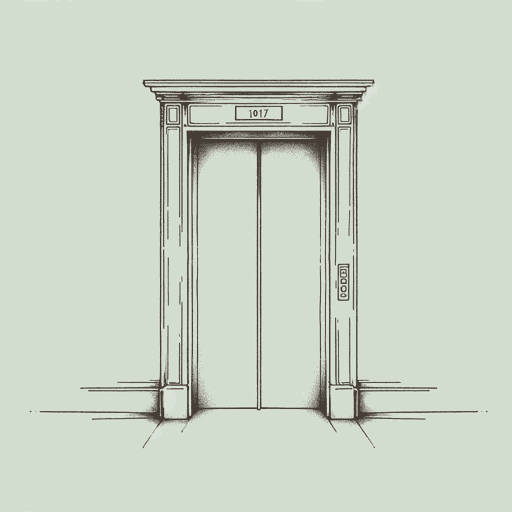
Reynolds chose the elevator as the book’s sole setting because its physical properties matched the interior state he was building. The choice was architectural: he wanted a container whose material characteristics would do half the psychological work before a word was read.
I wanted to mimic a traumatised mind. If we were to objectify a traumatised psyche, what exactly would the object be? If we were to contextualise it, what would the context be? So the elevator was perfect. The characteristics of the elevator are directly in line with the characteristics of a person going through extreme trauma – it’s cold, it’s small, there’s vertigo involved, it’s actually hanging by a thread – and there’s a healthy fear of it.
Reynolds also made a craft decision about when not to speak. The book uses ghosts of people Will has lost, each appearing on a different elevator floor, to dramatize the pressure of the revenge cycle. Reynolds chose this device partly to protect the reader from being preached at, and partly because he felt the moral weight should come from the community, not from him.
What I wanted to do in telling a tale about gun violence is to not create one-dimensional characters that fall into, like, cliches. And so what I think what we can do with devices like using ghosts of the past is, we can create a space where the writer, the author, quote-unquote, ‘me,’ doesn’t have to teach a lesson. Instead it’s about us, a community, thinking about those of our family members and our friends who we’ve already lost to this thing and allow their haunting to be the thing that creates our psyche and our conscious.
The personal thread
The weight of a form he had to grow intoReynolds came to language through rap, not through books, and that origin shapes how he thinks about what verse can do on the page. When he describes Long Way Down as poetry, he is specific about what he means: not lyric atmosphere, but story told through compression, where every device is load-bearing.
Long Way Down is storytelling, it’s straight-ahead language. It’s using metaphor, repetition, alliteration, onomatopoeia—all the things that are poetic devices—but it’s telling a story and it’s breaking it into 10 or 20 words on a page.
Reynolds has talked about the page itself as a visual and spatial tool, a framing he traces to filmmakers as much as to writers. The connection between Hitchcock’s off-kilter camera and a word placed unexpectedly on white space is not decorative for him: it is the mechanism by which discomfort travels from the author to the reader.
I believe that every page is a canvas, and that we have an opportunity to manipulate the reader – and we only do it through words, but we can actually use space and composition.
What he wants us to sit with
The ending that turns the book back on youReynolds has said from the start that he had two different audiences in mind for this book and a distinct ask for each. The asks are not the same, because the stakes are not the same depending on which side of childhood you are on.
If you are a child, if you are a young reader, I want you to think about decision-making. If you are an older reader, I want you to think about how difficult it is for young readers and young people to make certain decisions. There are lots of things happening that we don’t know and that we don’t see. [paraphrased from audio]
Reynolds never reveals what happens at the end of the elevator ride. The refusal is deliberate. The book’s final moments hand the gun, so to speak, to the reader, and what you do with it tells you something about yourself that the story itself cannot tell you.
But this particular book is almost like a social experiment. I won’t spoil the ending, obviously, but when you get to the end, you realize this book is about you. It has less to do about this young person, but it’s about what you bring to the page because you get to make certain decisions. And those decisions are literally about what you think, about your life, your prejudices, your experiences.
For adult readers specifically, Reynolds has framed the ending as a test with moral consequences. At a student event captured on video, he put the question directly: the choice you make about Will’s fate at the close of the book is not a literary preference but a window into your actual beliefs about children who look like Will.
If you are an educator, a parent, a neighbor, and you choose to kill this child, you have to ask yourself why when you could have easily chosen to not. [paraphrased from audio]
Reynolds has returned to this point across multiple formats because he sees the label problem as the source of the policy problem: once a child is called a thug or a gangster, adults stop feeling obligated to protect him, and the cycle he documented in juvenile detention centers runs on without interruption.
One detail Reynolds returns to repeatedly is the moment early in the book when Will picks up the gun and is startled by its weight. That surprise is not incidental. It is Reynolds’s single most direct piece of counter-evidence against the story the public tells about kids like Will.
The minute that we label our children, we no longer have to see them as children. [paraphrased from audio]