Miss Wolcott's Ghost
A modern alternative to SparkNotes and CliffsNotes, SuperSummary offers high-quality Study Guides with detailed chapter summaries and analysis of major themes, characters, and more.
Summaries & Analyses
Quizzes
NEWReading Tools
Chapters 29-42Chapter Summaries & Analyses
Content Warning: This section of the guide includes discussion of graphic violence and illness or death.
Chapter 29 Summary
Gamache conducts a preliminary search of Brian Fillmore’s office at Réunion and calls in a team of investigators. Brian’s brother, Charles Fillmore, anxiously follows him, hoping the recently discovered body is not Brian’s. Gamache mentions the online rumors about Brian’s disappearance, which Charles dismisses, and requests a list of company competitors. He then contacts his cybersecurity team to trace the rumors and messages his godfather, an elderly financial expert, in Ottawa.
Charles admits he last saw Brian in February or March. At Gamache’s request, Charles provides a DNA sample to eliminate himself as a suspect. Gamache then asks to see the office of a Réunion investigator, Jeanette Bouchard. An assistant informs them that Jeanette is on assignment in Aix-les-Bains, France, and that her last contact was on May 21st. When the security chief unlocks Jeanette’s office, they find it has been ransacked. Gamache secures the scene and calls for a homicide team. After asking to see the office of another investigator, Gaston Comeau, Gamache is stunned when the security chief informs him that Comeau is a janitor.
Chapter 30 Summary
Gamache calls Jeanette Bouchard’s mother, who confirms she last heard from her daughter on May 21st and knows nothing about her work. Gamache then texts his team with the update that Comeau is a janitor. Beauvoir receives the text in Three Pines while sitting in a car with Comeau. He confronts Comeau, who claims Beauvoir merely assumed he was an investigator. Comeau then angrily asks what other job he could get “after what you did to me” (162), which triggers a narrative description of a police raid.
Years earlier, Comeau was part of a tactical team raiding a gang of killers. He froze in terror, allowing the two leaders to escape. They found him cowering, filmed a video mocking him, and sent it to the Sûreté with the subject line, “Will that be fries with your burger?” (165)—a taunt the gang had adopted as their calling card, used repeatedly to mock the Sûreté, first spoken by a young server before she was shot. In the present, Inspector Lacoste watches from the Incident Room, disgusted by Comeau’s presence and worried for Beauvoir. She is on a call with Dr. Lagacé, who is describing a man named James Clybourne. Lacoste sees Beauvoir and Comeau enter the B&B and reflects on how Comeau was once Gamache’s promising protégé and now represents his greatest mistake.
Chapter 31 Summary
In Three Pines, Beauvoir checks Comeau into Gabri and Olivier’s B&B, registering him as “Monsieur Doesn’t Matter (167).” Gabri, the B&B’s co-owner, notes the seriousness of the situation when Beauvoir decides to stay there with Comeau instead of at the Gamaches’ home with his wife, Annie. Gabri notices Comeau’s posture—hands clasped behind his back—is identical to Gamache’s and deduces Comeau is being hidden and protected.
Meanwhile, in Montréal, Gamache confronts Charles Fillmore in a break room at Réunion. He calmly pressures Charles, who finally admits he lied. Brian did visit Clara Morrow to search her house for a connection to the 1914 sinking of the Empress of Ireland. The real link was through Clara’s late husband, Peter Morrow. Brian had discovered that Aldous Clybourne’s mother was a Morrow—her maiden name—and that her brother, Aldous’s uncle, was the Receiver of Wrecks—the official in charge of shipwreck salvage. After the Empress sank, Morrow suspiciously ordered the recovery of mail to be prioritized over the bodies of victims. Brian believed Morrow was corrupt, stole something valuable from the mail, and founded the Morrow family fortune. His research led him to the last known Morrow descendant, Peter, in Three Pines.
Chapter 32 Summary
In her home, artist Clara Morrow stands in her late husband Peter’s old studio. After his death, she locked the room, but with the support of her friends, she eventually reopened it, leaving it as a memorial space. Now, knowing that both Brian Fillmore and Jeanette Bouchard were recently in the studio, she wonders what they were looking for. She is increasingly certain she surprised Brian as he was leaving the room, not entering it. Remembering the initial call to the police came from a phone registered to her, she feels she must have missed an important clue and decides to re-examine Peter’s papers. As she moves to leave the studio, she is startled by Lacoste. Gamache had called Lacoste, told her about the Morrow family’s connection to the Receiver of Wrecks, and ordered another search of Clara’s house for an artifact potentially salvaged from the Empress.
Chapter 33 Summary
While Sûreté teams search Clara’s home and the Réunion offices, Gamache drives to Ottawa to visit his godfather, Stephen Horowitz, a sharp-witted former financier living in an assisted living facility. Stephen has already heard rumors of Brian Fillmore’s disappearance and correctly deduces from Gamache’s visit that Brian has been murdered. Stephen praises Réunion’s business model but notes that while Brian was the creative force, Charles is the rational business mind. He speculates that Brian would’ve been more likely to kill as the emotional brother, but Gamache counters that rational people can also snap. Stephen believes Réunion will survive without Brian, but not if Charles is imprisoned. When Gamache asks about the Empress of Ireland, Stephen is surprised.
Chapter 34 Summary
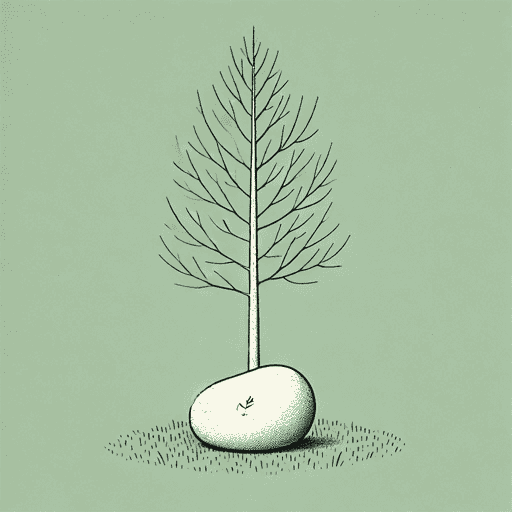
In the Three Pines Incident Room, Beauvoir’s research into the Empress of Ireland triggers a traumatic waking nightmare. He imagines himself as a passenger on the sinking ship, panicking as water floods his cabin. In his vision, he beats a fellow passenger to steal a life jacket and escapes into a dark, chaotic corridor. Faced with a choice between turning right toward the lifeboats or left toward the cabins where his wife and children are, he turns right, away from his family. Lacoste finds him shaken and gripping his desk. Meanwhile, Gaston Comeau sneaks out of the B&B to revisit the grave in Lost Nation. Beauvoir calls the police in Aix-les-Bains, France, while Comeau hides from Gamache’s returning car. Gamache parks, hesitates about confronting Comeau, who he thinks is inside the B&B, and decides to go home first, where he contemplates the malevolent-looking Miss Wolcott’s Ghost plant in his garden.
Chapter 35 Summary
A flashback reveals the aftermath of the botched Sûreté raid years earlier. The escaped gang leaders sent a video to Gamache that mocked a terrified Agent Comeau, forcing him to repeat their taunt, “Will that be fries with your burger?” (195). The email also contained a horrifying close-up video of the murder of a 17-year-old server. The videos spread through the Sûreté network, enraging the force. Gamache confronted Comeau, who broke down, admitted he had let the gang leaders past hoping they would spare him, and wept. Gamache, who had followed Comeau’s exceptional career since his first year at the academy, was stunned by his failure. He then called the Sûreté psychologist to arrange an assessment for the young agent.
Chapter 36 Summary
Comeau reaches the cemetery in Lost Nation and, in the daylight, sees the headstone is nameless. It bears only the image of a flower and the date May 29, 1914. Back in Three Pines, Gamache tries to relax in his garden, but his thoughts are interrupted by another flashback to the Sûreté’s hunt for the escaped gang leaders. After tracing the video message, the cyber team uncovered a plan for another attack in the town of Saint Faustin. Gamache set up a trap, placing undercover officers in three restaurants. He established his command post in the office of the most likely target, a burger joint, bringing a young Agent Comeau with him. The Sûreté psychologist had assessed that Comeau’s cowardice was likely a one-time event and recommended reinstatement. Trusting this and needing all available agents, Gamache gave Comeau another chance, a decision he came to deeply regret.
Chapter 37 Summary
In Gamache’s garden, he, Lacoste, and Beauvoir discuss the case over lemonade and cheese. Gamache receives confirmation that the body is Brian Fillmore’s. They review their theory: Brian was searching for something valuable stolen from the Empress of Ireland by Peter Morrow’s corrupt ancestor. Gamache shares a rumor from his godfather, Stephen Horowitz, about an unpublished McGill University history suggesting a Professor McDonald was on the ship carrying secret documents to Britain just before World War I, and that the sinking may have been sabotage. McGill investigated and found nothing, deeming it exaggeration or fantasy. The theory seems far-fetched, as there are easier ways to steal documents. Lacoste agrees to search the McGill archives and the ship’s passenger list for any mention of McDonald. They acknowledge the entire case is built on conjecture, lacking solid proof connecting the murder to the historical disaster.
Chapter 38 Summary
Comeau hides in the woods behind Gamache’s home, eavesdropping on the conversation. In the garden, the team discusses the recurring appearance of rosemary. Gamache recalls hearing that Brian Fillmore had mentioned the herb at Clara’s house, likely to test people’s reactions. Lacoste proposes that the thieves buried their loot in Lost Nation, using the dated gravestone as a marker. Beauvoir suggests that Brian and Charles may have dug it up before Charles killed Brian and took the treasure. Gamache realizes that nature would have quickly obscured any signs of digging. He has Lacoste call the botanist, Dr. Lagacé, who happens to be in Three Pines and soon joins them.
Chapter 39 Summary
Dr. Lagacé confirms for Gamache that a grave dug up months ago would appear naturally overgrown, meaning the grave was almost certainly disturbed. Gamache receives a message from the coroner stating Brian’s injuries are consistent with a shovel, and he orders a search for the weapon. Dr. Lagacé reports that her colleagues view Miss Wolcott’s Ghost as a worthless weed and that the papers of its discoverer, the eccentric Victorian botanist Daisy Wolcott, were scattered and largely destroyed. However, she mentions that Wolcott had an estate in Aix-les-Bains, France. The team immediately makes the connection: This is where Jeanette Bouchard went, likely in search of Wolcott’s lost papers. Beauvoir learns Jeanette has not returned to Canada and asks the French police to investigate. Dr. Lagacé explains that rosemary symbolizes remembrance, suggesting someone may be sending a message.
Chapter 40 Summary
Gamache prepares to interview Comeau alone. Lacoste voices her concern, bluntly stating that Comeau is a manipulative coward who has endangered the team twice and that Gamache’s desire to grant second chances is a weakness. Gamache sadly concedes she is right and that his judgment was flawed. As he walks to the B&B, a flashback reveals the climax of the second raid: Comeau left the command post to redeem himself, was spotted by the gang leaders, and triggered a shootout. Gamache saw Comeau cowering in a corner again and made his second mistake by leaving him there—his first mistake having been bringing Comeau to the raid at all. In the present, Lacoste finds no “McDonald” on the passenger list and calls Stephen Horowitz, who promises to keep looking. At the B&B, Comeau threatens Gamache, who calmly retorts that Comeau is in danger and then threatens to have Beauvoir deliver him to his enemies at Réunion as bait. Comeau recognizes both the rage and the vulnerability in Gamache’s eyes.
Chapter 41 Summary
Comeau tells Gamache he snooped in Jeanette Bouchard’s office while working as a janitor and found notes about Aldous Clybourne, a “Receiver of Wrecks,” rosemary, a cassette, and Lost Nation. He realized Jeanette was investigating the Fillmores. He found Brian’s body while searching for Lost Nation and assumed it was Jeanette, killed by Brian. Gamache reveals the body is Brian, which relieves Comeau. Comeau explains he saw a note in Jeanette’s agenda recording an appointment Brian Fillmore had, to pick up a tweed suit from a “McDonald.” He claims to have destroyed her notes to protect her. He then demands reinstatement to the Sûreté in exchange for information about the cassette. Enraged, Gamache backs Comeau against a wall, terrifying him. After regaining control, Gamache walks out. A panicked Comeau yells after him, revealing that the tombstone date refers to the Empress of Ireland and that Jeanette was looking for a tape labeled “Oral History.”
Chapter 42 Summary
Reine-Marie Gamache and other villagers witness the confrontation. Gamache and Reine-Marie both recognize a connection to Flossy Fuller’s oral history tape about Lost Nation, including the phrase, “And then there was the murder” (238). Reine-Marie wonders whether a burned cassette from the archivist’s fatal car crash, labeled “Ohio,” could somehow be connected, and leaves to investigate. Gamache returns to Comeau, his anger gone. He finds a seed pod from Miss Wolcott’s Ghost on Comeau’s sweater, proving he was recently at the crime scene. Comeau admits he went back to see the grave. He then recalls seeing an identical seed pod in Brian Fillmore’s office, which he had mistaken for a bug. Gamache tells him it was not a demon, but a “ghost.”
Chapters 29-42 Analysis
Lacoste’s blunt accusation that Comeau has “manipulated you in the past” brings the central conflict of Gamache’s leadership into sharp focus (224). Her challenge is not just an expression of concern but a direct critique of Gamache’s core belief in redemption, framing it as a professional liability. This confrontation exposes the deep fissures within the team caused by Comeau’s return, forcing Gamache to concede his own “mistake in judgment” (226). The confrontation becomes especially significant because Lacoste acknowledges that she and Beauvoir have themselves benefited from Gamache’s willingness to offer second chances. Her objection is to extending trust when other people’s lives depend on it. During his subsequent interview with Comeau, Gamache struggles to maintain the restraint he ordinarily exercises with suspects. When Comeau attempts to bargain for reinstatement, Gamache’s anger overwhelms his professional composure, but his decision to walk away ultimately forces Comeau to reveal information about the oral history tape. The encounter develops The Psychological Burden of Cowardice by showing how Comeau’s actions continue to affect the judgment, relationships, and emotional stability of those who once trusted him.
The narrative deliberately fractures the history of the Sûreté raids, revealing the traumatic events through a series of layered and conflicting flashbacks. The first fragment emerges in Chapter 30, triggered by Comeau’s bitter claim to have been wronged, framing him as a victim. This is complicated in Chapter 35, which details the humiliating video the gang leaders sent to the Sûreté, cementing Comeau’s reputation as a coward who failed his team. Finally, in Chapters 36 and 40, the perspective shifts to Gamache’s own memory, recasting the event as Gamache’s own flawed decision to grant a second chance. The delayed revelations also complicate the reader’s understanding of Gamache. His decision to reinstate Comeau initially appears to reflect misplaced confidence in a promising young officer, but the later account reveals that Gamache had consulted a psychologist before allowing him to return to duty. The tragedy therefore cannot be reduced to a simple failure of judgment, as Gamache acted on a professional assessment that proved disastrously inadequate. Penny’s nonlinear structure allows readers to reconsider earlier conclusions as new information emerges, reproducing the uncertainty of an investigation in which apparently settled explanations remain open to revision.
Beauvoir’s waking nightmare of drowning aboard the Empress of Ireland viscerally connects the historical disaster to the investigators’ immediate psychological state. In his harrowing vision, Beauvoir’s panic-driven actions—beating a man for a life jacket and choosing to save himself over his family—mirror the paralysis and self-preservation that defined Gaston Comeau’s past failure. The nightmare becomes particularly revealing when it intrudes upon the present-day conversation about Comeau. As Lacoste condemns the former agent for saving himself rather than protecting his colleagues, Beauvoir involuntarily returns to the imagined sinking, where he abandons his own family to survive. Although Beauvoir has never faced this particular choice, his nightmare forces him to confront the possibility that he might behave as Comeau did under extreme pressure. The episode complicates The Psychological Burden of Cowardice by distinguishing the condemnation of another person’s actions from certainty about one’s own courage.
The introduction of botanist Dr. Lagacé and her assessment of Daisy Wolcott’s work directly confronts The Risk of Relying on Received Wisdom. Although Dr. Lagacé acknowledges Wolcott’s determination and abilities, she repeatedly qualifies her accomplishments by emphasizing her lack of formal training. When Lacoste asks whether Wolcott might have selected plants according to a particular purpose, the botanist initially considers the possibility that her choices were random. Gamache challenges this assumption by suggesting that discoveries often emerge from departures from conventional thinking. His intervention exposes a distinction between possessing specialized knowledge and remaining receptive to explanations that fall outside established expectations. The investigation subsequently demonstrates the practical importance of such openness: The rediscovery of Miss Wolcott’s Ghost leads the team to Wolcott’s former estate in Aix-les-Bains, while its distinctive seed pods provide evidence connecting the cemetery, Comeau, and Brian Fillmore’s office. What the scientific establishment regards as an insignificant plant becomes essential to the detectives precisely because they refuse to dismiss it.
As the investigation deepens, disparate clues coalesce around the act of remembering, embodied by the symbol of rosemary. The herb’s appearance on the nameless gravestone and in Brian Fillmore’s research suggests that remembrance may also have a practical function, identifying a connection that the investigators have yet to understand. The case increasingly depends on recovering information that survives outside conventional records. Flossy Fuller’s oral history preserves details about Lost Nation that have otherwise disappeared from local memory, while Comeau’s unauthorized search of Jeanette Bouchard’s office reveals references to the same recording. Meanwhile, Stephen Horowitz’s account of a disputed historical theory introduces another possible explanation for the Empress of Ireland mystery, although Lacoste’s initial search of the passenger list fails to substantiate it. These competing sources demonstrate that forgotten or unofficial accounts can provide investigative leads without necessarily establishing the truth. The detectives must therefore distinguish between recovering neglected information and determining whether that information constitutes reliable evidence.
Penny frequently uses shifts in perspective and interruptions to expose tensions between what characters say and what they privately experience. During Lacoste’s criticism of Comeau, the narration abruptly returns to Beauvoir’s imagined escape from the sinking Empress, juxtaposing her condemnation of cowardice with his fear that he might make the same choice. Elsewhere, Penny makes storytelling itself part of the investigative process. Gamache describes Lost Nation to Charles Fillmore in the soothing cadence of a bedtime story, drawing him into the account before confronting him with its implications. The narrator compares his manner to a tale by the Brothers Grimm, emphasizing the sinister material beneath his reassuring delivery. Yet the technique is briefly reversed when Charles begins explaining the shipwreck’s mysterious salvage operation: Gamache recognizes that he is being drawn into another narrative but finds himself “immersed” nonetheless. These reversals reveal how Penny uses narrative perspective, pacing, and the act of storytelling to dramatize the struggle for control over information.

Get in-depth, chapter-by-chapter summaries and analysis from our literary experts.
- Grasp challenging concepts with clear, comprehensive explanations
- Revisit key plot points and ideas without rereading the book
- Share impressive insights in classes and book clubs
Related Titles
By Louise Penny