One Wrong Step
One Wrong Step
A modern alternative to SparkNotes and CliffsNotes, SuperSummary offers high-quality Study Guides with detailed chapter summaries and analysis of major themes, characters, and more.
Summaries & Analyses
Quizzes
NEWReading Tools
Games
Chapters 10-18Chapter Summaries & Analyses
Content Warning: This section of the guide includes discussion of death.
Chapter 10 Summary: “Advanced Base Camp: 21,300 Feet, September 3, 1939”
Atlas hears a horrible whooshing sound up the mountainside, and through binoculars, he can see snow drifting down—evidence of an avalanche. There is no way of knowing whether the expedition has been affected. Even Chodak starts to show signs of fear through his characteristic calm, and Maddie openly states the possibility that the group could be buried alive. Atlas tries to use the radio to reach them several times but gets only static in response. He starts to realize that something horrible may have happened.
Chapter 11 Summary: “Advanced Base Camp: 21,300 Feet, September 3, 1939”
Atlas is convinced that he must climb the mountain and rescue his father. Although he doesn’t voice this aloud, Chodak Sherpa senses his thoughts anyway and forbids Atlas from going to the North Col (where he would then start the ascent proper). Atlas demands to go anyway, refusing to leave without even attempting to see whether the group is still alive. Maddie agrees and gets her pack ready, and Chodak realizes that he has no choice but to go with them. Maddie admits that she has never done a climb anywhere near this difficult, an admission that worries Atlas.
Chapter 12 Summary: “North Col: 22,000 Feet, September 3, 1939”
Chodak’s hand is becoming infected and is not healing. He suggests camping at the top of the North Col for the night and trying the radio one last time in the morning. Atlas and Maddie know that it will be a harrowing climb, and Maddie reveals that she has a fear of heights.
Chapter 13 Summary: “North Col: 22,000 Feet, September 3, 1939”
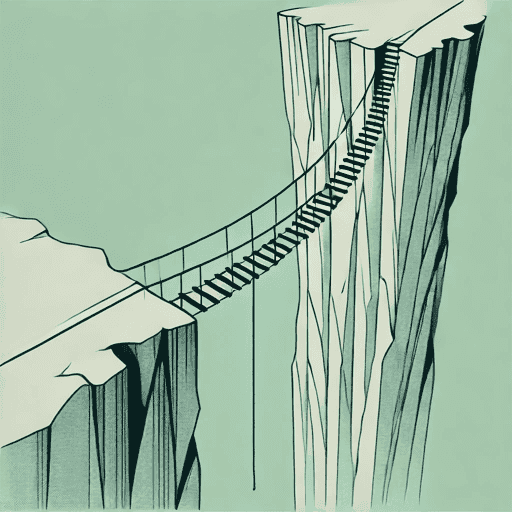
The ascent is difficult from the beginning. Chodak takes the lead, with Maddie in the middle and Atlas holding up the back. As they climb, ice falls on Atlas, crystallizing his goggles and making it almost impossible to see. Maddie tries not to look down, but Atlas keeps saying things that remind her about how high in the air she is. When they finally reach a flat area, Chodak puts hot spices on Atlas’s face to melt the ice. The spices burn his skin but are effective, and everyone shares a brief moment of levity amid the stressful situation. When the group approaches a crevasse that must be traversed via a ladder, both Atlas and Maddie are instantly filled with dread. The scene reminds Atlas of the one and only time he had to cross such a ladder, two years ago.
Chapter 14 Summary: “Mount Cook, New Zealand: 7,250 Feet, November 4, 1937”
The narrative shifts back in time to a point about one year after Atlas’s mother’s death, when he and his father were still mired in grief. Atlas’s father planned a trip to New Zealand to climb Mount Cook so that they could both escape their grief. (They teamed up with Mr. Thomley and Mr. Blake during that expedition as well.) They came to a crevasse that was at least 100 feet deep and had to cross it using a ladder. Atlas did well at first, but when Mr. Blake started complaining about Atlas’s age and slow pace, Atlas became annoyed and slipped. He danced around on one foot, staring down into the deep chasm.
Chapter 15 Summary: “North Col: 22,400 Feet, September 3, 1939”
The narrative returns to the present. Atlas finishes telling Maddie about the crevasse, explaining that Mr. Thomley grabbed his hand and brought him to safety.
Now, Atlas volunteers to go across the ladder first so that Maddie can see how it should be done. He takes his time, ensuring that he steps on the rungs using the flat part of his boots. After reaching the other side, Atlas coaches Maddie as she nervously crawls across the ladder. Chodak crosses with expert ease and then reminds the others that they must reach the top before sunset.
Maddie asks Atlas about their fathers, wanting to know how the two men met in Austria, but Atlas doesn’t want to discuss that moment and evades the topic. The final climb involves a straight vertical wall, and Chodak climbs up first. At one point, he leans back and slides on his injured hand, and the pain causes him to fall.
Chapter 16 Summary: “North Col: 22,400 Feet, September 3, 1939”
Chodak lands on Maddie and Atlas, slightly injuring them both and hurting his own foot. Once again, Atlas volunteers to go up first and set a path so that he can help Chodak up the incline. It is dark above him as the sun sets, and he hopes that he is nearing the top. As Atlas climbs, he hears Maddie mention how worried her mother would be if she knew what Maddie was doing. This comment makes Atlas long for his own mother. Atlas makes it to the top and then pulleys the packs up, followed by Maddie and then Chodak. Together, they search for tents that would have been left behind by the other group. When they find them, it is a welcome sight. Atlas tries the radio before going to sleep but still gets no reply; he tells himself that he must find a way to help his father, just as his father would do for him.
Chapter 17 Summary: “Camp Four: 23,031 Feet, September 3, 1939”
As the wind roars, Atlas wonders if his father is still alive. Maddie is reminded of a time when a tornado came through her town. Chodak mentions that six years ago, a massive earthquake killed 10,000 Tibetan people, and Maddie thinks about the avalanche again. Atlas insists that the group is still alive. Maddie isn’t so sure, but Chodak says that it is important to hold onto hope. When Atlas hints about going farther up the mountain, Chodak insists that they cannot risk doing so and will only be able to try the radio once more in the morning. Chodak tries to remind Atlas of the most important rule: saving oneself. However, Atlas believes that sometimes rules should be broken. He knows that Chodak is too injured to climb any further, but because Atlas feels fine himself, he makes a private decision.
Chapter 18 Summary: “Camp Four: 23,031 Feet, September 4, 1939”
Atlas wakes up early with the intention of sneaking away, but he notices that Maddie is gone. He gets dressed and wakes up Chodak, who tells Atlas that Maddie is just outside. Atlas finds Maddie with the radio; she claims that she heard a break in the static. Atlas is doubtful at first, but then Chodak pulls out a letter from his father. The letter was meant for Atlas only if his father didn’t come back. His father writes that he loves his son. He also counts himself lucky that he to be able to try what few have tried, and he forbids Atlas from trying to rescue him. Suddenly, the radio static starts breaking again, and Atlas recognizes the Morse code pattern for “SOS.” When Chodak hears it, he instantly decides to go rescue the team.
Chapters 10-18 Analysis
During this portion of the story, the narrative shifts into a crisis when an avalanche threatens the expedition, leaving Atlas and Maddie wondering whether their fathers are still alive. Their fears are heightened by the lack of radio communication, which implies that the expedition members are trapped or worse. As Atlas and Maddie choose to go against orders and climb the mountain to save their families, their bold decision heightens the emotional stakes and reflects one of the chief hallmarks of young adult fiction: a situation in which the young protagonists must take charge and make key decisions in the absence of parental protection. Thus, while Chodak serves as a facilitator of the protagonists’ goals, Atlas and Maddie are the ones making many of the decisions that drive the action of the plot from this point forward.
In this light, the daring ascent of the three intrepid characters forces them to put their resilience to the test and focus on Overcoming Challenges as a Team. Chodak, who is now doubly injured, must necessarily allow Atlas to take on greater responsibilities, and the boy’s determination is fueled by his resolve to help the others and save his father. By working together and supporting one another, the three are able to overcome steep odds and tackle the growing challenges that the mountain throws their way. This dynamic demonstrates the strength of the human spirit in the face of overwhelming adversity. When the SOS call inspires the trio to redouble their efforts, the narrative aptly demonstrates Atlas’s growth as he uses his mountaineering knowledge to take on a guiding role in the rescue mission. For example, he takes charge during critical moments by leading the group over a crevasse, and he demonstrates a new tone of decisiveness as the novel unfolds. This distinct inner shift represents Atlas’s transformation from a grieving, self-centered child into a young man with the capacity for self-sacrifice and leadership.
Atlas also demonstrates a new level of determination when he knowingly chooses to countermand his father’s standing order that he see to his own safety first. Although Atlas has been coached in these “rules” of mountaineering throughout the pair’s many adventures together, he now asserts his own independence by choosing to follow a new rule of his own. As he declares, “That was the rule I planned to follow on this mountain, to do the right thing, even if it wasn’t the easy thing” (131). With these words, Atlas works to rationalize his urge to go against his father’s wishes and rescue his sole surviving parent. Because of the lingering trauma of his mother’s death, he refuses to entertain the notion that his father may already be beyond saving.
However, Atlas’s headlong rush to rescue his father flies in the face of every safety guideline that he has sworn to obey, and his rash decision to ascend Mount Everest with an ill-prepared team reflects his deep connection to his father despite the pair’s unresolved issues and lingering grief over the death of Atlas’s mother. In many ways, the intensity of the ascent forces Atlas to reflect on his unaddressed emotional snags, and the narrative accordingly vacillates between visceral descriptions of the harrowing climb and descriptions of Atlas’s private insights. Atlas’s discovery of his father’s letter also highlights the emotional tension between the two characters, as the letter makes it clear that Atlas’s father expects to die during the ascent. When he orders Atlas not to rescue him, this section of the letter triggers Atlas’s most deeply held fears and insecurities, especially since the boy must now grapple with the certain knowledge that his father has prioritized a quest for the summit over the well-being of his own son. Traumatized anew by his fear of losing another parent, Atlas continues to struggle with Learning to Move Forward After Loss, and his inner turmoil in these chapters suggests that both he and his father have not yet managed to heal the differences that lie between them.

Unlock all 52 pages of this Study Guide
Get in-depth, chapter-by-chapter summaries and analysis from our literary experts.
- Grasp challenging concepts with clear, comprehensive explanations
- Revisit key plot points and ideas without rereading the book
- Share impressive insights in classes and book clubs