Pendergast: The Beginning
Pendergast: The Beginning
A modern alternative to SparkNotes and CliffsNotes, SuperSummary offers high-quality Study Guides with detailed chapter summaries and analysis of major themes, characters, and more.
Summaries & Analyses
Quizzes
NEWReading Tools
Part 2, Chapters 19-32Chapter Summaries & Analyses
Content Warning: This section of the guide includes discussion of death, graphic violence, self-harm, and substance use.
Part 2, Chapter 19 Summary
Proctor has fashioned a small, sharp weapon from a strip of bonding cement pried from the floor drain. While he is passing the time with mental ballistic calculations, his instincts alert him to faint scraping sounds from the ceiling. Suddenly dizzy, he collapses, rendered unconscious by gas pumped through a hidden ceiling vent. He awakens with a headache and fragmented memories. He recalls his captor standing over him wearing a gas mask and then, having removed it, stroking Proctor’s right arm and making “cooing noises of approval” that remind him of a butcher admiring a pig (105). The memory, combined with the forced feeding regimen, convinces Proctor that his captor is a cannibal. The gas was used to inspect him up close, and the approving noises indicate that his time is running short. Armed with this certainty, Proctor begins formulating an escape plan.
Part 2, Chapter 20 Summary
Chambers receives historical maps and aerial photographs. Comparing a 1901 map to a 1951 map, he and Pendergast identify two structures—the Rabineau Plantation and the Wichman House—that survived the 1921 hurricane on a bluff but are now inaccessible by road. Pendergast suggests a walk to escape the stuffy, non-air-conditioned mansion. He leads Chambers to the overgrown Pendergast family burial plot and shows him his grandfather’s grave, inscribed with the Latin phrase meaning “Time, devourer of all things” (110). The moment reminds Chambers of his late wife. Pendergast offers philosophical words about accepting the past and living in the present, which brings Chambers unexpected peace.
Pendergast announces that their killer is “sui generis”—unique—and does not fit any known serial killer profiles. They must focus only on known facts: The killer targets strong men, focuses on their right arms, and has surgical skill. Back at the computers, Chambers finds a two-year-old case from Husser, Louisiana: A man named Nicholas Mabley was tortured and his left arm brutalized, but his right arm was untouched except for suspicious needle marks on the shoulder. Pendergast suggests that they drive to Husser immediately.
Part 2, Chapter 21 Summary
A man named Wickman ascends from a deep basement in a dilapidated mansion. He checks a sophisticated anesthetic gas-delivery apparatus and muses that the system, now perfected, will only be used once more. The escape of Drakos forced improved security, and the gas system worked perfectly on his “new and final resource” (115).
In his command post, Wickman calls the office of a man named Dr. Telligren, using the alias Dr. Moreau, and tells him, “It’s time.” Telligren is irritated about a previous delay, but Wickman reminds him of unspecified leverage that he holds, threatening to ruin the doctor. They schedule their operation for Friday night, two nights away, with Telligren proposing meeting at the ramp around six o’clock. After hanging up, Wickman feels victorious, comparing his sense of triumph to George Washington after Cornwallis’s surrender.
Part 2, Chapter 22 Summary
Forty minutes after leaving Penumbra, Pendergast and Chambers arrive at the Tangipahoa sheriff’s office in Hammond, Louisiana. They request information about a two-year-old homicide, claiming a possible connection to an active serial killer. Sheriff Ledbetter, the investigating detective, dismisses the case as an open-and-shut mob killing. When he claims that the file is in long-term storage and would take weeks to retrieve, Chambers grows frustrated. Pendergast intervenes, lavishly praising Ledbetter for his heroism in taking down an active shooter at a school. Flattered, Ledbetter asks his secretary, Dolly, to retrieve the file immediately. He also recalls that the victim was tied, tortured, and stabbed in the heart. He identifies the medical examiner as Dr. Franklin Brantley and offers to call ahead. After signing out the file, they leave.
In the car, Chambers expresses disgust at Pendergast’s fawning behavior. Pendergast reveals that he learned about the shooting from framed citations on Ledbetter’s wall and notes that his flattery succeeded.
Part 2, Chapter 23 Summary
Pendergast briefly reviews the autopsy report before they arrive at Dr. Brantley’s office. The friendly, boisterous coroner eagerly assists, recalling the case as a typical mob killing. Chambers asks why the victim’s right arm was untouched while the rest of the body showed torture marks. Pendergast directs Brantley’s attention to a cluster of perimortem pinpricks on the victim’s right shoulder. Brantley initially suggests drug use but concedes that the shoulder is an odd injection site. The autopsy revealed flunitrazepam (Rohypnol). Pendergast notes the contradiction of sedating a victim while torturing him. Brantley confirms that the cause of death was a stab to the heart with a scalpel blade. Pendergast asks Brantley to reexamine a photograph showing the pinpricks arranged in an inverted V. Brantley agrees that the marks were likely made by the scalpel tip at the time of death. Pendergast tells Chambers that they have found the killer’s “signature.”
Part 2, Chapter 24 Summary
In his padded cell, Proctor finishes his meal and prepares for what he believes will be his captor’s imminent attack. His plan is to hold his breath when the anesthetizing gas is released, feigning unconsciousness to lure his captor inside. Knowing that the average person can hold their breath for three and a half minutes at most, Proctor has been practicing breathing exercises from his military past to extend his capacity. He recalls his Navy SEAL training with UDT-11 and SEAL Team Five, followed by recruitment into the Ghost Company, a “shadowy” special operations unit. Senior officer Howard Longstreet recruited him, and he served under Michael Decker and Aloysius Pendergast before the Company was disbanded five years ago. After leaving the service, his “unique skills” left him directionless. Murmuring the Company motto—Latin for “loyalty unto death” (129)—he resumes his training, aiming to hold his breath for eight minutes to ensure that his captor enters the cell before he must breathe.
Part 2, Chapter 25 Summary
Back at Penumbra Plantation, Pendergast tells Chambers that the pinpricks are likely a test to determine if the victim’s flesh is suitable. They search an FBI database for similar marks. The search returns numerous hits, including non-homicides. They divide the files and discover multiple cases featuring 11 shallow pricks arranged in an inverted V on the right shoulder, all made with a scalpel tip. Chambers finds a unique case: a funeral home complaint involving a man who died from accidental trauma but whose corpse was later found to be missing an arm. They reconvene in the drawing room, where Maurice serves drinks. Between them, they have identified 10 murders and one postmortem mutilation spanning five years. The killer varied his methods but always left the 11 pricks. Pendergast declares that they will begin their investigation with the earliest incident: the case of the abused corpse at the funeral home, which likely represents the killer’s first victim.
Part 2, Chapter 26 Summary
Proctor’s breathing exercises are interrupted by the scraping sound of the hatch opening. He quickly prepares, hyperventilating before filling his lungs completely, and then collapses to the floor with his shank hidden between his fingers. At three minutes, the lights snap on, signaling that his captor is watching. Proctor continues holding his breath, expecting the door to open by four and a half minutes. At six minutes, he hears a chilling “chuckle.” His captor speaks, revealing that he knows Proctor is holding his breath and armed with a shank in his left hand. Shocked and oxygen-deprived, Proctor realizes that his plan has failed but recalls his training: “[E]ven when you were out of options, one final option was still open to you” (139). With this in mind, he gasps for air and sits up. Shouting defiant curses, he slashes his own right arm repeatedly, yelling that he has spoiled the captor’s “trophy” and “meal.” The man howls in rage, promising to leave him to bleed to death in the dark. As the lights go off, Proctor succumbs to the gas and blood loss, losing consciousness.
Part 2, Chapter 27 Summary
Wickman races away from his property, enraged that Proctor has ruined himself as a “resource.” He cannot postpone the operation scheduled for that evening with Dr. Telligren. He drives to Slidell, Louisiana, seeking a new victim. After surveying several locations, he settles on the Diamond Gym, which sits next to a tavern. He enters the tavern and uses his cultivated power—a “radar” for identifying suitable victims—to scan the patrons.
After 30 minutes, three men arrive from the gym. His radar immediately goes off, and he identifies the man in the middle, named Jake, as a perfect specimen. He also overhears that Jake has a girlfriend named Stacey. Wickman prepares a disguise: a gym T-shirt, wig, baseball cap, and glasses. He parks his van in the alley with the rear doors open and then reenters the tavern and tells Jake that he has an urgent call from Stacey. After luring Jake into the alley, Wickman injects him with a large dose of flunitrazepam. He loads the unconscious Jake into the van, checks his vitals, and palpates his right arm, feeling a “spiritual connection.” Removing his disguise, he drives away, confident that he has secured the perfect resource in time for Dr. Telligren’s arrival.
Part 2, Chapter 28 Summary
Pendergast and Chambers arrive unannounced at Kroker Brothers Funeral Home, interrupting a viewing. Albert Kroker, a short man with slicked hair and a pencil mustache, is initially hostile and uncooperative. When he refuses to help, Pendergast speaks loudly enough for the entire funeral audience to hear, forcing Kroker to lead them to a private office.
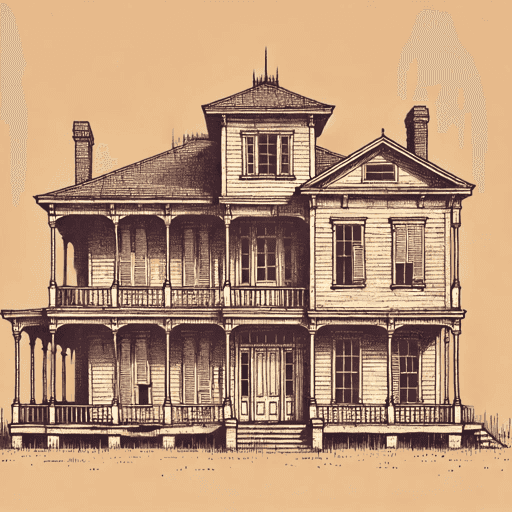
Under threat of subpoena, Kroker discusses the case of Bernard Montcalm, whose right arm went missing five years earlier during preparation for burial. He confirms that the body arrived intact but was missing the arm when the coffin broke open at the gravesite. He fired all mortuary staff present: embalmer Marc Bloomquist and mortuary science technicians Parker Wickman and Carlos Medina Michelson. After Kroker provides their personnel files, Chambers recalls the name Wickman. Pendergast connects it to the Wichman House marked on old swamp maps, roughly seven miles from where Drakos was recaptured. The agents theorize that Wickman is the killer and the old mansion is his hideout. With evening approaching, they decide to investigate immediately.
Part 2, Chapter 29 Summary
Just after six o’clock in the evening, Wickman pilots a boat carrying two men through a hidden entrance to his property’s boathouse. The passengers are Dr. Telligren and a surgeon named Magnus whom Wickman knew years ago. Wickman leads them into the mansion’s basement, revealing a state-of-the-art surgical suite that impresses even Magnus. Wickman confirms that the sedated “resource,” Jake, is secured in a large morgue-like drawer.
Before the procedure, Wickman produces a document for the others to sign: It states that Telligren’s past medical experiments caused Wickman’s condition, that Wickman possesses incriminating evidence, and that the doctors must see him through recovery. Both surgeons sign, and Wickman immediately shreds the document, explaining that their act of signing was the true acknowledgment of his leverage and calling the shredding a demonstration of trust. He dons a surgical gown and lies on the gurney. Telligren and Magnus prepare him with monitors, oxygen, and a blood pressure cuff and then place the anesthesia line. Wickman drifts under as the doctors open the drawer containing Jake and prepare to begin the operation.
Part 2, Chapter 30 Summary
At dusk, Pendergast and Chambers find the turnoff to the Wichman property, but the dirt track is impassable for the Porsche. Pendergast inspects the ground and determines that a vehicle recently used the track, its passage carefully disguised. They discover that the fallen tree blocking the path is actually a hinged gate. Chambers wants to return the next day with better equipment, but Pendergast points to a column of smoke rising from the property—the mansion is on fire, and they must act immediately.
They drive to a nearby fishing camp, where Pendergast uses bolt cutters to break into a shed and “expropriate” a pirogue. Paddling through the swamp, they navigate around alligators and through shallow mud that ruins their suits. As they near the boathouse, they see the mansion’s right wing engulfed in flames. Approaching the shore, they discover an arm, apparently recently severed, floating in the water. Their boat then bumps into a body, which Pendergast identifies with astonishment as Parker Wickman. As they prepare to land, they spot a second naked body, also missing an arm, floating nearby.
Part 2, Chapter 31 Summary
Chambers and Pendergast race into the burning mansion, searching for the basement entrance. They crawl through choking smoke and intense heat to reach the kitchen; a wall bursts into flame, but they find a pantry with a locked steel door, which Pendergast picks. Descending into a hospital-like corridor, Chambers turns on the lights, revealing a trail of fresh blood leading to double doors. Beyond is an operating room splattered with blood and covered with gory surgical instruments. They split up to search adjacent rooms. In a lab, Chambers finds a padlocked freezer. Pendergast picks the lock and opens a steel case inside that contains dozens of expertly prepared tissue samples mounted on glass plates. Chambers assumes that they are trophies, but Pendergast identifies them as “biological specimens […] prepared for scientific testing” (173). The samples have been stained with professional skill, indicating that the killer was conducting systematic research on his victims’ tissue rather than simply collecting mementos.
Part 2, Chapter 32 Summary
Pendergast rushes them toward another locked steel door, suspecting a victim may be imprisoned beyond it. After picking two more locks, they descend to a padded cell where they find Proctor unconscious and bleeding from cuts in his right arm. Pendergast is stunned, recognizing him.
After Chambers retrieves water, they revive Proctor enough to get him standing. Pendergast finds an alternate escape route and returns with wet strips of his coat for them to breathe through. They plunge through a burning section of the house, passing through a decaying library into a small, crude chapel. On an altar, Chambers notices a votive candle stand arranged in an inverted V—the same formation as the killer’s signature pinpricks on victims’ shoulders. Pendergast confirms that this is the inspiration for the signature pattern. They escape outside into a graveyard as the mansion’s roof beam cracks and the entire structure collapses into the inferno.
Part 2, Chapters 19-32 Analysis
Proctor’s storyline develops Reclaiming Agency in Absolute Captivity across an escalating sequence. Locked in a soundproof cell, he refuses to sink into passivity. He maps the room’s measurements in the dark, sticks to a strict exercise routine, and uses mental calculations to keep his mind sharp. His resistance becomes concrete when he shapes bonding cement into a weapon and forms a plan to overcome his captor, whose name is now revealed to be Wickman. Even when Proctor faces the collapse of his tactical options, he answers with an assertion of control: he repeatedly slashes his own right arm and shouts, “Your trophy is spoiled […] I’m slicing up your meal myself!” (140). By choosing to injure his own body, he takes ownership of it and robs Wickman of his goal. The padded cell, therefore, evolves from a site of total oppression to a place where Proctor proves his own agency, demonstrating that the mind can remain sovereign and defiant even when the body is completely controlled.
The novel’s focus on amputated right arms exemplifies how it blends procedural structure with tropes borrowed from horror and speculative fiction broadly, developing the theme of The Clash Between Intuition and Procedural Evidence. Pendergast uses the detail to build a psychological profile of Wickman: He observes, for instance, that the killer moves with clinical exactness, noting the use of a tourniquet to avoid early exsanguination. However, Wickman’s careful hunt for an ideal limb thus far evades Pendergast’s ability to understand, hinting that something truly irrational—perhaps supernatural—is at work. Meanwhile, Wickman’s chapters play on anxiety about uncontrolled scientific experimentation. Working in a deep basement, Wickman regards captives as “resources” and takes pride in his gas system as engineering. The suggestion that science can be turned to evil purposes foreshadows later revelations about Tulane University’s PSI program, but it also hearkens to a longstanding tradition in the horror genre—one that dates back to at least Mary Shelley’s Frankenstein (1818). Indeed, Wickman’s call to Dr. Telligren references this tradition directly, as Telligren’s alias is an allusion to H. G. Wells’s The Island of Doctor Moreau, which features a scientist performing gruesome surgeries to create human-animal hybrids.
Another significant motif emerges in these chapters: the pinpricks left behind on victims’ bodies. The motif functions in part to deepen the contrast between Pendergast’s methods and conventional police work. Sheriff Ledbetter and Dr. Brantley quickly classify a victim’s death as a routine mob hit, but Pendergast notices the inverted V and redraws the crime as the action of an organized serial killer with a layered psychological drive. Pendergast’s attention to the petechiae thus introduces the V-shaped pinpricks as a key to Wickman’s psychology. The origin appears in the mansion’s crude chapel, where an inverted-V candle holder stands on a makeshift altar. This link between Wickman’s attacks and a warped religious devotion recalls his description of an “evil stirring ever more aggressively in that limb [his right arm]” (141), suggesting that he sees the surgical replacement of his arm as a kind of exorcism. It also roots his violence in personal history, laying the groundwork for Part 3’s backstory.
The discovery of Wickman’s mutilated body unsettles genre conventions: With half the book remaining, the character previously set up as the primary antagonist is dead, and his death points toward a larger medical conspiracy. This redirects the plot from the serial killer chase toward an older institutional mystery surrounding the origin of Wickman’s behavior.

Get in-depth, chapter-by-chapter summaries and analysis from our literary experts.
- Grasp challenging concepts with clear, comprehensive explanations
- Revisit key plot points and ideas without rereading the book
- Share impressive insights in classes and book clubs