Pendergast: The Beginning
Pendergast: The Beginning
A modern alternative to SparkNotes and CliffsNotes, SuperSummary offers high-quality Study Guides with detailed chapter summaries and analysis of major themes, characters, and more.
Summaries & Analyses
Quizzes
NEWReading Tools
Part 2, Chapters 6-18Chapter Summaries & Analyses
Content Warning: This section of the guide includes discussion of death, mental illness, suicidal ideation, sexual violence, death by suicide, and graphic violence.
Part 2, Chapter 6 Summary
On August 10, 1994, FBI Agent Dwight D. Chambers arrives at his New Orleans field office, viewing the building as a “prison.” For two months since the death of his wife, Janice, in a car accident, he has been deeply depressed, contemplating suicide and neglecting his duties. Six months earlier, his longtime partner, Fenton, was wounded and reassigned to a desk job. Chambers was then assigned a new partner from Quantico whom he dislikes and has failed to mentor properly.
Inside, Chambers notices a fresh announcement from ASAC Gerald Urbanski, encouraging agents to inform on each other. He finds his partner’s desk empty. Agent Win Malone drops off an envelope for the absent partner’s scrapbook. Soon after, Urbanski arrives giving a tour to T. J. Fulsom, a prominent bank president, and a stranger in a blue hat and thick glasses—a clear protocol violation. Later, a commotion draws everyone from their offices. The man in the blue hat is arguing with Urbanski while taking Polaroid photographs. SAC Estevez arrives to intervene. The stranger suddenly pulls a manila packet from Fulsom’s jacket and hands it to Estevez. He then removes his elaborate disguise: To Chambers’s shock, the man is his own new partner.
Part 2, Chapter 7 Summary
Urbanski protests that the envelope belongs to Fulsom. Agent Pendergast, Chambers’s partner, suggests that Estevez examine it privately. Estevez orders everyone into his office. He tells Pendergast that since Mike Decker, an FBI agent and friend, recommended him, he will give him a chance to explain himself. Pendergast reveals that he witnessed a suspicious garage meeting between Urbanski and Fulsom and approached Fulsom with a scheme to impersonate a corrupt lawyer at their subsequent lunch in LaPlace. He learned that Fulsom was worried about an incriminating videotape from an FBI sting involving sex trafficking. Urbanski had agreed to retrieve the tape from the evidence room for $50,000. Pendergast states that the videotape is in the envelope, along with Polaroid photos documenting the exchange.
Estevez is furious at the unauthorized sting. Pendergast argues that the evidence was obtained legally on federal property. Chambers unexpectedly speaks up, falsely claiming that he approved the operation as senior agent.
Part 2, Chapter 8 Summary
Pendergast raises an eyebrow at Chambers’s lie. Chambers continues, telling Estevez that he authorized the operation because morale has declined under Urbanski. Fulsom threatens to sue if the envelope is opened. Defying the threat, Estevez tears it open, revealing a videotape with an FBI evidence tag. He summons two agents and has Fulsom and Urbanski arrested, reciting Miranda warnings. Chambers formally takes responsibility for Pendergast’s actions.
Estevez reveals that Decker told him that Pendergast has authority issues, which is why he assigned him to the open-minded Chambers. He expresses hope that this incident might help Chambers become a good agent again. However, he threatens both with career-ending consequences if they pull another “stunt” and bars them from the building for at least seven days, ordering them to find something to investigate far from the office.
Part 2, Chapter 9 Summary
Outside the field office, Pendergast directs Chambers to a Japanese tea shop in Faubourg Delassize. Pendergast notes that the robin’s-egg blue of Chambers’s Impala reminds him of a Magritte painting. When Chambers correctly guesses that he’s thinking of The Empire of Light, Pendergast is surprised. At the tea shop, Pendergast orders in fluent Japanese. He apologizes for the incident and thanks Chambers for intervening. Chambers apologizes for being a poor mentor and receives Pendergast’s sympathies for his wife’s death.
Pendergast asks about the Magritte reference. Chambers explains that his late wife, Janice, taught art history and loved Magritte; he bought the car as a surprise for her but received word of her death before she could see it. When asked how he knew Urbanski was corrupt, Pendergast cryptically replies that “some things [he] just know[s]” (56). For the first time in months, Chambers feels his depression recede. Pendergast opens the envelope from Malone, which contains a newspaper article about a bizarre unsolved murder in Diamondhead, Mississippi. He suggests investigating the case to fulfill Estevez’s orders. Chambers agrees.
Part 2, Chapter 10 Summary
Driving east toward Mississippi, Pendergast reads from the article. A body was found in a storage unit with one arm amputated. Chambers begins feeling like himself again. They pass the Grand-Morte Swamp, which Pendergast knows as the Ghost Swamp. Chambers recounts the local legend of the town of Frenier and the Creole priestess Julie Brown, who cursed the town before a hurricane swallowed it in 1921; her body supposedly “glowed yellow as the moon […] before she sank beneath the wind and waves” (59). Pendergast offers a scientific explanation: Ingesting phosphorus-laden match heads as a means of suicide caused a ghostly glow. Observing Chambers’s unease regarding the swamp, Pendergast cites Edith Wharton to the effect that it is possible not to believe in ghosts but still fear them.
Part 2, Chapter 11 Summary
Pendergast radios ahead to Diamondhead law enforcement. At the southern Hancock County sheriff’s department, Deputy Willis meets them. Pendergast takes the lead in the interview. Willis explains that on August 5, two girls witnessed a man in a hospital gown run out of the swamp and across Chef Menteur Highway near the Old Pearl River. A man in a black sweatshirt chased him down and forced him back into a white van. The girls provided few details, and an APB on the van has yielded no results. The storage unit was rented under a false name and paid for in cash. The victim, Kenneth Drakos, was running north when recaptured.
They view Drakos’s body in the morgue. Chambers observes signs of strangulation and notes that a tourniquet was used on the severed right arm, which is heavily mutilated, while the rest of the body is relatively unharmed. Pendergast conducts a lengthy examination using a magnifying glass. On the drive back, he shares his conclusions: The killer, who has some sort of mental illness, is experienced and well-funded, with surgical training. He has killed many times before and likely has a safe house, but he does not kill for the typical reasons serial killers do. The fundamental mystery is why the killer amputated the arm with surgical precision but then mutilated it.
Part 2, Chapter 12 Summary
Proctor remains imprisoned in the padded cell. Unafraid, he has systematically familiarized himself with the cell’s dimensions in darkness and maintains a rigorous exercise routine. He deduces that he is in a basement and that previous captives have been held here. The lights activate, and his captor speaks through the food slot, praising Proctor’s compliance. The meal is more substantial: grilled filet, carrots, pancakes, and Jell-O. The captor instructs Proctor to take a multivitamin and antibiotic tablets, threatening punishment for refusal. Proctor recognizes the man’s talkativeness as a “weakness.” Recalling the captor’s “slavering expression” and obsessive focus on his health and diet, Proctor grows increasingly suspicious that his captor has a cannibalistic purpose for keeping him alive. Meanwhile, the captor remarks on Proctor’s unusual stoicism, noting that Proctor has not pleaded, offered money, or asked questions.
Part 2, Chapter 13 Summary
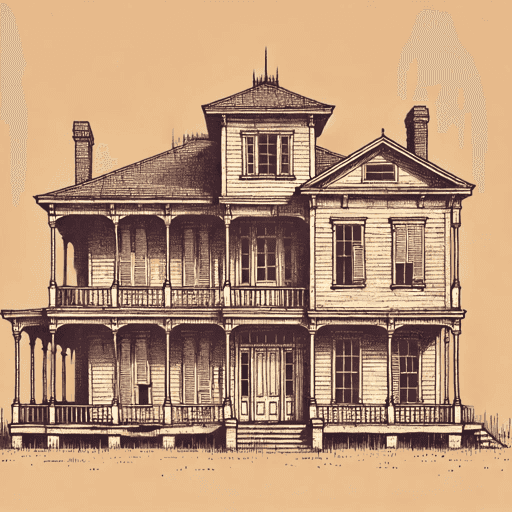
The next morning, Chambers wakes after a “miserable night,” though for the first time in months, he kept his gun locked away. A uniformed chauffeur arrives, sent by Pendergast, and drives Chambers in a vintage Rolls-Royce to Pendergast’s residence in St. Charles Parish. The car travels through “sleepy byways […] where the trees hung thick with Spanish moss and ancient mansions could be glimpsed past ancient tree trunks, set among dark bayous and old, private family cemeteries” (73). They arrive at a grand, pillared plantation house with two IBM trucks parked outside, their equipment—including a large satellite dish and thick cables—running into the building. Pendergast, dressed in his customary black suit, greets Chambers at the door.
Part 2, Chapter 14 Summary
Pendergast welcomes Chambers to Penumbra Plantation and identifies his car as a 1959 Silver Wraith. He confirms his genuine interest in the Drakos case. Pendergast shows Chambers their temporary base: a den where IBM technicians are installing computers with a T-1 line. Mike Decker arranged for them to access FBI databases remotely. A household worker named Maurice serves them lemonade. Pendergast proposes searching for similar unsolved homicides from the past five years involving cutting or amputation within a 30-mile radius of the abduction site.
They spend hours searching with limited success. During lunch on the veranda, Pendergast questions the assumption that Drakos escaped from the van. He posits an alternative: Drakos escaped from a place of confinement south of the highway and was intercepted by the killer, who used the van to cut off his escape route. Chambers is skeptical, arguing that the area has been an uninhabitable swamp since the 1921 hurricane. Pendergast suggests obtaining historical maps and aerial photographs. Chambers agrees to make the calls.
Part 2, Chapter 15 Summary
Back at the computers, Chambers widens his search across three states. He finds a potential connection: a cold case involving gangster Jimmy Socks, whose decomposed body was found in Bayou Gauche, missing an arm and both legs. A severed arm was discovered in a dumpster in Gadsden, Alabama, several days before the body was found. The arm was missing its hand, preventing fingerprint identification. Pendergast notes similar clean, surgical cuts on both arm and torso, plus possible freezer burn. Chambers remains skeptical due to low screen resolution and lack of physical evidence—the body was cremated and the arm likely disposed of. Pendergast suggests visiting the Diamondhead storage facility the next day.
Part 2, Chapter 16 Summary
The next morning, Chambers drives them to the run-down Haul-U-All Self Storage facility. They meet the uncooperative owner, Rockelton, who confirms that he found Drakos’s body after noticing the unit’s door was slightly ajar. The unit is rented under the name Jack Daniel with annual cash payments dropped through the mail slot. Rockelton refuses to open the unit without a court order. Chambers takes over, fabricating a story that the property is a toxic former munitions factory and tuberculosis cemetery, threatening to expose it to a journalist. The blackmail works. In the car afterward, Pendergast expresses admiration for Chambers’s interrogation methods. Chambers advises Pendergast to be less deferential.
Part 2, Chapter 17 Summary
Rockelton opens the unit and departs. The space is set up like a surgical area, with a blood-stained metal table and floor, well stocked with new hospital gowns and surgical supplies. Chambers concludes that CSI processed the scene thoroughly but found no fingerprints. The killer was methodical but left in a hurry, indicating a serial killer who planned long-term use of the site. Pendergast begins his own minute examination with a magnifying glass. After half an hour, he asks Chambers to lie on the bloody table in the victim’s position. Chambers angrily refuses, so Pendergast lies on the table himself, explaining that it is a concentration exercise requiring 40 to 45 minutes. A disgusted Chambers leaves to wait in the car.
Part 2, Chapter 18 Summary
Nearly an hour later, Pendergast returns. Chambers confronts him about his wealth, connections, and bizarre behavior. Pendergast explains that he was part of a “highly classified military unit” with Mike Decker, which led to his interest in law enforcement (97). He describes lying on the table as part of Chongg Ran, a Tibetan meditation requiring physical presence at the event’s location. He shares his conclusions: Drakos ran at least five miles through the swamp, indicating that both victim and killer were extremely fit. The killer knew that he was seen by the girls, which caused him to rush the procedure. Something happened after the amputation that sent the killer into a rage, causing him to slash the arm and flee in panic. Pendergast theorizes that the killer’s sole interest was the right arm, that he does not enjoy killing, and that he is a “seeker” searching for something.
Part 2, Chapters 6-18 Analysis
Agent Dwight D. Chambers enters the story hollowed out by recent loss. After his wife Janice dies suddenly, Chambers drifts through his days in professional apathy and private despair, even considering suicide. That he continues to drive the robin’s-egg blue Impala he had bought as a surprise for Janice encapsulates his state: The car, a reminder of canceled futures and her love of Magritte, is woven into the everyday rhythm of his life, illustrating the extent to which his despair has come to define him. It is thus a disruption of routine that causes his state to shift when Chambers unexpectedly lies and claims he authorized Pendergast’s trap. That reflexive decision breaks through his emotional numbness, allowing him to see himself from a new perspective: As he recalls “moping” while arriving at work earlier that morning, he reflects, “Moping. That label, or at least its self-administration, was unexpected, too” (53), suggesting that he has come to see his despair as self-indulgent, though the novel itself does not endorse that view of grief. Rather, it suggests that Chambers is newly able to imagine a world beyond his loss, including how others might perceive him. That world expands further as the demands of investigation slowly sharpen his focus and as his interactions with Pendergast pull him out of isolation, introducing the theme of Overcoming the Corrosive Power of Grief Through Purpose.
As Chambers starts to reengage, the investigation foregrounds The Clash Between Intuition and Procedural Evidence. Pendergast ignores Bureau rules to expose Urbanski, relying on disguise and psychological manipulation instead of sanctioned evidence collection. He brings the same approach to crime scenes. While Chambers sticks to ordinary observations—the absence of fingerprints, the neat removal of evidence in the storage unit—Pendergast lies on the blood-streaked table and practices Chongg Ran, a Tibetan concentration exercise that he says helps him inhabit the killer’s mindset. He ultimately decides the murderer is “sui generis” and abandons common tools like geographic profiling and standard motive grids. The killer is a methodical “seeker” following an obscure logic that conventional forensics cannot chart.
The interspersed chapters from Proctor’s point of view underscore this point. Proctor continues to respond to his captivity with calm assessment, correctly deducing various details about where he is being held and how many people have preceded him. However, his logic runs up against a wall when he turns to the man holding him captive:
Proctor could not determine a precise motive. If his captor was a serial killer, which seemed increasingly likely, he did not fit the MO of any Proctor had heard of. Also disquieting was how intently the man had looked him over during their interaction—not his face so much as the rest of him, particularly his right arm, bared as it was by the hospital smock. It was as if the man was sizing him up for something (70).
It is telling that the conclusion he eventually comes to—that his captor intends to eat him—is both highly outlandish and wrong. Some cases are so fantastical, the novel suggests, that they exceed the bounds of ordinary imagination.
The discussion of the Grande-Morte Swamp provides a Gothic touch that deepens the contrast between the novel’s procedural and supernatural elements. In particular, its nickname introduces the motif of ghosts, references to which are ubiquitous (“Ghost Company,” “the Fantôme,” etc.) even though no actual specters appear in the novel. Though Pendergast demystifies the legend of Julie Brown, the chapter ends on an ambiguous note as he observes that it is possible to disbelieve something yet act as though it were true. The motif thus serves as a reminder of the limits of rationality.

Get in-depth, chapter-by-chapter summaries and analysis from our literary experts.
- Grasp challenging concepts with clear, comprehensive explanations
- Revisit key plot points and ideas without rereading the book
- Share impressive insights in classes and book clubs