The Pillars of the Earth
The Pillars of the Earth
A modern alternative to SparkNotes and CliffsNotes, SuperSummary offers high-quality Study Guides with detailed chapter summaries and analysis of major themes, characters, and more.
Summaries & Analyses
Author Insights
Quizzes
NEWReading Tools
Ken Follett on The Pillars of the Earth
In his own words: quotes and insights from the author.Why he wrote it
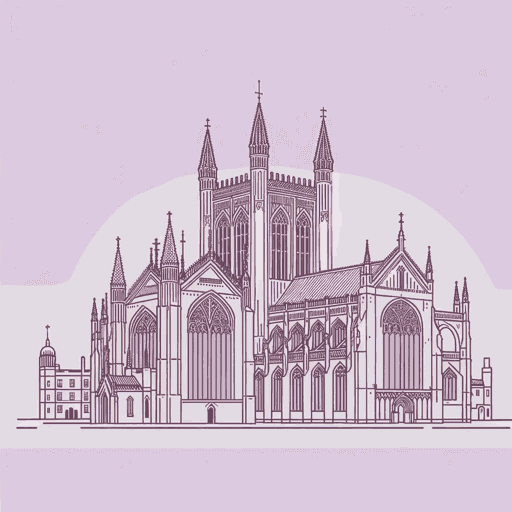
An empty afternoon in PeterboroughFollett grew up in the Plymouth Brethren, a puritanical sect whose meeting halls were stripped of every ornament. His first real encounter with a cathedral came not from any deliberate plan but from a gap between a finished assignment and a train home.
Our churches were never called ‘churches’; they were halls with plain white walls. Pictures and statues were forbidden; the only bit of decoration might be an embroidered text. So for me, it was all new, and standing there in Peterborough Cathedral was the beginning of my fascination.
He spent roughly a decade after that afternoon visiting cathedrals, reading about Gothic construction, and nursing a novel he knew he could not yet write. The self-assessment, when he finally named it, was blunt about the gap between the ambition and the writer who held it.
Looking back, I can see that I couldn’t have written it then. I wasn’t good enough to write the book that I had in mind – set around the building of a 12th-century cathedral, which would take decades, and the lives of the people who worked on it – and it was too ambitious for me.
When Follett returned to the idea in 1986, his publishers responded with something between alarm and intervention. He had built his reputation on Cold War thrillers, and the people who sold his books saw the medieval cathedral not as an opportunity but as a trap.
One of the publishers actually approached my wife Barbara and said, ‘You’ve got to stop him writing this book. It’s going to ruin his career.’ [paraphrased from audio]
He ignored the warning. The book now sells around 100,000 copies a year in US paperback alone.
The question that kept pulling him back was not theological. Follett had become an atheist at university, and what puzzled him was an economic and social riddle: why did people who slept on the floor and lived in wooden houses without chimneys commit decades and fortunes to these structures.
When I started to look at cathedrals, I wondered: Who built them, and why? The book is my answer to that question.
How he wrote it
Three years, three months, and a borrowed structureHe arrived at the project convinced he had already done the work. A decade of cathedral visits and specialist reading felt like preparation. The writing corrected that assumption almost immediately.
I’d been interested in cathedral architecture for about 10 years before that. So when I started the project, I thought, I know all about this — I’m not going to have to do much research. That was wrong, by the way. I realized as I was writing how much I didn’t know about the Middle Ages, naturally.
Even where his research was solid, turning specialist knowledge into readable prose required a separate act of translation. His central technical source was a scholarly volume called The Construction of Gothic Cathedrals, and knowing it was not the same as being able to use it.
The real challenge was to tell the story of how a cathedral is built without getting bogged down in technicalities — and the technicalities of cathedral building are pretty complicated! I had a famous book called *The Construction of Gothic Cathedrals* and I had to try to take from that the essence, the bones of it, and make it clear and easily comprehensible to the reader.
For managing a cast of characters across a story that spans decades, Follett turned to Anthony Trollope. Orley Farm, a long Victorian novel, gave him a structural method he then applied to everything he wrote at this scale.
There’s a circle of characters and every time there’s a development in the story, he goes around the circle showing how the development affects each character, and it’s just perfection. When I started to write long novels with *The Pillars of the Earth* I thought, that’s how you can have a big cast: you’ve always got to include them all and the best way to do that is in a logical, structured way.
Every previous Follett novel had run between 90,000 and 100,000 words. This one reached 375,000. The difference was not simply one of proportion: sustaining a single imaginative world across that length produced a strain he had not encountered before.
Writing *The Pillars of the Earth* was exhausting. It is much more difficult to write one book of 400,000 words than three or four shorter books because you have to keep making up more and more stuff about the same people. Pillars of the Earth took me three years and three months and towards the end I was working Saturdays and Sundays because I thought I was never going to get it finished.
The character who cost him the most deliberate thought was not the villain but the hero. Follett is an atheist, and Prior Philip, the monk at the moral center of the novel, required him to inhabit a sincere devotion entirely unlike his own.
I’m an atheist, and I was reluctant to create a hero who was a devout worshipper, but given the subject matter, I really had no choice. Philip is about as different from me as a character could get. Perhaps that’s why, he is the best character I’ve ever created.
The personal thread
An atheist and his cathedralFinishing the book brought something he had never felt before: not relief, but a specific depletion he could only name after it arrived. The exhaustion was creative rather than physical, and it clarified, in hindsight, why the result sat apart from his earlier work.
I found it extraordinarily difficult, and when it was finished, I experienced imagination fatigue for the first time, but the result was on a level different from anything I’d written previously. And of course, I saw the irony of an atheist writing a much-loved novel about a church. [paraphrased from audio]
The irony he named was not incidental. Throughout his public discussion of the book, Follett has been consistent about where his own interest actually lay, and it was not in the spiritual ambition the cathedrals are supposed to represent.
I’m not a very spiritual person. I’m more interested in the material problems of building a cathedral.
That distinction matters for how the book works: its moral seriousness comes not from religious conviction but from the practical, human stakes of construction, politics, and survival.
What he wants us to sit with
No message shorter than the book itselfWhen a Spanish musical adaptation of the novel prompted the question of what single idea he hoped to leave with an audience, Follett refused the premise of the question. The refusal was not evasion.
I don’t really believe in messages… I don’t think I could have a message that could be any shorter than the book, you know? The book tells how I look at life, what I think are the important things, how people can be manipulated, and how some people can be cruel, and some people can be loving — I can’t single out just one thing.
What he does insist on is the criterion by which any novel, including this one, should be judged. The standard he applies has nothing to do with historical accuracy or thematic weight.
If tears come to your eyes and your heart beats faster and if you become angry about something in the book or worried about what’s going to happen or scared or sad, if all of those things happen, then the book is a success and you enjoy it. And if that doesn’t happen, if your emotions aren’t engaged by the story, then reading the book is a bit of a chore.