Pnin
Pnin
A modern alternative to SparkNotes and CliffsNotes, SuperSummary offers high-quality Study Guides with detailed chapter summaries and analysis of major themes, characters, and more.
Summaries & Analyses
Quizzes
NEWReading Tools
Symbols & Motifs
Content Warning: This section of the guide includes discussion of mental illness, suicidal ideation and self-harm, and death.
The Aquamarine Glass Bowl
This beautiful and fragile object is a central symbol of Pnin’s transient happiness and his deep yearning for a stable, aesthetically pleasing life. A gift from his ex-wife’s son, Victor, the bowl shows a fragile hope for connection, domesticity, and a future rooted in America. Its arrival on the day Pnin begins planning his housewarming party suggests the possibility of a new beginning, a home filled with beauty and friendship. The bowl’s brilliant aquamarine glass and “decorative design of swirled ribbing and lily pads” (153) embody an ideal of refined, settled existence that Pnin, a lifelong wanderer, has never been able to achieve. This object concentrates all his aspirations for a home into a single, perfect form, making its fate a direct reflection of his own.
The bowl’s symbolic weight culminates during the party, which marks the high point of Pnin’s social and domestic life at Waindell. As his guests admire the “perfectly divine bowl” (157), its value and beauty are affirmed, mirroring Pnin’s own sense of belonging and success in that moment. He appreciates the bowl, but also the way in which his guests’ admiration for the bowl reflect the strength of Victor’s affection for Pnin; he likes that the bowl shows him to be a person worthy of such a gift.
After the party, while washing dishes, Pnin hears an “excruciating crack of broken glass” (172) from the sink. His moment of terror, followed by the deep relief of discovering the bowl is intact, is deeply ironic. Although the physical symbol of his hope survives, Pnin has just learned he is being fired. The true shattering has already occurred, rendering the bowl a beautiful but empty vessel, a relic of a dream that was destroyed just as it seemed within reach. The scene illustrates the central theme of The Trauma of Permanent Exile, in which any sense of security is illusory.
Wrong Trains and Lost Ways
The recurring motif of Pnin taking the wrong train or losing his way is a literal and metaphorical representation of his status as a permanent exile. Unable to navigate the American landscape, Pnin is in a state of constant disorientation that reflects his deeper cultural and existential displacement. This pattern is established in the opening chapter, where, despite his proud study of timetables, he confidently boards the wrong train to Cremona, a comedic error that devolves into a near-tragic series of mishaps. His confidence in his ability “in puzzling out schedules for himself” (9) is undercut by reality, showing the unbridgeable gap between his inner world of Russian logic and the baffling systems of his new home. This is a condition of exile, where the familiar maps of one’s homeland are useless in a new and unintelligible territory.
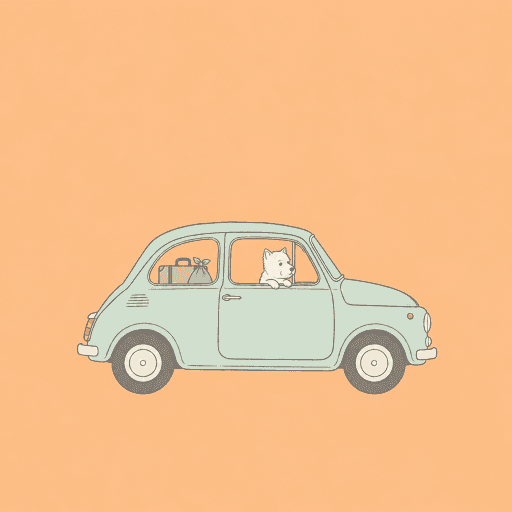
This motif structures many of Pnin’s interactions with America, creating both the novel’s humor and its pathos. In Chapter 5, his attempt to drive to the Kukolnikovs’ house becomes another journey into confusion as he gets lost in a maze of rural roads, his car “manned by an idiot” (112), meaning himself. Each wrong turn emphasizes his alienation and his struggle to find his place. The culmination of this motif occurs in the final scene. Having been dismissed from his job and his new home, Pnin is last seen driving away from Waindell. For the first time, he appears to be in control, as his sedan “boldly swung past the front truck and, free at last, spurted up the shining road” (191). This image offers an ambiguous resolution: Pnin is still on a journey, but he is now moving with a decisive agency he previously lacked. He is no longer on the wrong train; he is finally charting his own path, embracing the perpetual motion that defines the trauma of permanent exile.
Teeth and Dentures
Pnin’s dental ordeal in Chapter 2 is a symbol of the painful, often violent process of forced assimilation. The extraction of his own teeth signifies the forcible removal of his old, authentic European self. His tongue, which once happily explored a “battered but still secure kingdom” (38) of familiar teeth, now confronts “a great dark wound, a terra incognita of gums” (38). This physical loss mirrors the psychological trauma of having his homeland and identity violently torn away. The new dentures, when they arrive, are a foreign imposition. He initially regards them with dread, “as if a poor fossil skull being fitted with the grinning jaws of a perfect stranger” (38). This imagery captures the artificiality of the new identity the exile must adopt to survive in a new culture, an identity that feels unnatural and disconnected from one’s true self. He must smile with artificial teeth at the artificial colleagues who inhabit the exile’s artificial existence.
Over time, Pnin grows to admire his new teeth, seeing them as a “firm mouthful of efficient, alabastrine, humane America” (38). This shift symbolizes his earnest attempt to adapt and find value in his new life, embracing the “new gadget” (38) as a sign of progress. However, the perfection of the dentures is also their flaw; they are “too even” (39), betraying their synthetic nature. Like his fractured English and his attempts to understand American customs, the dentures are a superficial fix that cannot erase the underlying sense of loss. They represent a functional but inauthentic assimilation, a key aspect of the theme of the trauma of permanent exile. Pnin may have acquired a perfect American smile, but it is a mask that covers the irreparable wounds of his past, a fact his cruelly observant colleagues in the solipsistic faculty never fail to notice.
Ghosts and Phantoms
The motif of ghosts and apparitions from Pnin’s past is the most direct expression of the novel’s central theme of the trauma of permanent exile. For Pnin, the past is not a collection of memories. The past is more accurately a living, intrusive presence that constantly breaks through the thin veneer of his American reality. His dead parents, friends, and lost loves are more real to him than the living people who surround him, revealing the deep and isolating nature of his grief. This is starkly illustrated during his lecture at the Cremona Women’s Club, when his audience dissolves into a vision of his past. He sees “Murdered, forgotten, unrevenged, incorrupt, immortal, many old friends […] scattered throughout the dim hall” (27). This hallucinatory moment shows that Pnin’s true audience is the dead; his consciousness is fundamentally oriented toward a world that has been destroyed, making his life in the present a spectral existence.
The most significant of these phantoms is Mira Belochkin, his first love, who was murdered in a Nazi concentration camp. The memory of her horrific death is a trauma so deep that Pnin must actively suppress it to function. He understands that “no conscience, and hence no consciousness, could be expected to subsist in a world where such things as Mira’s death were possible” (135). When these memories do surface, often triggered by a chance remark, they reveal the immense historical tragedy that Pnin’s comical, bumbling exterior conceals. His life is a constant struggle to manage an unbearable sorrow, rather than—as the narrator implies—a series of absurd and comic mishaps. The recurring presence of these ghosts demonstrates that, for an exile like Pnin, the defining events of his life have already happened and the present is little more than an Epilogue haunted by their consequences.

Unlock the meaning behind every key symbol & motif
See how recurring imagery, objects, and ideas shape the narrative.
- Explore how the author builds meaning through symbolism
- Understand what symbols & motifs represent in the text
- Connect recurring ideas to themes, characters, and events