Projekt 1065
Projekt 1065
A modern alternative to SparkNotes and CliffsNotes, SuperSummary offers high-quality Study Guides with detailed chapter summaries and analysis of major themes, characters, and more. For select classroom titles, we also provide Teaching Guides with discussion and quiz questions to prompt student engagement.
Summaries & Analyses
Author Insights
Quizzes
NEWReading Tools
Alan Gratz on Projekt 1065
In his own words: quotes and insights from the author.
Why he wrote it
A deleted scene that refused to stay cutThe book began as a mistake, or rather as a problem Gratz couldn’t solve during an earlier manuscript. While writing Prisoner B-3087, his 2013 novel based on Holocaust survivor Jack Gruener’s account of surviving ten Nazi concentration camps, he drafted a chapter that never made it to publication. The cut scene lodged itself and wouldn’t leave.
One of the chapters I ended up cutting from Prisoner B-3087 was a scene where Jack runs into a kid in the Hitler Youth. Ever since then, I’ve wanted to write a whole book about the Hitler Youth, but I didn’t want to have a Nazi as my main character.
Ireland’s wartime neutrality is a historical footnote most readers skip over. Gratz found in it the structural solution he needed: a country that kept its embassies open in Berlin, which meant diplomats on the ground who were quietly working against the regime, which meant a protagonist who could be inside the Hitler Youth without being a true believer.
Then I learned that Ireland had been neutral in World War II, and so they had diplomats and ambassadors in Nazi Germany–diplomats and ambassadors who were really working as spies! Then I realized I could have an Irish kid as my main character, but because he was thirteen years old, he would have to be in the Hitler Youth, and would be my hero.
The final push came from readers rather than from research. After Prisoner B-3087, Gratz received more mail than all his previous books combined, and the letters kept asking the same thing. He describes how that correspondence shaped the direction of his next project.
I’ve received more about Prisoner than all my other books combined. They kept asking when I would write more about WWII...Kids were really responding to Prisoner, though. I was accidentally on the front end of a trend. WWII books, particularly for MG, have been really, really strong. So, I listened. Then came Projekt 1065.
Beneath the spy-thriller mechanics was a question Gratz wanted to press directly on young readers. He returns to it in interviews as the reason WWII keeps pulling him back: not the battles or the tactics, but the conditions that made the whole catastrophe possible.
I think the most fascinating thing to me about the war is the rise of Nazi Germany. How could such a thing ever happen in the world? I hope students continue to study Nazi Germany for the rest of human existence, so we can hope to understand how it came to be and make sure something like that never happens again.
lilbooklovers.wordpress.com, “Exclusive Interview with Alan Gratz – LILbooKlovers”That question is the engine running underneath the thriller plot. Michael O’Shaughnessy, the thirteen-year-old Irish spy at the novel’s center, is inside the machine Gratz wants readers to understand from the inside out.
How he wrote it
Real history, invented peopleGratz draws a firm line between what he researched and what he made up, and he states it plainly for readers who want to know where the novel’s edges are. The list of real historical elements he worked into the book is longer than most readers expect.
All the history is real–about the Hitler Youth, and the Edelweiss Pirates, and Operation Paperclip, and Projekt 1065, and Irish diplomats being spies…but I made up Michael and Simon and Michael’s parents and the rest of the characters.
The discoveries that fuel Gratz’s research are always the same kind: documented events that most people have never heard of. He names the Irish spies in wartime Berlin alongside other examples from his broader work to describe the feeling he’s chasing when he goes into an archive.
I’m looking for those parts of a time and a place that most of us don’t know about, but that really happened— baseball-playing samurai, Irish spies in Germany during World War II, Okinawan refugees on their own island during the Battle of Okinawa...I’m looking for stories and events that make you say, ‘Wow, I never knew that—but it really happened!’
Once the research gave him enough to work with, Gratz’s process moves from library to notecard board. He describes the sequence: a kernel idea first, then research built around it, with a deliberate rule about what to do when the facts don’t cooperate.
I start with the kernel of an idea—an Irish spy in the Hitler Youth, three families escaping violence to seek new homes as refugees, multiple perspectives on the same massive D-Day invasion—and then research to support that idea. If the research doesn’t fit, I don’t force it!
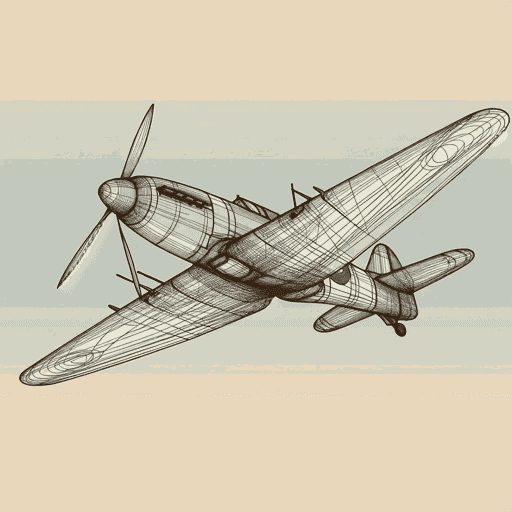
The title itself is a small example of that fidelity to the historical record. “Projekt” with a K is the German spelling, and Projekt 1065 was the actual code name for the Messerschmitt Me 262, the world’s first operational jet plane. The spelling isn’t stylistic; it’s accurate.
What he wants us to sit with
Why the clearest war still asks hard questionsGratz has thought carefully about why WWII keeps working for middle-grade readers in a way that other historical conflicts don’t. His answer connects the war’s moral legibility to something specific about how young readers process injustice.
WWII was perhaps the one war where our reasons for fighting it were incredibly clear, especially in retrospect, when we see the actions of Nazi Germany clearly and we understand what we stopped. We understand why the sacrifice was worth it...There are clear bad guys and clear good guys and very little politics.
But legibility is not the same as simplicity, and Gratz doesn’t want readers to mistake one for the other. The goal underneath every thriller set piece is something he names consistently across his books: a reader who finishes and sees another person’s inner life rather than a historical category.
The biggest thing I’m trying to do with my books is to help young readers understand how other kids live—their hopes, their struggles, and their motives—so that the readers see them as human beings, not statistics or sound bites.
In Projekt 1065, that means a protagonist who has to beat a friend to protect his cover, who has to burn books he secretly loves, who has to perform enthusiasm for a regime he is trying to destroy. The cost of resistance, not just its outcome, is what Gratz wants readers to carry out of the book.