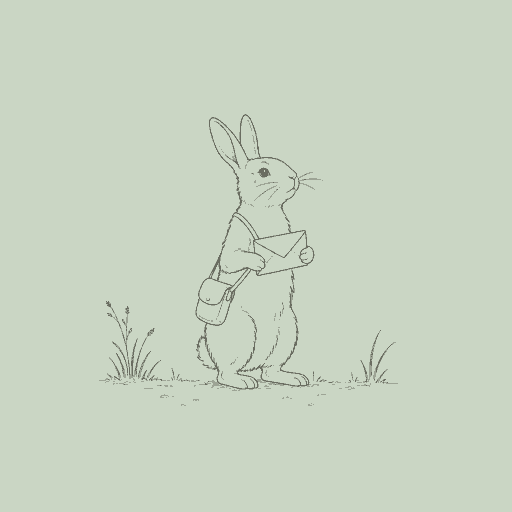
Rabbit Hill
Rabbit Hill
A modern alternative to SparkNotes and CliffsNotes, SuperSummary offers high-quality Study Guides with detailed chapter summaries and analysis of major themes, characters, and more.
Summaries & Analyses
Quizzes
NEWReading Tools
Chapters 1-4Chapter Summaries & Analyses
Content Warning: This section of the guide includes discussion of animal cruelty and death.
Chapter 1 Summary: “New Folks Coming”
On a spring evening on the Hill in Connecticut, the animal community is filled with excitement at the news that new people are moving into the empty “Big House.” Little Georgie, a young rabbit, rushes into his family’s burrow to share the news. Mother Rabbit, stirring thin soup, immediately worries that the newcomers might not be gardeners. She laments three years without a proper garden, the harsh previous winter, the lack of stored food, and the dangers of foraging nearby. Father Rabbit, a Southern gentleman, responds with cautious optimism and sets out to investigate.
As Father walks through the overgrown garden at dusk, he reflects on better times when kind people maintained lush lawns and abundant vegetables. Those residents were replaced by neglectful tenants who abandoned the house the previous autumn, leaving the land overgrown and the tool house empty of food supplies. Father encounters several neighbors. Porkey, a thin, grumbling woodchuck, reports that a real-estate agent, a carpenter, and a mason have recently inspected the house and that a man named Tim McGrath has examined the garden and fields, taking measurements. Father interprets this as strong evidence that new “planting Folks” are likely arriving. Other animals discuss the news as well: The Gray Squirrel reminisces about past holiday celebrations; Willie Fieldmouse tells the Mole about potential seeds and warmth; Phewie the Skunk and the Red Buck debate vegetables versus garbage; and deep underground, the old Grandfather of the Cutworms awakens his offspring to prepare for new plantings. The news spreads rapidly across the Hill as all the animals speculate about the arrival of the new Folks.
Chapter 2 Summary: “Mother Worries”
Back in the burrow, Mother becomes increasingly anxious and worries about every danger the new residents might bring: dogs, cats, ferrets, shotguns, rifles, explosives, traps, poisons, poison gases, and even boys. She repeats a disturbing rumor about someone using automobile exhaust to kill animals in their burrows. Father reassures her that their emergency exit remains unobstructed, unlike the victims who had blocked theirs with stored food.
Mother worries that the newcomers might plow up their home. Father acknowledges this but suggests that relocating to higher, drier ground might benefit his slight tendency toward gout—which makes Mother weep at the thought of leaving. Father changes the subject to cats, which he presents as a manageable danger if young rabbits are properly disciplined and kept indoors until mature. He sternly reminds Little Georgie of several grandchildren who were killed by cats after being unduly pampered and allowed too much freedom. When Mother raises concerns about their friend Porkey, whose burrow sits dangerously close to the Big House, Father agrees to speak with him if dogs arrive.
Mother then frets about her elderly uncle Analdas, who lives alone in Danbury. Father argues this this is an ideal time to invite him: He would benefit from companionship and better food and could offer valuable advice about dealing with humans. He assigns Georgie the task of fetching his great-uncle. Georgie, confident from his regular foraging trips, is thrilled but stays quiet as his parents talk, and he falls asleep as Mother continues worrying and Father keeps talking.
Chapter 3 Summary: “Little Georgie Sings a Song”
At dawn, Little Georgie departs for Danbury with a packed lunch and a letter for Uncle Analdas. Father accompanies him to the Twin Bridges, instructing him and testing his knowledge of safety rules. Georgie flawlessly recites the steps for crossing bridges, names every dog along the route, and lists his checks and doublings before Father sends him off.
Georgie successfully navigates past sleeping dogs and evades the Police Dog at Norfield Church corner using a dead stop, a right jump, and a freeze, causing it to plunge into a briar patch. On the open High Ridge, boredom sets in, and he begins composing a song. He becomes so absorbed that he fails to notice that he has passed the house with the big barns, and the Old Hound suddenly rushes him from behind.
Georgie runs steadily, but his usual tricks fail in the bare fields. Forced to sprint at full speed, he suddenly realizes that he has forgotten Deadman’s Brook and has run into its looping trap, with no escape except to jump. He executes a perfect takeoff and soars across—a distance he estimates at 18 feet—and watches the defeated hound retreat.
After resting and eating, Georgie marks the exact spot, reflecting that no rabbit, not even Father, has ever jumped Deadman’s Brook. He also realizes that he made two mistakes: He allowed himself to be surprised and ran into a dangerous trap. His song crystallizes into a refrain about the new Folks coming, which he sings contentedly as he continues his journey. He briefly speaks with Red-bellied Robin, who declines to listen to the song.
Late that afternoon, a voice from the bushes interrupts his singing. It is Uncle Analdas himself, who scolds Georgie for his carelessness. The elderly rabbit’s burrow is dirty and disorderly, with fleas present. After a meager supper of one dried turnip, they sit outside while Georgie reads Mother’s letter aloud. Uncle Analdas, who can’t read but pretends to have misplaced his spectacles, agrees to visit, citing loneliness and poor local food. He distrusts all people, new or old, but looks forward to Mother’s soup. Georgie sleeps outside under the bushes, humming his song as a lullaby.
Chapter 4 Summary: “Uncle Analdas”
The next morning, Little Georgie and Uncle Analdas begin their slow journey home. The elderly rabbit instructs Georgie in survival techniques and his knowledge of the countryside as they travel cautiously, always near cover. At Deadman’s Brook, Georgie proudly shows where he jumped, and they find his deep landing footprints. Uncle Analdas confirms the leap’s impressiveness but reiterates that being trapped in the first place was careless.
Over their sparse lunch, Uncle Analdas reflects that Georgie’s simple song contains wisdom because there are always new people and new times coming. He recounts the region’s history: the devastation of the Revolutionary War, the prosperity of the 19th century, and the decline, while the animals continued raising their young and carrying on with their lives. Both good and bad times pass, he concludes, but new people keep arriving. This gives the song meaning, though he still finds it tedious.
Their journey home is delayed by farewells from other animals, and they arrive in late afternoon. As they approach the Hill, Georgie eagerly hurries ahead, and they notice new shingles on the roof of the Big House and the smell of fresh paint and woodwork, showing that work has begun. Near the Hill, Uncle Analdas announces that for the first time in years, he will take a bath.
Clean and refreshed, they arrive to a joyful reception. Georgie recounts his adventures. Father is angry about his carelessness but is proud of the Deadman’s Brook leap. As Georgie begins to mention his song, Father tells him to listen—it is already being sung across the entire Hill by many of the animals. Even the departing carpenters whistle it. Down the road, Tim McGrath sings it while working on his tractor, and soon his wife, Mary, hums along. At the Corner Store, Mr. Daley sings it while writing orders for new stock to meet the anticipated demand.
Chapters 1-4 Analysis
The opening chapters present the Hill as a space where survival is closely tied to human activity on the land, with scarcity and neglect shaping the animals’ daily conditions. Mother Rabbit’s persistent worries about “food getting scarcer all the time” and the community’s desperate longing for planting residents highlight a period where survival depends heavily on human activity on the land (12). The animals’ intense focus on the potential for a garden and their collective trauma from past harsh winters illustrate a precarious existence. Their reliance on the land’s productivity reflects their limited control over food sources and mirrors the real-world mid-1940s Victory Gardens movement, where growing food was promoted as an act of survival and communal resilience. Father Rabbit’s methodical investigation of the property, seeking evidence of plows and measurements, underscores the high stakes of this anticipated arrival; the animals are not merely curious neighbors but a dependent population on the brink of starvation. By anchoring the narrative in this agrarian desperation, the text immediately introduces the theme of A Harmonious Coexistence Between Humans and Nature, positioning thoughtful human stewardship as the deciding factor between communal prosperity and ecosystem collapse.
The recurring phrase “new Folks coming” serves as the structural and emotional throughline of this section (12), transitioning from a rumor of apprehension into a unifying anthem of optimism. Initially, the phrase circulates among the adult animals as a source of frantic debate over potential dangers, prompting discussions of dogs, traps, and shotguns. However, Little Georgie organically adapts the phrase into a song during his long journey to fetch Uncle Analdas. By the time Georgie returns from Danbury, the song has spread far beyond the animal community to the human laborers, including the plowing man Tim McGrath and the mason Louie Kernstawk. Georgie’s musical adaptation strips the phrase of its inherent anxiety, rebranding the unknown future as an opportunity rather than an imminent threat. The contagion of the simple melody, successfully bridging the communicative gap between animal anticipation and human awareness, indicates a shared energy that unites the entire landscape. This progression illustrates the theme of The Role of Hope and Trust in Overcoming Fear.
Uncle Analdas functions as the community’s living archive, providing historical perspective that contextualizes the current crisis within cyclical patterns of prosperity and decline. During his journey home with Georgie, he recounts the region’s turbulent past: the devastation of the Revolutionary War, the prosperity of the 19th century, the decline after the Civil War, and the modern return of prosperity. His reflection that “there’s always new Folks comin’” positions the current arrival within an inevitable historical rhythm (54). This wisdom suggests that survival requires adaptability rather than resistance to change. Uncle Analdas’s initial distrust of all humans, combined with his agreement to visit based on loneliness and poor food, demonstrates the tension between inherited suspicion and practical necessity. His insistence on bathing before arriving at the burrow signals a readiness to participate in communal renewal, marking a shift in his role toward renewed participation in communal life.
The juxtaposition of Father’s aristocratic demeanor with Mother’s pragmatic anxiety establishes the internal social dynamics and coping mechanisms of the animal community. Father consistently speaks in elevated, courtly rhetoric, reminiscing about his gentlemanly origins in the Kentucky Bluegrass region and advocating a consistently optimistic outlook. Mother, however, focuses on imminent threats, compiling lists of past atrocities and hazards like poison gas, ferrets, and feline predators. Father’s gentility functions as a psychological shield; by maintaining the posture of a Southern gentleman and treating survival tactics as sporting exercises, he asserts a sense of order and dignity in a precarious environment. Mother’s chronic worrying, on the other hand, represents the historical memory of the burrow, keeping the family alert to genuine existential threats that Father’s more idealized perspective may underplay. Their distinct reactions demonstrate how prolonged hardship produces different ways of responding to uncertainty within the same community. This dynamic introduces the theme of Community Stability Through Adaptation to Change. The animals’ existing social contract relies heavily on strict adherence to safety protocols and historical precedent, and their varied responses to the incoming humans underscore the vulnerability of a social order that remains dependent on unstable external conditions.
Father’s rigorous training of Georgie before the Danbury journey reveals the community’s systematic approach to teaching survival skills to younger generations. At the Twin Bridges, Father quizzes Georgie on safety procedures, and Georgie flawlessly recites the protocol for crossing bridges, names every dog along the route, and lists his evasive maneuvers. This examination demonstrates a formalization of knowledge transmission, ensuring that dangerous experience accumulated over generations is not lost. Georgie’s subsequent carelessness on High Ridge—becoming so absorbed in composing his song that he fails to notice the farmhouse with the Old Hound—highlights the limits of memorized knowledge when attention lapses in practice. His 18-foot leap across Deadman’s Brook, executed in desperation, becomes remarkable within the community because it represents a survival skill developed through crisis rather than instruction. Uncle Analdas’s reaction to the feat is instructive: He confirms its impressiveness while insisting that being trapped in the first place was unacceptable. This response reflects a practical emphasis on avoiding danger through vigilance.
The physical landscape, specifically the neglected garden, functions as a symbol of the strained relationship between humanity and the natural world. The text emphasizes that the Big House has stood dark and decaying for years, leaving the surrounding earth choked with weeds and the animals enduring lean winters without proper sustenance. The stark contrast between this barren reality and the older animals’ collective memories of former abundance underscores their current conditions. The garden is an important source of food within the local environment, shaping patterns of survival. Its degradation reflects the neglectful practices of the previous human tenants, who allowed the property to fall into ruin. This landscape’s decay forces the animals into perilous foraging missions across the Black Road, demonstrating that human apathy has direct, lethal consequences for the surrounding wildlife. By emphasizing the ruin of the estate before the new arrivals even unpack their belongings, the narrative establishes the stakes for the upcoming human-animal encounters. The eventual restoration of this space will reflect how the new residents maintain and cultivate the land over time.

Get in-depth, chapter-by-chapter summaries and analysis from our literary experts.
- Grasp challenging concepts with clear, comprehensive explanations
- Revisit key plot points and ideas without rereading the book
- Share impressive insights in classes and book clubs