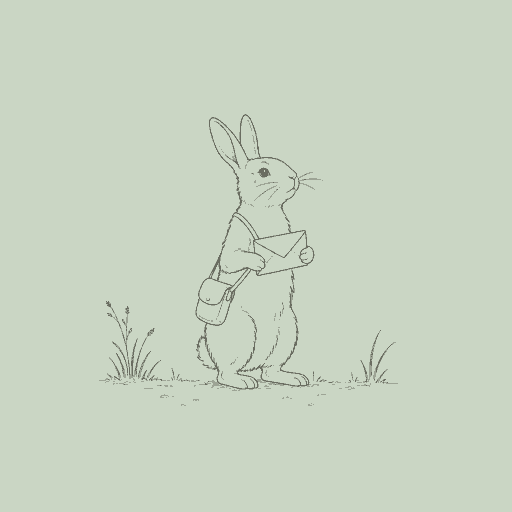
Rabbit Hill
Rabbit Hill
A modern alternative to SparkNotes and CliffsNotes, SuperSummary offers high-quality Study Guides with detailed chapter summaries and analysis of major themes, characters, and more.
Summaries & Analyses
Quizzes
NEWReading Tools
Themes
A Harmonious Coexistence Between Humans and Nature
In Lawson’s Rabbit Hill, the bond between humans and the natural world is shaped by how people treat the land and the creatures living on it. The novel shows how the new Folks’ willingness to provide for themselves while also allowing the animals to share in what is grown creates a more stable way of living since the new Folks move away from the earlier neglect of the land and rely on the idea that what is produced can be shared. Their habits contrast with the indifference of earlier tenants and the more cautious, survival-driven habits of the animals and local workers. When humans adopt a role rooted in steady caretaking, the animals answer with their own sense of duty, and that exchange produces a shared system that supports both human activity and animal survival.
The new Folks express their outlook through small, visible actions that place animal safety first. For example, when they arrive, they put up a sign that says, “Please—drive—carefully—on—account—of—Small—Animals” (78). This brief message signals a level of regard that the animals rarely receive from humans, who are often associated with danger. Another example is when the Lady spots a dog attacking Porkey the Woodchuck, she drives it off with a stone. These moments show an approach in which animals are treated as neighbors deserving protection. Tim McGrath cannot understand this attitude since he assumes that fences, traps, and poison are the practical ways to deal with wildlife. His bafflement underlines how deliberately the Folks act differently from what is commonly expected in the area.
Their decision to plant a large, unfenced garden offers the strongest example of the Folks’ caring attitude toward the animals. Local practice generally assumes that a garden without a barrier will fail, yet the Man ignores Tim’s warning about the wildlife on the Hill and replies, “I think there’ll be enough for all of us” (84). That confidence shapes much of their interactions with the creatures around them. When they refuse to build a fence, they show trust and treat the surrounding wildlife as part of the same environment rather than as something to be controlled. This choice moves beyond simple tolerance and reflects a deliberate willingness to share what the land produces.
The arrangement that develops from this generosity becomes more clearly established when the Folks unveil the statue of St. Francis of Assisi on Midsummer’s Eve. The statue provides food and water without interruption, which reduces the pressure on the animals to raid the garden. Its inscription, “There—is—enough—for—all” (123), makes this idea explicit. The animals answer that gift by agreeing to limit their own use of the garden. Led by the Red Buck, they call the garden “forbidden ground” and form patrols to protect it from harm, even from cutworms. Their choice changes how they relate to the garden, as they take part in maintaining it and limiting how they use its resources. The balance on the Hill grows out of steady giving and shared responsibility since it relies on continued provision and on the animals respecting the limits that are set.
The Role of Hope and Trust in Overcoming Fear
The animals in Rabbit Hill begin the novel shaped by prolonged fear since years of neglect have taught them to expect danger at every turn. Lawson shows that their suspicion eases only as they encounter repeated, visible acts of care from the Folks. Mother Rabbit’s constant anxiety over dogs, traps, and even car exhaust used to poison burrows reflects what the community has lived through. Her reactions stand in for the shared memories of the Hill, where earlier tenants created lasting conditions of danger.
The first shift from fear to hope occurs when Little Georgie transforms the unsettling rumor of “new Folks coming” into a song during his journey to Danbury (12). Where the adults hear threat in the unknown, Georgie’s melody recasts change as possibility. When the refrain spreads across the Hill and even to the workers rebuilding the Big House, it introduces a different way of responding to the unknown.
The animals insist on gathering evidence before relaxing their guard. Father Rabbit crosses the driveway in front of the approaching car to gauge the Man’s manners, and the Man stops and raises his hat in a gesture that Father recognizes as respectful. Uncle Analdas throws dirt on the sleeping cat and finds him unbothered. These tests show that trust develops through repeated observation rather than assumption.
The Folks deepen this trust through concrete actions that challenge what the animals have come to expect from humans. The Man posts a sign asking drivers to take care on account of small animals. The Lady throws a rock at a threatening dog. The household refuses offers to shoot or trap animals and plants a garden large enough to feed everyone. They rescue Willie Fieldmouse, whom they warm by the fire and revive with milk from a medicine dropper after he falls into the rain barrel. Willie’s safe return gives the community direct evidence of human kindness.
Yet Lawson doesn’t allow this trust to hold without testing it. When Georgie is struck on the Black Road and the animals can’t see him recovering inside the house, their old reflexes resurface. Uncle Analdas begins insisting that the Folks are holding Georgie hostage and that the handyman’s covered project is a gallows. The community becomes divided, and even careful communal rules can’t hold the group steady. This moment shows that trust remains uncertain and depends on continued evidence.
The unveiling of the St. Francis statue brings this period of uncertainty to a close. Georgie appears healed and safe in the Lady’s lap, and the covered structure proves to be not a gallows but a fountain surrounded by food, with the words “There—is—enough—for—all” carved in stone (123). The inscription brings together the pattern of care that the animals have already observed and makes it clear. The community responds by leaving the garden untouched and limiting how they use its resources. Even Uncle Analdas, the novel’s most hardened skeptic, sheepishly asks to return to the guest room as his suspicions begin to ease. By the novel’s close, Lawson shows how that trust develops gradually, is tested by uncertainty, and remains dependent on continued proof.
Community Stability Through Adaptation to Change
Rabbit Hill functions as a closely structured community in Lawson’s novel, with its own rules, traditions, and hierarchy. The arrival of the new Folks tests those structures since the change unsettles the animals and exposes weaknesses in their routines. Their reactions show that a community’s strength rests on its ability to adjust its shared rules, respond to uncertainty, and maintain cohesion when circumstances change.
The animals follow a clear system meant to manage food and protect the group. Dividing Night, their yearly gathering, lets them assign vegetable shares among families and prevents fights over resources. Other customs keep the group safe. Father, the Red Buck, and the Gray Fox pressure Porkey the Woodchuck to move his burrow from a spot near the Big House, which leaves him exposed. Their threat to use force shows how the group can override an individual’s stubborn choice when a risky location endangers everyone.
This structure falters once the new Folks arrive and Georgie disappears after his accident. The tension turns into open conflict, encouraged by Uncle Analdas, who becomes the “ring-leader of the rebellious element” (115). He spreads rumors that the Folks have imprisoned Georgie, built a dungeon, and plan to torture him, which deepens the split among the animals. Some of the more impulsive creatures even propose abandoning their “ancient rules and customs” and attacking the garden and chicken coop before the humans strike first (116). Their turmoil shows how quickly fear can strain long-standing agreements.
This shift is reinforced by Uncle Analdas’s broader reflections on the past, where he explains that “there’s always new Folks comin’” and that periods of hardship and abundance follow one another (53). He refers to earlier times of change on the Hill, showing that the community has endured repeated disruptions long before the present moment. His perspective reframes the animals’ immediate fears as part of a larger pattern, where change is constant and must be managed over time.
The community eventually reshapes its shared system once the Folks reveal the statue of St. Francis and the steady food it provides. This gift reduces the need for strict division of resources since the animals no longer need to compete over shares. After the feast, the Red Buck calls the garden “forbidden ground,” and the Mole and his brothers volunteer to guard it from cutworms. Their new arrangement replaces a system based on regulated foraging with one grounded in cooperation and trust in the Folks. Uncle Analdas’s quiet return to the family burrow signals the mending of the earlier divide. By setting aside their older rules and accepting these changes, the animals settle into a more stable and cooperative arrangement shaped by the new conditions on the Hill.

Unlock every key theme and why it matters
Get in-depth breakdowns of the book’s main ideas and how they connect and evolve.
- Explore how themes develop throughout the text
- Connect themes to characters, events, and symbols
- Support essays and discussions with thematic evidence