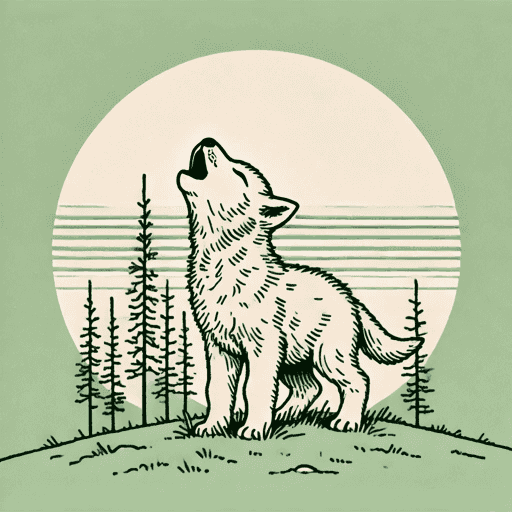
Runt
A modern alternative to SparkNotes and CliffsNotes, SuperSummary offers high-quality Study Guides with detailed chapter summaries and analysis of major themes, characters, and more.
Summaries & Analyses
Quizzes
NEWReading Tools
Chapters 12-17Chapter Summaries & Analyses
Chapter 12 Summary
Content Warning: This section of the guide includes discussion of animal death.
Within days of the encounter with the porcupine, Thinker dies from his injuries. The pack mourns, all but ignoring Runt. Runt understands that they are disappointed but still feels like they have betrayed him. He tries to comfort himself with the knowledge that he is alive, but this is thwarted by the question of whether “existing on the edge of the pack c[an] be considered living” (75).
Chapter 13 Summary
After Thinker dies, the pack moves on to a new home, with Runt staying apart from the pack. After some time passes, Helper starts spending time with Runt, teaching him to stalk silently and other important skills. One day, Runt asks why his mother gave him such a cruel name. He is hurt, but not surprised, to learn that his father gave him the name. After several failed hunts, the pack is hungry and tired. When the raven flies in with news of a moose nearby, King rallies the pack and invites the pups to join in the hunt. Runt is determined to prove his worth to everyone, most especially “to the one who had named him Runt” (83).
Chapter 14 Summary
The wolves find the moose right where the raven said they would. The animal is far bigger than Runt imagined, and for a moment, he wonders how a pack of wolves will take down such a creature. The moose runs, clearly limping, and the wolves give chase. Even with the limp, the moose is strong. With one kick, Runt goes flying, and the moose bashes the other wolves into trees, killing Helper in the process. The pack retreats, except for Bider, who continues to chase the moose. Runt asks why his family is leaving when Helper needs them, to which Hunter answers, “Helper will never need us again” (90). Even so, Runt stays with Helper’s body until long after dark, when he follows the moose’s trail to help Bider if he can.
Chapter 15 Summary
Though Runt’s shoulder hurts from the moose’s kick, he is determined to help Bider because the pack needs food, and Runt knows that “with food would come a place in his family” (95). After sunrise, Runt finds Bider lying in a patch of sunlight. When Runt says that he’s come to help, Bider scoffs that Runt would have been of no help. The two return to the pack, where Bider gets angry at King and then leaves.
Chapter 16 Summary
That night, Bider takes Runt to an enclosure full of cows that belong to humans. There are enough cows to feed the pack several times over. Bider bites the tail off one of the cows and gives it to Runt to show his father. Runt is sure that the discovery of so much easy food will finally make King proud of him. On his way home, Runt decides that “Provider” would “be a good name. It ha[s] a much better ring than Runt” (104).
Chapter 17 Summary
Runt’s father refuses to even look at the tail because the animals have been touched by humans, which leaves Runt wondering, “[I]f being touched by humans could ruin perfectly good meat, what had it done to him? (105-06).
Chapters 12-17 Analysis
Following Thinker’s death, Runt experiences his darkest moments, tormented by guilt for what happened and by his family’s reaction to him getting help from humans. This crisis of faith exposes The Tension Between Autonomy and Belonging: Runt is more desperate than ever to belong to the pack, and his sense of self-worth depends entirely on the approval of others, but the pack gives him only disapproval. His desire to belong is thus at odds with his need to respect himself. Since Bider is the only one who gives Runt the approval he craves, Runt becomes susceptible to Bider’s influence. Like Bider, Runt is set apart from the pack and feels at odds with King, and this foreshadows how Runt almost falls victim to Bider’s greed and arrogance. The pack’s inability to take down the moose reveals that Runt has learned from past mistakes. Runt’s underestimation of the porcupine got Thinker killed, and while Runt is determined to prove himself on this hunt, he also refuses to be responsible for another loss. Runt’s place at the back of the pack symbolizes how he is set apart from the others at this point in the story, and it also reveals that Runt is waiting for his chance, much like Bider.
The encounter with the moose again offers insight into pack dynamics, representing The Importance of Managing Risk. King’s wisdom as the pack leader means that he knows when to attack and when to move on. The moose’s limp makes King believe that this fight is worth picking. The pack’s failure to take down the moose, coupled with Helper’s death, shows that King is not perfect and that even leaders make mistakes. The hunt itself departs from how wolves behave in the wild. Typically, pups (even the older ones) are not included in the hunt because, despite appearing fully grown, they are too weak and inexperienced to neutralize prey. Runt and the pups are brought along for the purpose of the story, mainly so that Runt can move further from King and begin to see Bider as a viable alternative. Bider’s choice to pursue the moose after the rest of the pack quits is foolish, but for Runt, the action appears to be brave and responsible, as Bider is the only one trying to get food at a time when the pack desperately needs it.
The cows in the latter portion of this section set up the novel’s climax and the completion of Runt’s character arc. It is later revealed that the chemicals that humans have given the cows make the cow meat poisonous to the wolves, but since Runt and Bider are unaware of this, they see the cows as hungry predators would—as easy food while they are starving. Runt also views the cows as more proof that King is weak and that Bider is strong and smart. The cows themselves, like Goldie, give Runt a new perspective on instincts and domesticity. The cows don’t fear the wolves because they have not learned to fear them. Thus, when the wolves attack, the cows react only while there is an imminent threat, becoming docile again after the threat has passed. This reveals how domesticity dulls instincts and offers further support for how experience shapes understanding. The cows also encompass Runt’s second failure at giving himself a new name. Runt wants to believe that he will be a hero for providing his family with food, but he is only shunned again because of his interaction, if indirect, with humans. Runt’s misunderstanding is fueled by King’s lack of explanation. Later, it is made clear how King knows that the domesticated animals are poisonous, but since he does not share this information with Runt or Bider, Runt cannot use it to understand his father’s stance or to realize that Bider is in the wrong. Runt believes what Bider tells him—that his father is too cowardly and stubborn to prey on the cows. In reality, King’s refusal is evidence that he understands The Many Forms of Strength—that strength means not only courage but also the wisdom to know which risks are not worth taking.

Get in-depth, chapter-by-chapter summaries and analysis from our literary experts.
- Grasp challenging concepts with clear, comprehensive explanations
- Revisit key plot points and ideas without rereading the book
- Share impressive insights in classes and book clubs