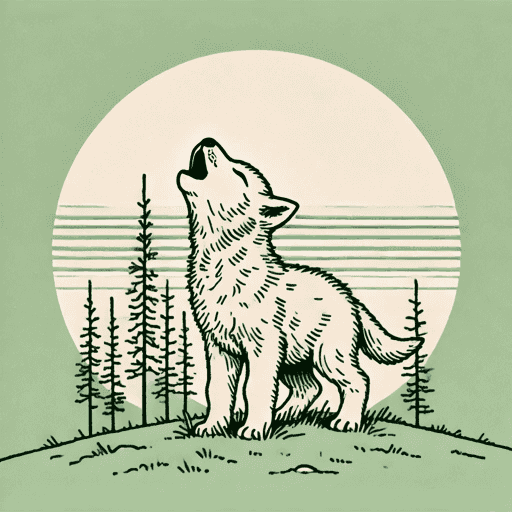
Runt
A modern alternative to SparkNotes and CliffsNotes, SuperSummary offers high-quality Study Guides with detailed chapter summaries and analysis of major themes, characters, and more.
Summaries & Analyses
Quizzes
NEWReading Tools
Symbols & Motifs
Names
Content Warning: This section of the guide includes discussion of animal death.
In Runt, the wolves are given names that correspond to their position in the pack and their most salient character traits, and this use of names offers additional context to The Many Forms of Strength, showing how each wolf brings something different to the pack. Using adjectives as names is common across the fantasy genre, and it is employed by such prolific authors as Robin Hobb (author of Assassin’s Apprentice) so that characters may then live up to or subvert the meaning of their given name. For Bauer, the adjectival names of her characters represent the traits that define each character. Since Runt is the protagonist—the only character who undergoes significant change over the course of the novel—he is the only one whose name changes. As the mother of the pups, Silver possesses instincts about each pup and can provide a name based on what she observes of them in their first moments. Silver’s instincts are then confirmed as Leader, Sniffer, Runner, and Thinker live up to their given names by leading, sniffing out prey, running swiftly, and thinking through problems, respectively. In the case of Runt, however, Silver is not able to determine his name immediately, which leads to his temporary moniker—bestowed by King, not Silver—and, by extension, Runt’s journey to find a new name and his place in the pack.
Runt’s new name in the final chapter of the book suggests that names within the wolf culture of the novel are not always meant to be permanent. Silver is unable to determine Runt’s name at birth because Runt’s proper name is dependent on his ability to sing (howl) to tell stories and call the pack to arms. Runt’s inability to howl and get his true name at birth represents the idea that not everyone grows or matures at the same rate. Thus, Runt changing his name is a sign that he has grown and marks a turning point for his idea of himself and his place in the pack. Further, King’s and Bider’s names suggest that both had different names in the past. King has not always been the ruler of the pack and, thus, was not always “king.” Similarly, Bider used to be a king who was not biding his time, meaning that the name “Bider” would not have suited him in his former life. Taken together, Runt, King, and Bider symbolize how there is more to each than their name, and on a storytelling level, this shows how the characters are built of more than their time on the page.
The Hunt
Runt’s wolf pack participates in a few hunts during the events of the novel, and each symbolizes the strengths and weaknesses of the pack, as well as The Importance of Managing Risk. In general, the hunt is a time for the pack to band together and take down prey so that they may all eat and keep the pack thriving. Specifically for Runt, the hunt represents his journey toward finding where he belongs. When Runt tries to follow the hunters in Chapter 4, he ends up lost and distracted by the wonders of the world. At first, this seems to show that Runt’s size means that he can’t keep up with the others, but through this excursion, Runt learns to howl—the act that ultimately secures his name at the end of the book. Though Runt isn’t aware of it at the time, this seeming failure helps him find his voice and become the voice of the pack. Runt’s voice is also born of a moment when he feels that his small size has proven that he isn’t strong enough, showing how strength rises from moments when one may feel weak.
The hunt also represents the harsh conditions under which the wolf pack lives. In Chapters 13-14, the wolves fail at hunt after hunt, which means that they go without food for days. The steadfast determination with which the wolves face their hunger shows their strength and their drive to live. When the wolves do finally choose to attack the moose, the hunt ends in tragedy, which highlights the importance of managing risk. Driven by hunger, the wolves chose to take on an animal much larger and more powerful than themselves. The loss of Helper shows that this choice was ill advised. To survive, the wolves must be not only brave and strong but also judicious in the risks they choose to undertake.
Humans
Throughout Runt, King makes it clear that humans are deadly and not to be trusted. However, Runt’s experience of humans is very different, and this dichotomy highlights humans as a symbol of how no creature is only one thing. King’s reason for distrusting humans comes at the end of the novel when Runt sees Bider die from eating the tainted cow meat. After a year of questioning King’s bravery where humans are concerned, Runt realizes that King’s dislike of humans is born of understanding, not fear. The cow meat is poisonous to wolves because of the chemicals that the cows ingest from the food that humans give them, and from this, King concludes that humans mean nothing but harm and death. By contrast, Runt finds humans to be kind and caring when they pull the porcupine barbs from his face and help him recover from the injuries. These two opposing ideas of humans lead Runt to question King’s wisdom, and as a result, he nearly shares Bider’s fate at the end of the book. In this way, humans also represent the inherent problem in not understanding different viewpoints. By ignoring King’s warnings about humans, Bider dies, and Runt is almost killed by the tainted meat. However, by rejecting Runt’s insistence that humans could help Thinker, the wolves lose a potential source of aid, and Thinker dies from his porcupine injuries. Altogether, the humans of the story are neither wholly good nor wholly bad, and they symbolize the importance of keeping an open mind.

Unlock the meaning behind every key symbol & motif
See how recurring imagery, objects, and ideas shape the narrative.
- Explore how the author builds meaning through symbolism
- Understand what symbols & motifs represent in the text
- Connect recurring ideas to themes, characters, and events