Runt
A modern alternative to SparkNotes and CliffsNotes, SuperSummary offers high-quality Study Guides with detailed chapter summaries and analysis of major themes, characters, and more.
Summaries & Analyses
Quizzes
NEWReading Tools
Character Analysis
Runt
Content Warning: This section of the guide includes discussion of animal death.
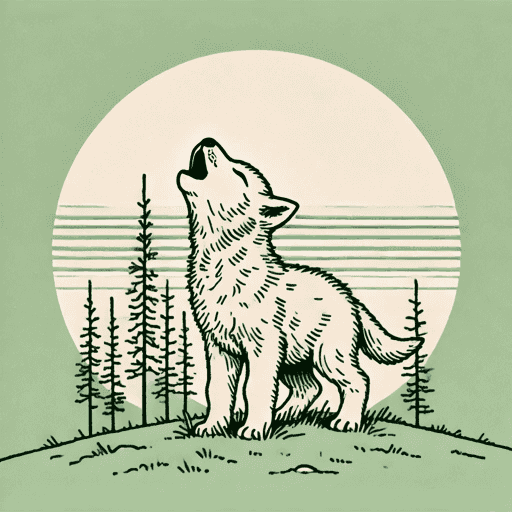
Runt is the protagonist and titular character of the novel, and he represents the major themes of The Many Forms of Strength and The Tension Between Autonomy and Belonging. Throughout the novel, Runt struggles both physically and emotionally with his small size. Physically, Runt’s status as the smallest pup in the pack has practical drawbacks, as described in the Chapter 2: “When two competed for the same teat, he was the one pushed aside” (8). Thus, Runt must work harder for basic necessities like food, where he is at a disadvantage beside his larger siblings. Emotionally, Runt struggles with feeling lesser because he is small. King’s distant attitude and refusal to defend Runt make Runt feel that he must continually prove himself. These motivations lead Runt to make poor choices that put him in difficult or dangerous situations as he works to carve out his place in the pack and earn a new name.
Runt’s character arc relies on his shifting opinions of King, Bider, and himself. At the beginning of the book, Runt wants to be a proud member of the pack who follows King and disregards Bider’s harmful rhetoric. However, as Runt starts to feel pushed aside by his father, he seeks a new role model and finds himself drawn toward Bider. Since Bider pays attention to Runt, even if that attention is not positive, Runt sees Bider as someone who understands what it’s like to be on the fringes. As a result, Runt starts to question King’s bravery and leadership, choosing instead to appreciate Bider’s willingness to take opportunities that King seems to fear, such as the easy meal of the cows. Bider’s death is a turning point for Runt. When Bider dies from the poisoned meat, Runt realizes that King was right all along and that true leadership is quietly confident, not loudly insistent on its own superiority. In addition, Runt realizes that being part of a pack means trusting his packmates, and this allows him to gain his new name of Singer when he trusts his family to help him in the hunt.
Bider
Bider is the antagonist of the novel and described as “a mature male, pure white” (3). Bider’s name is derived from the word “bide,” as in the phrase “to bide one’s time.” This definition symbolizes Bider’s role in the story. As a king who was deposed by his former pack, Bider joined his current pack expressly to wait for an opening to challenge King and arrest control for himself. Thus, Bider is literally “biding” his time until the right moment, making him a representation of The Importance of Managing Risk. Bider also shows the power of influence, especially over those who are seeking someone to believe in—such as Runt. Throughout the book, Bider works to turn Runt against King in order to redirect the pup’s loyalty to himself. First, Bider chips away at Runt’s confidence by insulting his size and weakness while highlighting how little King seems to care about him. When Runt starts to question King, Bider then convinces Runt that he is strong while King is weak, citing such incidents as Runt facing humans when King will not. Lastly, Bider works to destroy King’s credibility by showing Runt how easy it is to kill the humans’ cows, all the while emphasizing that King will not do so and delivering the message that King is not fit to lead. However, Bider’s work is undone when his certainty in his greatness leads to his death, revealing that his arrogance is truly a weakness.
King
King is the leader of the wolf pack and is “a large black wolf with a white star on his chest” (2). King’s wisdom and experience lead him to make decisions that typically benefit the pack, making him a representation of The Importance of Managing Risk. King also symbolizes the problem with making assumptions. From the moment he sees Runt, King convinces himself that the pup will never survive because he is too small and frail. As a result, King decides to keep his distance from the pup, as he doesn’t want to get attached only to lose Runt. As Runt grows and continues to survive situations that should destroy him, King’s love for the pup grows, but King still keeps these feelings hidden because of his fearful assumptions. As a result, King continuously pushes Runt away and blames him for negative situations that befall the pack, such as Thinker’s death from the porcupine quills. Though it takes almost the entire book, King finally comes to understand that Runt is not doomed by his small size. Rather, King realizes that he let his bias get in the way of remembering that every wolf has a place in the pack and a responsibility to care for all the others. Runt reminds King of this when he sings of food, and King bestows the name Singer upon Runt to show that he finally accepts Runt as a worthy member of the pack.
Silver
Silver is King’s mate and the mother of Runt and his siblings. She is responsible for naming each pup born to the pack, and her infallibly accurate names demonstrate her insight into character. She has the ability to assess each pup’s strengths and predict how they will contribute to the pack. When she cannot see Runt’s strength—his unique ability to communicate through howling will not emerge until he is much older—she chooses to leave him unnamed rather than give him a name that may prove inaccurate. This forbearance shows that she takes the power of names seriously and uses her own gift with humility. By contrast, King immediately names the diminutive pup “Runt”—an impulsive expression of frustration that has profound consequences for Runt’s developing sense of self. Silver frequently stands up for Runt when others dismiss him, including in this early scene, and her compassion and steadfastness make her an important source of support for the book’s protagonist.
The Raven
Though unnamed (and referred to as “it” rather than “he” or “she”), the raven is an important secondary character. It has a symbiotic relationship with the wolves: The raven uses its ability to fly to help the wolves find food, and in turn, the raven gets to feed on the wolves’ leftovers. The raven’s role as a hunting guide for the pack symbolizes its more abstract role as a guide for Runt in his character development. When the raven first meets Runt, it expresses dismay at Runt’s name and suggests more positive qualities that could have inspired a more suitable name. In doing so, the raven inspires Runt to form his own identity rather than letting his identity be decided by others. The raven also warns Runt about the dangers of preying on domesticated animals or getting too close to humans, and it even physically gets in Runt’s way to prevent him from consuming the tainted cow meat, thus saving his life.

Unlock analysis of every major character
Get a detailed breakdown of each character’s role, motivations, and development.
- Explore in-depth profiles for every important character
- Trace character arcs, turning points, and relationships
- Connect characters to key themes and plot points