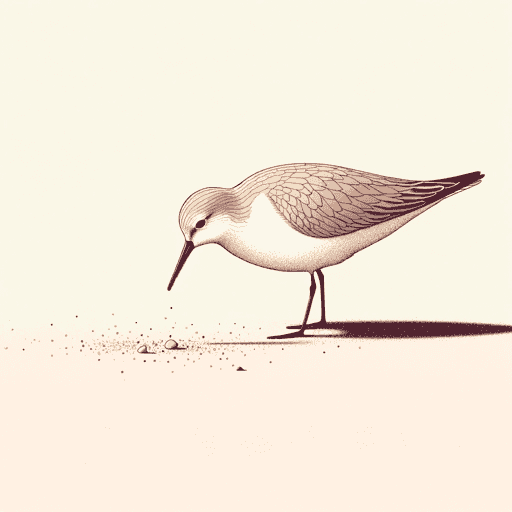
Sandpiper
Sandpiper
A modern alternative to SparkNotes and CliffsNotes, SuperSummary offers high-quality Study Guides with detailed chapter summaries and analysis of major themes, characters, and more.
Character List
Meet the key characters, with insights into their roles, motivations, and relationships—spoiler-free.
Major Characters
The sandpiper is a small bird native to American beaches. He spends his time sprinting back and forth along the wet sand, fleeing from the receding waves to keep his feathers dry while hunting for food. Characterized by his dark and brittle feet, he stares obsessively at the ground between his toes, searching for tiny crabs and filter-feeding shells. His intense focus on the minute details of the sand, including varied grains of quartz and amethyst, blinds him to the larger atmospheric changes happening around him.
Observed by The Speaker
Symbolic Student of William Blake
Forages beside The Atlantic Ocean
The speaker is the third-person narrator of the poem. She closely observes the beach environment, tracking both the massive shifts of the ocean mist and the tiny physical details of the bird. Her real-time observation includes correcting herself; she initially thinks the bird is looking at his toes before realizing he is looking at the spaces between them. Unlike the hyper-focused sandpiper, she sees the vastness of the world and ultimately expresses pity for the bird's relentless, seemingly unseeing search.
Observer of The Sandpiper
Observer of The Atlantic Ocean
Supporting Characters
William Blake is a historical British Romantic poet whose philosophical concepts directly inform the events of the poem. The speaker categorizes the sandpiper as his metaphorical student. His specific literary idea of seeing an entire world in a single grain of sand parallels the bird's obsessive staring at the beach. Although he does not physically appear on the beach, his presence establishes the core philosophical framing of the bird's mundane actions.
Symbolic Teacher of The Sandpiper
The Atlantic Ocean is the massive, active body of water bordering the beach. It acts with a powerful, animate presence, roaring and shaking the ground as its waves roll in. The ocean creates a hissing sound when interacting with the sand, and its interrupting water drains backwards and downwards with immense power. Despite its huge tidal shifts and mist, the sandpiper treats its constant, rhythmic proximity as completely ordinary.
Environment of The Sandpiper
Observed by The Speaker