Story Thieves
Story Thieves
A modern alternative to SparkNotes and CliffsNotes, SuperSummary offers high-quality Study Guides with detailed chapter summaries and analysis of major themes, characters, and more.
Summaries & Analyses
Quizzes
NEWReading Tools
Chapters 1-9Chapter Summaries & Analyses
Chapter 1 Summary
Owen Conners daydreams through math class while his teacher, Mr. Barberry, drills students on fraction problems. When Barberry calls on a classmate named Bethany Sanderson, she doesn’t respond. Owen can see that she has been reading Charlie and the Chocolate Factory by Roald Dahl behind her textbook.
At lunch, Owen sits alone rereading Kiel Gnomenfoot and the End of Everything, the sixth installment in a popular fantasy series centering on a young wizard named Kiel, his mentor the Magister, and their enemy Dr. Verity. The world of the novel is divided into Quanterium, a kingdom based solely in science, and Magisteria, a magic-based kingdom. Over the course of the series, Kiel and his friend Charm Mentum have found six of the seven keys necessary to open the Vault of Containment, which contains the Source of Magic. They’re hoping that when they acquire the Seventh Key, they will be able to open the vault and use the Source of Magic to save Magisteria from Dr. Verity.
He spots Bethany eating something furtively behind her book; she catches him staring and storms out. He follows her into the hallway but finds only her library copy of Charlie and the Chocolate Factory—visibly stained with chocolate—on the floor. He pockets it, intending to return it to Bethany when he sees her.
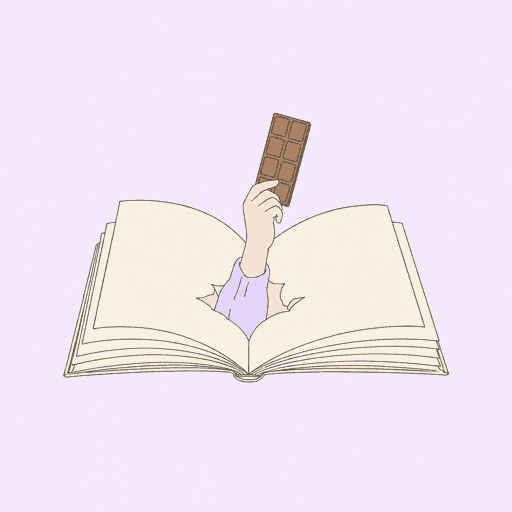
After school, Owen works at the public library where his mother is employed. While reshelving books in the children’s section, he pulls Charlie and the Chocolate Factory out of his pocket. He watches it jump in his hand, its pages flying open on their own. Five chocolate-covered fingers push out from between the pages.
Chapter 2 Summary
Bethany climbs out of the book, annoyed to find Owen there, staring in shock. She denies what happened, but her thumb visibly sinks back into the book’s pages as she holds it. When Owen tries to bolt, Bethany realizes that she can’t explain; instead, she drags him into a random book from a floor pile: The War of the Worlds by H. G. Wells.
They land in the Martian invasion of London, sheltering in a gutted building while death rays explode around them. Bethany explains that they’re inside the fictional world and that the story can’t be changed because it’s already written. Owen argues that they should warn the characters about how to defeat the Martians; Bethany refuses and pulls them out, jumping them into Lewis Carroll’s Through the Looking Glass.
In this new book, she tells Owen that she always avoids main characters (and most of the other characters as well) to prevent interfering with the plot. An overwhelmed Owen begs her to confirm the experience is real; she pinches him hard in reply. Back in the library, Bethany demonstrates her ability by pushing her arm into a book and allowing her flesh to dissolve into printed words absorbed by the page. Owen faints.
Chapter 3 Summary
Owen wakes in the children’s section, fearing that the entire experience was a dream. He arrives at school the next day trembling with the anticipation of talking to Bethany, but she spends the morning pointedly ignoring his glances. At lunch, he follows her to the cafeteria and sits across from her.
Bethany assumes that he wants to blackmail her into stealing something from a book. Owen, thrilled that her comment confirms the experience was real, delivers an earnest argument instead: If fictional worlds exist, then the relentless tedium of daily life isn’t all there is, and that makes everything bearable. Reluctant but resigned, Bethany agrees to meet him at the library that evening to explain her ability, on the condition that he never tells anyone.
While he’s walking home, Owen’s plan takes shape: He will persuade Bethany to bring him into Kiel Gnomenfoot and the End of Everything. The book ends with Dr. Verity pointing a ray gun at the Magister, and he has decided to intervene and save the Magister’s life.
Chapter 4 Summary
Bethany watches Owen through the library window before going in. She has a stolen Everlasting Gobstopper from Willy Wonka’s factory in her pocket as a bribe for him to leave her alone. At a quiet back table, she offers him the candy in exchange for his silence and absence from her life. Owen refuses, preferring a book visit.
When he asks how she enters books, Bethany reluctantly explains: Her father is a fictional character who somehow escaped his book and married her mother, making her “half-fictional.” At her fourth birthday party, she accidentally pulled herself, the other children, and her father into a fairy-tale book. She got everyone else out, but her father was left behind and has since vanished from that book entirely. Now, Bethany secretly searches for him by jumping into new books each night.
Owen proposes a trade: If she takes him into Kiel Gnomenfoot and the End of Everything, he will show her the Magister’s spell book, which holds a location spell that might find her father. Bethany is tempted but calls it too risky and walks out. At home, she finds her mother tearful over memories of her father, looking into a small hand mirror. After comforting her, Bethany retreats to her room. Her greatest fear is that her father chose not to come back, but she escapes from this thought by jumping into The Little Prince by Antoine de Saint-Exupéry.
Chapter 5 Summary
At lunch the next day, Owen admits to himself that while a location spell does exist in the Magister’s book, his real motive is to save the Magister. He resolves to confess to Bethany and offer genuine help finding her father. When he approaches where Bethany was sitting, he realizes that she has already gone, leaving a copy of Kiel Gnomenfoot and the End of Everything on the table with a note tucked inside saying “I’m in.”
Owen is instantly overtaken by excitement, imagining himself celebrated as the hero who saved the Magister and became Kiel’s closest companion. He briefly feels that he should come clean but then decides that letting a great wizard die would be the greater wrong. He crumples the note, throws it away, and leaves to make his plans.
Chapter 6 Summary
That evening, Bethany and Owen sit in his bedroom—packed floor to ceiling with worn-out books that his mother brings home from the library—preparing to enter the book. Bethany establishes five rules: Stay completely silent, never speak to any characters, do not change the story, follow her instructions at all times, and do nothing reckless. Owen challenges the third rule, pointing out that she has previously taken items from fictional settings. Bethany concedes that these were minor, unnoticeable lapses but holds firm.
Owen confirms that the chapter he has chosen for them to enter to access the spell book: Kiel is absent, beyond the edge of the universe retrieving a magical key, and the Magister is absorbed in a spell, leaving his spell book unattended. Bethany reads the passage, and despite her apprehension, she feels an unfamiliar flicker of optimism—that the trip might go smoothly and that Owen might prove to be a genuine friend.
Chapter 7 Summary
As Bethany begins pulling them into the book, Owen grabs a metal baseball bat from his bedroom floor, thinking he might need it to save the Magister. They arrive in the Magister’s tower study, filled with bubbling potions, caged shadow creatures, and Kiel’s winged cat, Alphonse. The Magister stands motionless, communicating through magic with Kiel, who’s beyond the universe’s edge.
Owen directs Bethany to the large spell book on its pedestal while he stations himself near the door with the bat. The spell book, which senses which spell its user needs, flips on its own to a memory-erasing spell and begins transferring it to her; Bethany backs away before fully absorbing it, refocuses, and finds the location spell.
Seconds later, the door blasts inward as Dr. Verity arrives with a ray gun, destroys the spell book, and levels the weapon at the Magister. Recalling that Verity’s force field is disrupted by solid metal, Owen steps from the shadows and swings the bat, hitting Verity, who drops to the floor. Owen raises the bat and shouts to the book’s unseen readers that the Magister has been saved.
Chapter 8 Summary
Bethany immediately understands that Owen lied to her; he planned the intervention from the start and used the location spell as a pretext. The Magister, released from his trance, greets them warmly and notes that both visitors carry a strange, unfamiliar quality—not from any world he recognizes. He magically chains Dr. Verity and then remarks that Bethany radiates some kind of power.
The Magister restores his destroyed spell book and uses it to exile Verity permanently from reality, explaining that exile is necessary to prevent Verity’s death from triggering the creation of more clones of him. When Owen carelessly whispers to Bethany about the seventh Kiel book, the Magister overhears the word “book” and begins asking pointed questions.
Bethany tackles Owen and kicks them both out of the story. They crash onto Owen’s bedroom floor. She screams at him, particularly for potentially revealing to a character that he exists inside a book. She then checks the final page of the novel and is relieved to find that their presence wasn’t recorded in the text. She threatens Owen with permanent confinement in a math book if he reveals her secret and then storms out. In her fury, she fails to notice a bright light flashing from Owen’s bedroom window as she leaves.
Chapter 9 Summary
Finding her mother tearful at home, Bethany leaves to go to the library. Alone in the children’s section, she runs through the words of the location spell, which she can only use once. She’s ready to cast it and find her father but can’t bring herself to do it. The fear that he left willingly and doesn’t want to return stops her cold. Owen’s mother, the librarian, finds her browsing and presses a copy of The Great Brain by John Dennis Fitzgerald into her hands.
Bethany leaves and then realizes that she has walked to Owen’s house without intending to. Telling herself that she’s there to receive a proper apology, she enters through the unlocked front door and speaks to him through his closed bedroom door, laying out exactly how badly he betrayed her. There’s no response. She opens the door to find the room empty and Kiel Gnomenfoot and the End of Everything lying open on the floor. Terrified that Owen has gone back into the story alone, she checks the final page—still unchanged—and then pushes her head in to verify. Something slams into her. As an unseen figure yanks her entirely into the book, the last thing she sees before losing consciousness is Owen’s startled face.
Chapters 1-9 Analysis
The narrative immediately sets up a metanarrative framework for the novel by blurring the boundary between the real and fictional worlds. Bethany illustrates this idea when she pushes her hand into a copy of Through the Looking Glass. As her fingers touch the page, they dissolve and re-form into words like “knuckles,” “fingernail,” and “thumb” before being absorbed into the paper (17). By transforming the act of reading into a physical journey, the text illustrates that stories are their own distinct places, governed by their own text. The novel establishes the theme of Learning Life Lessons From Fiction by illustrating the permeable boundary between fiction and the real world, evidenced by the literal chocolate stains that Bethany leaves on a library copy of Charlie and the Chocolate Factory. This metanarrative approach breaks the fourth wall and challenges the passive consumption of stories. It asks the reader to reflect on stories, asserting that fictional worlds hold their own substance, integrity, and potential.
Bethany’s book-jumping technique relies heavily on the novel’s interaction with other fictional works, anchoring the novel’s fantastical premise within famous literary works. She demonstrates her ability by pulling an overwhelmed Owen through iconic texts, moving rapidly from the deadly Martian invasion in The War of the Worlds to the surreal landscape of Wonderland. By referencing these established classics, the novel provides immediate shorthand world building. Because the reader may already understand the worlds and characters of these novels, the narrative can focus directly on the mechanics of travel and the strict rules that Bethany has instituted to avoid contaminating the stories. This strategy also ties the novel to a broader literary multiverse, placing it in direct dialogue with the traditions of the fantasy genre and echoing the crossover structures of other current stories in print and film. By relying on the audience’s familiarity, the text emphasizes that the imaginative power of shared stories is a connected landscape rather than a series of isolated narratives. The decision to include works ranging from Roald Dahl’s whimsical factory to H. G. Wells’s apocalyptic London demonstrates the full spectrum of fictional possibility available through this power.
Owen’s intervention in the Kiel Gnomenfoot series introduces the theme of Fandom and the Ethics of Story Ownership and opens the novel’s critique of fan entitlement. Believing that he’s correcting a narrative flaw—the impending death of a beloved mentor—Owen deceives Bethany, sneaks a metal baseball bat into the Magister’s study, and strikes the villainous Dr. Verity. After disabling the antagonist, Owen triumphantly addresses the unseen readers, declaring that he has saved the wizard. Owen’s actions prioritize his personal gratification and desire for heroic recognition over the structural integrity of the author’s creation. He views the published text as something he has the authority to conquer and fix. However, his violent disruption shatters the story’s internal logic, immediately prompting the Magister to question the presence of a “book” and causing unpredictable narrative deviations. This tension highlights the novel’s exploration of the friction between creator authority and fan culture, questioning whether deep emotional investment grants a reader the right to alter an artistic work. The structural fallout of Owen’s actions expands this ethical debate by granting fictional characters an unexpected degree of freedom. Upon being saved, the Magister recognizes that his visitors possess an unfamiliar quality and notes that they smell “distant.” When Owen accidentally mentions the upcoming seventh installment, the Magister immediately registers the slip and demands to know exactly what text they’re discussing. The Magister’s perceptive reaction breaks the traditional mold of a passive fictional character controlled by his author. By allowing a character to overhear and interrogate the concept of his own fictionality, the narrative subverts the standard relationship between character, reader, and creator.
Bethany has her own motives for entering the Kiel Gnomenfoot book with Own, grounded in her quest to find her father and The Search for an Independent Identity. Her entire reason for risking the jump into the Kiel Gnomenfoot universe is to acquire a location spell from the enchanted text to find her missing father. However, when she finally memorizes the incantation and stands in the safety of the real-world library, the fear that her father willingly abandoned her freezes her. The possibility of her father’s rejection proves more terrifying than the enduring mystery of his absence, causing her to abandon the magic just as she attains it. Her hesitation signals that her identity is currently defined by the void of her missing parent and demonstrates that her search is a confrontation with her own fear of abandonment rather than a straightforward rescue mission.

Get in-depth, chapter-by-chapter summaries and analysis from our literary experts.
- Grasp challenging concepts with clear, comprehensive explanations
- Revisit key plot points and ideas without rereading the book
- Share impressive insights in classes and book clubs