Strange Pictures
A modern alternative to SparkNotes and CliffsNotes, SuperSummary offers high-quality Study Guides with detailed chapter summaries and analysis of major themes, characters, and more.
Summaries & Analyses
Quizzes
NEWReading Tools
Games
Background
Content Warning: This section of the guide includes discussion of death and graphic violence.
Authorial Context: Uketsu
Uketsu is the pseudonym of a popular Japanese YouTuber. Uketsu deliberately cultivates an air of mystery around his identity. He posts wearing a white mask and kabuki-stagehand-like black clothing, and he uses voice-changing technology that allows him to create a gender-ambiguous presentation (though his Japanese publisher has confirmed that Uketsu should be referred to using he/him pronouns). Even the name “Uketsu” is a nonsense word, roughly translating to something like “rain hole.” It was chosen, Uketsu says, because it conveys a “wet, gloomy impression” (Ha, Thu-Huong. “‘Uketsu’: The Internet Phantom Haunting Japan’s Bestseller Lists.” Japan Times, 7 Feb. 2025).
Uketsu had ambitions as a writer before becoming a YouTuber. In 2018, he began writing absurdist articles for the Japanese humor website Omokoro. Frustrated with the limitations of the text-only format, he started posting on YouTube later that same year. Uketsu’s videos are strange and surreal, often parodying common YouTube video formats—the unboxing video, the explainer video, and so on. Sometimes, these videos are intended as visual counterparts to his Omokoro articles.
In 2020, Uketsu wrote about a fictional house with a floor plan that seemed designed for murder. Shortly afterward, he posted a companion video in which he acted out dialogue from this text. This wildly popular video attracted the attention of Japanese publishing house Asukashinsha. In 2021, Strange Houses, an illustrated novel about the house, was published in Japan under the title Henna Ie. In 2023, Japanese author Kyō Ayano began publishing a manga series, The Strange House, based on Uketsu’s novel, and in 2024, Strange Houses was made into a live-action feature film. In 2025, an English translation of the book was published.
Uketsu’s follow-up novel, Strange Houses 2, has not yet been published in English but was the number one bestselling book in Japan in 2024. Strange Houses and Strange Pictures were also among 2024’s top 10 bestselling books in Japan. The Japanese edition of Strange Pictures, titled Henna e, was published in 2022, the English edition following in 2025. Uketsu’s works have been translated into dozens of languages and have sold more than 1.5 million copies worldwide (Kageyama, Yuri. “Japan Youtuber Novelist Woos Global Audience with Visual, Accessible Horror.” AP News, 16 Jan. 2025).
Literary Context: Japanese Horror
Horror is a popular genre in Japan, and—as is generally the case with genre fiction—it tends to draw on traditional culture even as it explores contemporary concerns. In the Edo and Meiji eras, “kaidan” were popular horror folktales, often about curses and ghosts. The translation of “kaidan”—“strange narrative”—has a clear influence on the titles of Uketsu’s works. Modern Japanese horror has inherited kaidan tropes and is often focused on yūrei (similar to the Western conception of “ghosts”) and yōkai (vengeful supernatural entities). Possession is a common trope, and shaman figures or people with paranormal powers such as precognition often feature. Modern Japanese horror also draws on traditional forms of Japanese theater such as Noh and kabuki; this is one reason that Japanese horror emphasizes psychological terror and the slow build-up of suspense over things like jump scares and graphic violence.
In an interview with Japan Times, Uketsu explains the typical differences between Western and Japanese horror: “Classic American horror (films) like The Texas Chain Saw Massacre or Friday the 13th are violent, bloody and grotesque, and the horror is very powerful. [… while Japanese] horror tends to be more quiet, a bit modest in appearance, and it’s the kind that slowly builds up that sense of fear in your mind” (Ha, Thu-Huong. “‘Uketsu’: The Internet Phantom Haunting Japan’s Bestseller Lists.” Japan Times, 7 Feb. 2025). The characteristics of Japanese horror make it particularly suited to blending with mystery, which also relies on drawn-out suspense and the gradual building of tension for its effect. This is exactly what Uketsu does in Strange Pictures. Dividing the story into four sections with different protagonists, each able to investigate one small section of Naomi’s story, allows Uketsu to gradually reveal the horror that lies behind seemingly every-day domestic relationships.
In recent years, Japanese horror has become popular worldwide. Some particularly notable successes are Ring (1991) by Kōji Suzuki, Audition (2025) by Katie Kitamura, The Graveyard Apartment (2016) by Mariko Koike, In the Miso Soup (1997) by Ryū Murakami, Parasite Eve (1995) by Hideaki Sena, Out (1997) by Natsuo Kirino, Confessions (2008) by Kanae Minato, Piercing (1994) by Ryu Murakami, and Earthlings (2018) by Sayaka Murata.
Genre Context: Multimedia Mysteries and Genre-Blending
Strange Pictures is neither wholly mystery nor wholly horror—it blends these two genres. It is also a blend of image and text, relying on both to convey ideas and emotions. In this way, the book exemplifies a modern trend toward dissolving strict boundaries between genres and art forms. Notable contemporary examples of books that blur the boundaries between art forms are Reif Larsen’s The Selected Works of T. S. Spivet (2009), Caroline Preston’s The Scrapbook of Frankie Pratt (2011), and Nick Bantock’s Griffin & Sabine (2001) books. Popular books that blend mystery with horror include Silvia Moreno-Garcia’s Mexican Gothic (2020), Agatha Christie’s And Then There Were None (1939), Shirley Jackson’s The Haunting of Hill House (1959), and many of Stephen King’s novels—particularly The Shining (1977).
Most Western novels that blend mystery with horror lean more heavily on one genre than the other. The Shining, Mexican Gothic, and The Haunting of Hill House, for example, are primarily horror novels with mystery elements, while Christie’s And Then There Were None is primarily a mystery. Strange Pictures differs from these books in its heavy reliance on both genres. Partially, this is due to its status as a Japanese horror book rather than a Western one; Japanese horror’s emphasis on psychological terror and the gradual building of suspense suits the structure of a mystery novel.
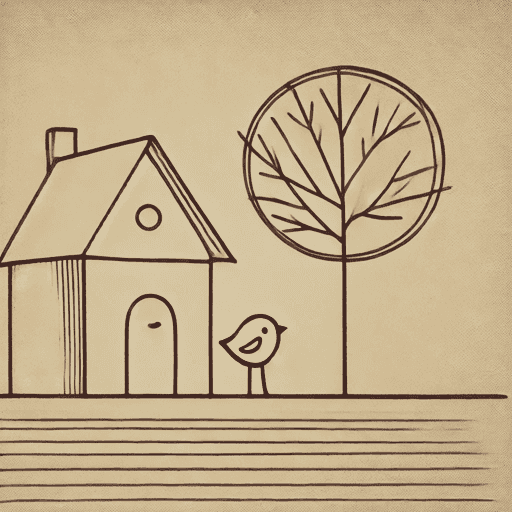
One of the ways that Strange Pictures amplifies its horror despite being mainly structured as a mystery is through its inclusion of illustrations. According to Uketsu, text and illustrations have differing strengths, and he wants to bring both to his books. He sees text as superior at creating understanding and art as superior at spurring imagination (Baratta, Franchesca. “Uketsu: What’s Scary, What’s Eerie, What’s Normal As Anything Else.” Flaunt, no. 196). Strange Pictures demonstrates this principle—the eerie drawings by various characters are a key contributor to the novel’s atmosphere of horror.

Get in-depth, chapter-by-chapter summaries and analysis from our literary experts.
- Grasp challenging concepts with clear, comprehensive explanations
- Revisit key plot points and ideas without rereading the book
- Share impressive insights in classes and book clubs
Related Titles
By these authors