Summaries & Analyses
Quizzes
NEWReading Tools
Character Analysis
Content Warning: This section of the guide includes discussion of death, death by suicide, child abuse, physical abuse, emotional abuse, and mental illness.
Violet Winters
The novel’s protagonist, Violet, completes a journey from self-effacement to empowerment that forms the narrative’s emotional core. Her identity is initially defined by the psychological wounds inflicted by her abusive mother, Savannah. This history manifests in a conditioned “freeze” response to danger and a deep-seated need for invisibility, symbolized by her recurring use of baggy hoodies and nonprescription glasses. Her mother’s cruel mantra, “If you lay low and shut your trap, you won’t get into trouble” (6), has become her own, shaping a personality that avoids confrontation.
This ingrained passivity is central to the theme of Trauma’s Imprint on Identity and Intimacy, as it governs her interactions and inhibits her ability to form healthy attachments. Her wrist tattoo, “Endure,” is a physical emblem of her survival strategy: to withstand pain rather than fight it. Violet’s initial state is one of quiet persistence, where her kindness is expressed through small, selfless acts like helping her coworker Laura or feeding the local unhoused men. These actions highlight an innate compassion that exists in tension with her learned fear and self-sacrifice.
The arrival of Jude Callahan acts as the primary catalyst for Violet’s transformation. His relentless stalking shatters her cloak of invisibility, forcing her to confront an external threat she cannot ignore. Jude’s accusation that her silence during his mother’s murder was a sin positions her at the center of the novel’s exploration of The Moral Ambiguity of Silence and Complicity. While her inaction stems from a trauma-induced freeze state, Jude’s quest for vengeance forces her to re-examine her role as a passive witness. This conflict pushes her beyond mere endurance. Her character arc pivots from being a victim of circumstance to becoming an active agent in her own life.
A significant turning point occurs when she intervenes to help a man Jude is torturing, a conscious choice to act rather than freeze. Her relationship with Jude, though born from terror and obsession, paradoxically incites her growth. Within this dangerous dynamic, she discovers her own desires and agency, developing a capacity for intimacy that is intense and challenging yet ultimately liberating. Her journey is one of integrating her traumatic past, not erasing it, allowing her to find a voice, reclaim her body, and redefine her identity on her own terms.
Jude Callahan
Jude functions as the deuteragonist and a complex anti-hero whose motivations shift from vengeance to a dark, possessive form of love. He is a round and dynamic character, initially presented as a merciless predator driven by the trauma of witnessing his mother Susie’s murder. As an heir to the Callahan empire and a member of the secret society Vencor, Jude wields immense power and expresses himself primarily through violence. This learned behavior is a product of his brutal upbringing under his father, Regis, who conditioned him to be a weapon.
At the novel’s outset, Jude’s entire existence is focused on making Violet pay for her perceived sin of inaction. He commands her to “[r]eflect on [her] sins” (21), framing his stalking as a righteous quest for justice. This mission is complicated by cognitive dissonance stemming from his memory of Violet’s past kindness, symbolized by the blue umbrella she gave him years ago. This memory creates an internal conflict between his desire to destroy her and a burgeoning, instinctual need to protect her.
Jude’s character arc is defined by the transformation of his obsession, which evolves from hatred into a romantic, proprietary protectiveness. He saves Violet from several threats, blurring the line between his roles as a tormentor and guardian. This duality is central to the theme of The Overlap Between Obsession, Protection, and Love, as his violent control becomes intertwined with acts of care. His relationship with Violet forces him to confront the limitations of his rage. His interactions with her compel him to find new ways of connecting, leading to moments of vulnerability and emotional confession.
The foundation of his identity is shattered with the revelation that his mother’s death was a planned death by suicide, not a random murder. This truth invalidates his entire quest for vengeance, leaving him adrift and forcing him to find a new purpose. He ultimately finds this purpose in Violet, redirecting his obsessive energy from avenging the past to securing their future. His journey is one of deconstruction and rebuilding, moving from an identity forged in hate and grief to one centered on a complex, all-consuming love.
Dahlia Winters
Dahlia is a pivotal supporting character and a classic foil to her adoptive sister, Violet. Where Violet initially embodies the “freeze” response to trauma, Dahlia represents the “fight” response. She is fiercely protective, outspoken, and unafraid of confrontation, qualities that stand in stark contrast to Violet’s initial passivity and desire for invisibility. Having met Violet in a foster home, she is the only family Violet has, and their bond is the emotional bedrock of Violet’s life. Dahlia’s loyalty is absolute; she is quick to defend Violet, as demonstrated when she threatens an inebriated man harassing them with a gun to scare him away. She acts as Violet’s advocate and protector, constantly encouraging her to demand better treatment and fewer shifts at work.
While she remains a relatively static character in her core personality, her relationship with Kane Davenport provides her with a new context to express her strength and loyalty, and her integration into the world of Vencor broadens her role within the narrative. Ultimately, Dahlia serves as both an anchor and a catalyst for Violet, providing the unconditional love that gives Violet a reason to endure while also modeling the assertiveness that Violet must learn to embrace for herself.
Preston Armstrong
Preston is a key supporting character, serving as Jude’s best friend and a source of both comic relief and underlying pathos. Outwardly, he projects a flamboyant, narcissistic persona, constantly preening and boasting about his own “genius” and good looks. This behavior often provides a lighthearted counterpoint to Jude’s brooding intensity and Kane’s stoicism. However, his provocative nature and manic energy also mirror the darker, more chaotic consequences of their shared traumatic upbringing within the Vencor elite.
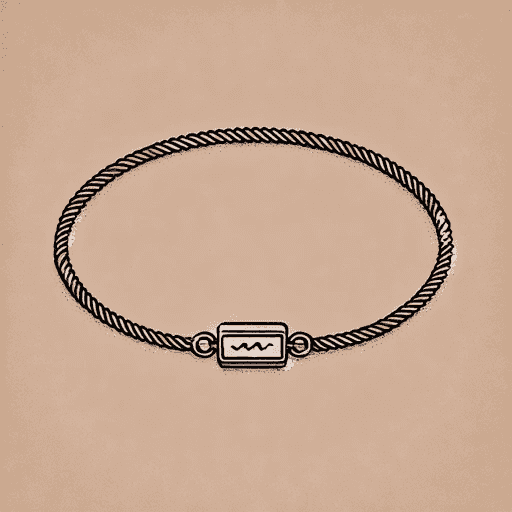
Beneath his arrogant exterior lies a deep-seated loyalty to Jude and Kane, the only real family he has ever known. His faked death, orchestrated by his father, becomes a crucial plot device that exposes the Armstrong family’s ruthless internal dynamics. The revelation that he is Violet’s half-brother, confirmed by the discovery of their shared family crest on her bracelet, adds a layer of complexity to his character and solidifies the intertwined fates of the main characters. Preston embodies the focus on appearances versus reality, using a mask of frivolity to conceal profound emotional wounds.
Kane Davenport
Kane is a significant supporting character who functions as the strategic leader and moral compass, however skewed, for his circle of friends. As the captain of the Vipers hockey team and a high-ranking member of Vencor, he embodies control, discipline, and authority. He often acts as a moderating force between Jude’s explosive rage and Preston’s chaotic impulsiveness, managing their missions and attempting to rein in their excesses. His demeanor is typically calm and collected, reflecting a man who can remain level-headed under extreme pressure.
This changes with the arrival of Dahlia. His relationship with her reveals a more emotionally invested and fiercely protective side that contrasts with his usual stoicism. He leverages his power within Vencor not only for the society’s goals but also to protect Dahlia and, by extension, Violet. Kane’s role is that of quiet strength, with calculated actions and unwavering loyalty essential to navigating the treacherous world the characters inhabit.
Julian Callahan
Julian, Jude’s older half-brother, serves as a recurring antagonist with ambiguous motives. He represents a cold, clinical, and manipulative form of power that contrasts with Jude’s raw, emotional violence. As the acting head of the Callahan pharmaceutical empire, Julian is a master strategist whose motivations are rooted in control and ambition. He views Jude’s quest for vengeance as a messy, emotional liability and seeks to manage it.
His most significant act is placing Violet in a drug-induced coma under the guise of protecting her, while he’s actually using her as a test subject for his experimental drugs. This act of deception highlights his ruthlessness and his belief that people are merely instruments to be used for his own ends. Julian’s character is defined by his amorality and his complex, condescending relationship with Jude, whom he seems to both protect and resent. When their father, Regis, reveals that their stepmother was abusive and had a mental illness, Jude learns that Julian knew of this and sought to protect Jude from the emotional pain that this information would cause. In this small way, Julian is shown to be more emotionally connected than Jude assumed, yet he is still controlling and distant.

Unlock analysis of every major character
Get a detailed breakdown of each character’s role, motivations, and development.
- Explore in-depth profiles for every important character
- Trace character arcs, turning points, and relationships
- Connect characters to key themes and plot points