The Butcher's Masquerade
The Butcher's Masquerade
A modern alternative to SparkNotes and CliffsNotes, SuperSummary offers high-quality Study Guides with detailed chapter summaries and analysis of major themes, characters, and more.
Summaries & Analyses
Author Insights
Quizzes
NEWReading Tools
Background
Series Context: The Galactic Game-Show Apocalypse
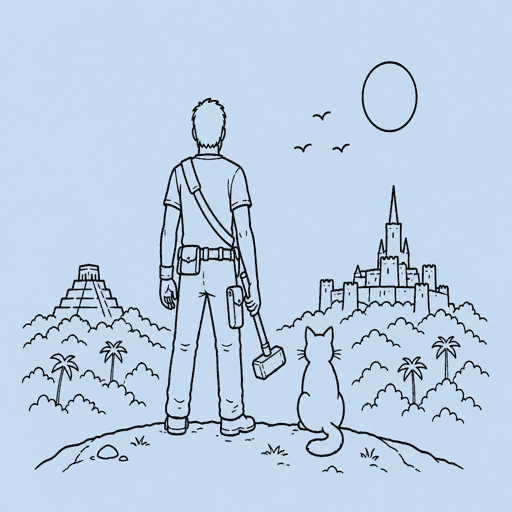
The Butcher’s Masquerade is the fifth book in the Dungeon Crawler Carl series, which unfolds after Earth is destroyed by an alien syndicate in the first book, Dungeon Crawler Carl, creating a live-streamed, planet-sized game show. The few human survivors, called “crawlers,” are forced to navigate a series of deadly, dungeon-like floors filled with monsters, traps, and complex quests. Carl enters the Dungeon with his pet cat, Princess Donut, who gains human intelligence and the ability to speak. Fighting through the first two floors, Carl and Donut quickly gain a fan following. In the second book, Carl’s Doomsday Scenario, Carl and Donut choose their race and class—a role-playing-game convention in which each category comes with specific skills and limitations. Carl chooses the Compensated Anarchist class, while Donut chooses the Former Child Actor class. While they change their classes in subsequent books, these initial choices reflect character traits that remain constant—Carl’s ingenuity and love of controlled chaos and Donut’s love of performance and attention. In this book, Carl and Donut team up with Katia Grim, who remains an important ally in The Butcher’s Masquerade. In the fourth book, The Gate of the Feral Gods, Carl and his team meet Samantha, a “withering spirit,” or demigod, inhabiting the detached head of a sex doll. Like Katia, Samantha remains a key ally in The Butcher’s Masquerade. In order to escape the fifth floor, they must find and assemble the scattered parts of the Gate of the Feral Gods, an object that opens a portal between floors but summons a dangerous feral god whenever it is used. This is the object that Carl must surrender at the start of the sixth floor in The Butcher’s Masquerade, allowing him to negotiate for crucial advantages.
This premise establishes a universe where survival is contingent not only on strength and strategy but also on entertainment value. The entire ordeal is broadcast across the galaxy, with crawlers accumulating viewers, followers, and corporate sponsors who provide crucial gear and support. The novel opens by displaying Carl’s audience metrics: “Views: 512 Sextillion / Followers: 142 Quadrillion” (3), immediately reinforcing that his actions are a performance for a mass audience. This framework contextualizes the series’ blend of visceral violence and dark humor, as Carl must constantly balance the grim reality of his situation with the need to be an engaging showman. The game-show format creates a dynamic similar to real-world reality television series like Survivor, where participants’ actions are shaped by constant surveillance and the necessity of appealing to an external audience, often leading to morally ambiguous or highly theatrical behavior for the sake of ratings and survival within the game’s rules.
Genre Context: The Conventions of LitRPG
The Butcher’s Masquerade is a prime example of the LitRPG genre, a subgenre of science fiction and fantasy that integrates explicit game-like mechanics directly into the narrative. Similar to video games like World of Warcraft or tabletop games like Dungeons & Dragons, the story features quantifiable elements such as character levels, skills, statistical attributes, and quests. Other key texts in the genre include the System Apocalypse series by Tao Wong, in which Earth is conquered by an alien imperial force that institutes game-like rules, pitting earthlings against each other in a “dungeon world”; the Primal Hunter series by author Zogarth; and the He Who Fights With Monsters series by Shirtaloon (the pseudonym of Australian author Travis Deverell). Many of the most influential texts in this genre were originally published pseudonymously online, with some being acquired by traditional publishers after gaining significant popularity through online platforms like Royal Road and Scribble Hub. The Dungeon Crawler Carl series, for example, began as a web serial on Royal Road.
LitRPG conventions are immediately apparent in The Butcher’s Masquerade, as the narrative presents Carl with a choice of class specializations: “Revolutionary,” “Guerrilla,” or “Agent Provocateur” (14-16), each offering distinct statistical bonuses and abilities. His ultimate selection results in a formal change to his character sheet: “Congratulations, Crawler. You are now Carl, the level 47 Agent Provocateur” (17). By embedding these mechanics into the plot, the LitRPG genre transforms character development into a measurable form of progression. This context helps readers understand why Carl’s strategic and moral decisions are often framed as quantifiable choices within a rigid system. His growth isn’t merely psychological but is also tracked through levels and skills, making his journey through the brutal dungeon a tangible and systematic struggle for advancement and survival within the game’s defined rules.

Get in-depth, chapter-by-chapter summaries and analysis from our literary experts.
- Grasp challenging concepts with clear, comprehensive explanations
- Revisit key plot points and ideas without rereading the book
- Share impressive insights in classes and book clubs